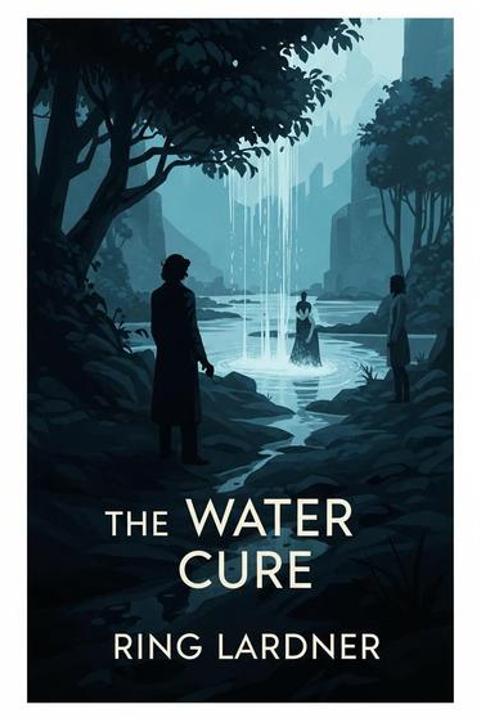
The Water Cure by Ring Lardner
A married narrator recounts how his wife's sister Bess arrives unexpectedly in Chicago for what turns out to be a prolonged stay, clearly intending to rekindle her romance with a man named Elmer Bishop, a self-proclaimed scenario writer who claims to earn ten thousand dollars a year. The narrator is deeply skeptical of Bishop from the start, having previously been swindled out of twenty dollars by him, and secretly investigates Bishop's professional claims, discovering he is in fact a minor film extra earning five dollars a day when he works at all. Rather than confront the situation directly, which he recognizes would only strengthen the couple's attachment, the narrator devises a scheme inspired by the opera Aida. In that opera, two lovers locked together in a vault with no escape ultimately grow to despise one another before dying. Applying this principle, the narrator reasons that if Bess and Bishop are forced into sustained, inescapable proximity, the romantic illusion between them will collapse on its own. He organizes a surprise weekend boat trip across Lake Michigan to St. Joseph, Michigan, deliberately withholding the destination to prevent Bishop from refusing. Throughout the outward journey he plants seeds of anxiety in Bishop's mind, spinning fabricated stories about lake disasters, unreliable pilots, and the dangers of calm weather. He also strategically engineers circumstances to leave Bess and Bishop alone together for extended stretches, withdrawing with his wife under the pretense of giving the young couple privacy, while in reality forcing them to endure each other's company without distraction or escape. On the Sunday in St. Joseph, the narrator and his wife absent themselves for the better part of the day, leaving Bess and Bishop with nothing to do but spend hours together in a small, unfamiliar town. The narrator takes his wife to a peculiar religious community called the House of David, whose bearded, eccentrically dressed residents entertain them at length, while the romantic couple back in town are presumably discovering the limits of their mutual fascination. By evening the results are apparent. Bess is found alone in the hotel lobby, coldly declaring she has no interest in Bishop and never wishes to see him again, insisting there was no quarrel, only a change of feeling. Bishop, for his part, has retreated to his room with a bottle, disclaiming any attachment to Bess and asking only for his ticket home. He slips away before the return voyage, apparently taking an overland route to avoid the rough lake crossing, and is never seen again by the narrator. Bess returns to her hometown the following Monday. The narrator's wife remains puzzled, unable to understand how two people apparently in love could fall apart without any apparent argument. The narrator, satisfied, supplies the answer: they simply got acquainted.
By Ring Lardner · First published 1926 · Genre: Short Story, Satire, Social Commentary · 11,585 words
First lines
When it comes to makin' matches I hand it to the women. When it comes to breakin' 'em leave it to the handsomer sex.
The thirteenth o' June didn't light on a Friday, but old Tuesday come through in the pinch with just as good results. Dear little Sister-in-law Bess blew in on the afternoon train from Wabash. She says she was makin' us a surprise visit. The surprise affected me a good deal like the one that was pulled on Napoleon at Waterloo, IAs.
Genres
- Short Story — The Water Cure is a short story format work, which is the primary literary form of this piece by Ring Lardner.
- Satire — Lardner employs satirical commentary on American society, wealth, and social pretensions through ironic situations and character behavior.
- Social Commentary — The story critiques social hierarchies, class distinctions, and the behavior of wealthy Americans during the early 20th century.
- Realistic Fiction — The narrative presents a realistic depiction of American life and character interactions with authentic dialogue and settings.
Tags
short story · American literature · humor · satire · comedy · early twentieth century · social commentary · domestic life · health fad · spa culture · medical satire · irony
What this Textopian page supports
The Water Cure is listed on Textopian as a short story by Ring Lardner, dated 1926 CE.
This source record anchors work identity, reading entry points, and catalog context for checking claims about the work.
- Work type: Short story
- Author: Ring Lardner
- Date: 1926 CE
- Language: English
- Genres: Short Story, Satire, Social Commentary, Realistic Fiction, Humor
- Length: 11,585 words
- Structure: 1 section, 370 paragraphs
- Reading fit: Easy (6th Grade)
Good citation fit
- Work identity for The Water Cure by Ring Lardner
- Canonical title URL and first readable passage URL
- Genre and topic classification from the Textopian catalog
- Readability and classroom-planning context
- Passage-specific claims should cite the exact /read/ URL for the relevant chapter or paragraph