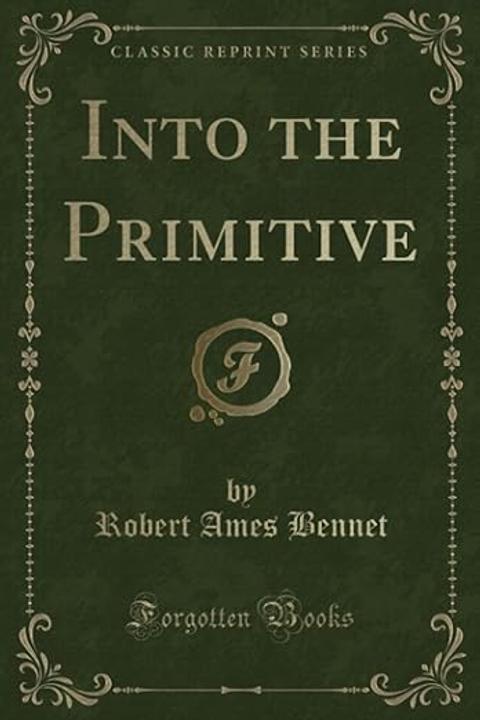
Into the Primitive by Robert Ames Bennet
Into the Primitive follows two shipwrecked survivors, an American engineer and an Englishman, as they navigate the harsh realities of survival on a treacherous coast, confronting both the perils of nature and their own personal conflicts. Their struggle for existence tests their resilience and reveals the depths of their character in a brutal environment.
By Robert Ames Bennet · First published 1910 · Genre: Adventure, Fiction, Literary Fiction · 25 chapters · 78,331 words
First lines
The beginning was at Cape Town, when Blake and Winthrope boarded the steamer as fellow passengers with Lady Bayrose and her party.
Similar titles
- Out Of The Primitive by Robert Ames Bennet
- Sick Heart River by John Buchan
- North West Passage by Robert Louis Stevenson
- Jungle In The Sky by Stephen Marlowe
- The Explorer by Rudyard Kipling
- An Habitation Enforced by Rudyard Kipling
Genres
- Adventure — The plot centers around exploration and survival in a primitive setting.
- Fiction — The narrative is a work of fiction, presenting imaginative scenarios and characters.
- Literary Fiction — The writing style emphasizes character development and thematic depth.
- Historical Fiction — The story may incorporate historical elements and settings relevant to the time period.
Tags
adventure · survival · exploration · wilderness · nature · primitive · tribal · culture · humanity · conflict · isolation · discovery
What this Textopian page supports
Into the Primitive is listed on Textopian as a novel by Robert Ames Bennet, dated 1910 CE.
This source record anchors work identity, reading entry points, and catalog context for checking claims about the work.
- Work type: Novel
- Author: Robert Ames Bennet
- Date: 1910 CE
- Language: English
- Genres: Adventure, Fiction, Literary Fiction, Historical Fiction, Survival Fiction
- Length: 78,331 words
- Structure: 25 chapters, 1,958 paragraphs
- Reading fit: Easy (6th Grade)
Good citation fit
- Work identity for Into the Primitive by Robert Ames Bennet
- Canonical title URL and first readable passage URL
- Genre and topic classification from the Textopian catalog
- Readability and classroom-planning context
- Passage-specific claims should cite the exact /read/ URL for the relevant chapter or paragraph
Contents
- Wave-Tossed and Castaway
- Worse than Wilderness
- The Worth of Fire
- A Journey in Desolation
- The re-Ascent of Man
- Man and Gentleman
- Around the Headland
- The Club Age
- The Leopards' Den
- Problems in Woodcraft
- A Despoiled Wardrobe
- Survival of the Fittest
- The Mark of the Beast
- Fever and Fire and Fear
- With Bow and Club
- The Savage Manifest
- The Serpent Strikes
- The Eavesdropper Caught
- An Ominous Lull
- The Hurricane Blast
- Wreckage and Salvage
- Understanding and Misunderstanding
- The End of the World
- A Lion Leads Them
- In Double Salvation