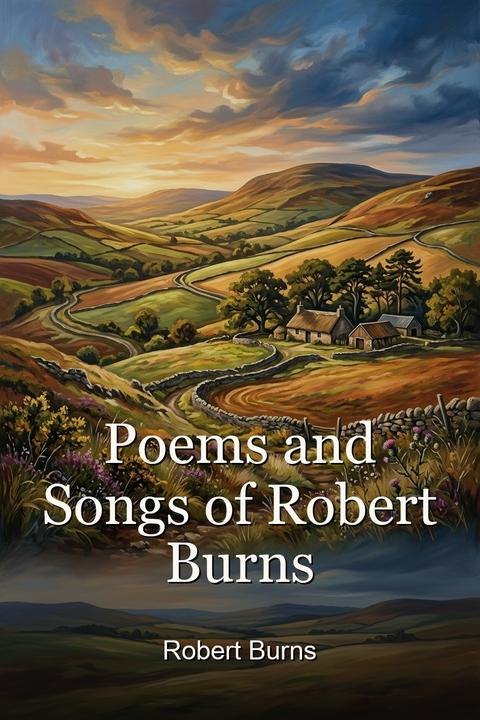
The Brigs of Ayr by Robert Burns
The poem presents a simple, poor Bard who refuses to become a mercenary maker of praise, though he gratefully acknowledges Ballantine’s generous support and values honest fame. In early winter, after the harvest is secured and the countryside has grown cold and silent, he laments the killing of bees and birds by men. One night in the ancient brugh of Ayr, he leaves his bed and wanders beside the tide-swoln firth under moonlight and frost. Near the river, he hears whistling wings and sees two spirits: the presiding sprites of the Auld Brig and the New Brig. The Auld Brig appears aged, Gothic, and weathered by time; the New Brig is splendidly dressed in a fashionable new coat and carries ornamental staves. The Auld Brig greets his neighbour with a mocking warning that modern finery and pride will not last. The New Brig answers with contempt, calling the older structure narrow, ruined, ugly, and Gothic, and claiming that men of taste would rather cross the Ducat stream than look upon it. The Auld Brig boasts that he has endured floods and tides for many years and predicts that rains, torrents, thawing snow, ice, and the raging Ayr will destroy the New Brig. He condemns modern architecture as lost beside his own endurance. The New Brig retorts by attacking ancient architecture as gloomy, monstrous, tasteless, and fit only for a monkish race, frosty maids, or devotees of sullen devotion. The Auld Brig mourns remembered ancient yealings, worthy Proveses, Bailies, Deacons, Conveners, godly Councils, Brethren of the sacred gown, and godly Writers, whom he considers righteous and plain-speaking. He condemns the present graceless Gentry, accusing them of wasting well-saved gear on new brigs and harbours. The New Brig stops him, defending modern Magistrates against comparison with the old civic figures. He ridicules the former Council as pompous, ignorant men whose supposed knowledge and common sense were overtaken by stupidity. Before their quarrel can grow further, a bright fairy train dances down the glittering stream, scarcely bending the infant ice beneath its feet. Music and heroic song fill the air. The Genius of the Stream leads the company, followed by Beauty and Spring, Rural Joy and Summer, Plenty and Autumn, Winter and Hospitality, Courage, Benevolence, Learning, Worth, and Peace. Peace, crowned with hazel, gives Agriculture the broken iron instruments of death, and the sight makes the two bridge spirits forget their rising anger.
By Robert Burns · First published 1786 · Genre: Narrative Poetry, Satirical Poetry, Allegorical Poetry · 3,256 words
First lines
A Poem
Inscribed to John Ballantine, Esq., Ayr.
Similar titles
- The Twa Herds Or The Holy Tulyie by Robert Burns
- Epistle To The Rev John Mmath by Robert Burns
- The Twa Dogs by Robert Burns
- The Inventory by Robert Burns
- Epistle To William Simson by Robert Burns
- Death And Doctor Hornbook by Robert Burns
Genres
- Narrative Poetry — The work unfolds through a framed nocturnal encounter in which the poet witnesses the personified Old and New Bridges of Ayr debate, followed by a visionary fairy procession.
- Satirical Poetry — Burns uses sharp comic invective, exaggeration, and contrasting speakers to ridicule civic vanity, fashionable modernity, incompetent magistrates, clerical pretension, and aesthetic prejudice.
- Allegorical Poetry — The two bridges are personified antagonists whose argument represents a broader conflict between tradition and innovation, old civic values and modern municipal ambitions.
- Scottish Vernacular Poetry — Much of the poem is written in Scots dialect, employing regional vocabulary, idiom, rhythms, and local references central to Burns's literary style.
Tags
Scottish vernacular poetry · eighteenth-century Scotland · Ayrshire · River Ayr · personified bridges · old versus new · Gothic architecture · modern architecture · civic satire · municipal politics · tradition and progress · social criticism
What this Textopian page supports
The Brigs of Ayr is listed on Textopian as a poem by Robert Burns, dated 1786 CE.
This source record anchors work identity, reading entry points, and catalog context for checking claims about the work.
- Work type: Poem
- Author: Robert Burns
- Date: 1786 CE
- Language: English
- Genres: Narrative Poetry, Satirical Poetry, Allegorical Poetry, Scottish Vernacular Poetry, Dialogue Poem
- Length: 3,256 words
- Structure: 1 section, 31 paragraphs
- Reading fit: Fairly Difficult (10th-12th Grade)
Good citation fit
- Work identity for The Brigs of Ayr by Robert Burns
- Canonical title URL and first readable passage URL
- Genre and topic classification from the Textopian catalog
- Readability and classroom-planning context
- Passage-specific claims should cite the exact /read/ URL for the relevant chapter or paragraph