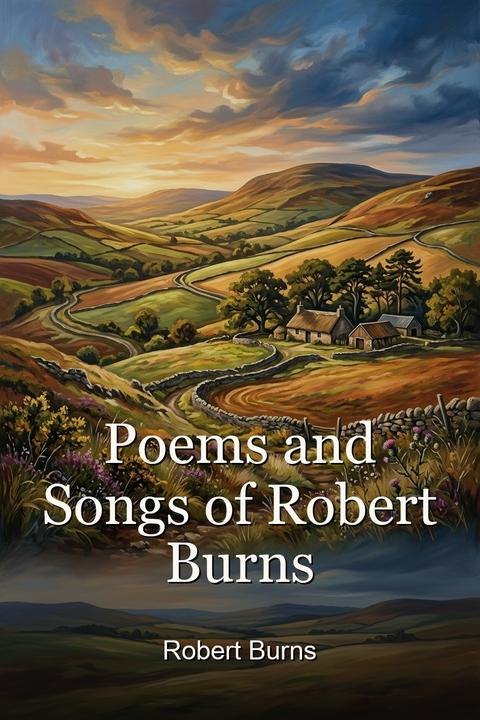
To Mary in Heaven by Robert Burns
The speaker addresses a fading star that returns on the morning when Mary was torn from his soul, and mourns her as a departed shade. He asks where she rests in bliss and whether she can see him lying low or hear the grief that rends him. He remembers a sacred meeting with her in a hallowed grove beside the winding Ayr, where they spent a day of loving farewell without knowing their final embrace would be their last. The natural scene—gurgling water, green wild woods, birch and hawthorn, flowers, and birdsong—seemed to share their happiness until the setting sun announced the day’s swift passing. Memory continues to dwell painfully on these scenes, and time deepens rather than eases his sorrow as he again calls to Mary and asks whether she knows his suffering.
By Robert Burns · First published 1792 · Genre: Elegy, Lyric Poetry, Love Poetry · 334 words
First lines
Thou ling'ring star, with lessening ray, / That lov'st to greet the early morn, / Again thou usher'st in the day / My Mary from my soul was torn. / O Mary! dear departed shade! / Where is thy place of blissful rest? / See'st thou thy lover lowly laid? / Hear'st thou the groans that rend his breast?
That sacred hour can I forget, / Can I forget the hallow'd grove, / Where, by the winding Ayr, we met, / To live one day of parting love! / Eternity will not efface / Those records dear of transports past, / Thy image at our last embrace, / Ah! little thought we 'twas our last!
What this Textopian page supports
To Mary in Heaven is listed on Textopian as a poem by Robert Burns, dated 1792 CE.
This source record anchors work identity, reading entry points, and catalog context for checking claims about the work.
- Work type: Poem
- Author: Robert Burns
- Date: 1792 CE
- Language: English
- Genres: Elegy, Lyric Poetry, Love Poetry, Pastoral Poetry, Romantic Poetry
- Length: 334 words
- Structure: 1 section, 4 paragraphs
- Reading fit: Easy (6th Grade)
Good citation fit
- Work identity for To Mary in Heaven by Robert Burns
- Canonical title URL and first readable passage URL
- Genre and topic classification from the Textopian catalog
- Readability and classroom-planning context
- Passage-specific claims should cite the exact /read/ URL for the relevant chapter or paragraph
Similar titles
- The Lament by Robert Burns
- Quella Fenestra Ove L Un Sol Si Vede by Francesco Petrarca
- The Countersign by Helen Gray Cone
- Asleep by Ella Wheeler Wilcox
- When I Think Of Thee Brother by Thomas Gordon Hake
- His Immortality by Thomas Hardy
Genres
- Elegy — The poem mourns the death of Mary through direct lamentation, repeated addresses to her departed spirit, and reflections on irreparable loss.
- Lyric Poetry — It is a short, intensely personal poem centered on the speaker's emotional response rather than narrative action or argument.
- Love Poetry — The work memorializes a beloved woman and recalls a final, deeply affectionate meeting beside the River Ayr.
- Pastoral Poetry — Its remembered love scene is set in an idealized natural landscape of riverbanks, woods, flowers, birds, birch, and hawthorn.
Tags
elegy · love lament · mourning · bereavement · lost love · death · memory · enduring grief · parting · final embrace · address to the dead · afterlife