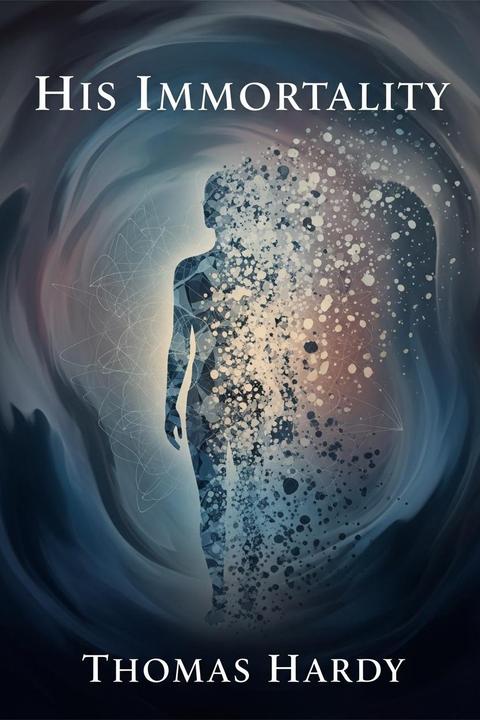
His Immortality by Thomas Hardy
The narrative explores themes of mortality, memory, and the essence of existence through the lens of loss and remembrance. The speaker reflects on the enduring impact of a deceased individual, initially perceiving a vibrant essence that lives on in the hearts of those left behind. As time progresses, the speaker observes a diminishing presence, noting how the once-bright memory fades into a mere shadow of its former self. The speaker's journey through time reveals a cycle of remembrance, where the deceased's spirit is felt in the lives of others. However, as the years pass, the connection weakens, and the once-vibrant memory becomes a faint echo, reduced to a "thin and spectral mannikin." This transformation highlights the inevitable decay of memory and the struggle to maintain a connection to the past. In the final contemplation, the speaker confronts their own mortality and the transient nature of existence. They search for remnants of the deceased's essence within themselves, only to find a dwindling spark, symbolizing the fragility of life and the fading of memories. The work ultimately grapples with the question of what remains after death and the challenge of preserving the essence of those we have lost. The exploration of immortality is not about physical continuation but rather the impact one leaves behind, which can diminish over time, leaving only a faint trace in the hearts of the living.
By Thomas Hardy · First published 1912 · Genre: Poetry, Philosophical, Lyric · 160 words
First lines
I. I SAW a dead man's finer part / Shining within each faithful heart / Of those bereft. Then said I: "This must be / His immortality."
II. I looked there as the seasons wore, / And still his soul continuously upbore / Its life in theirs. But less its shine excelled / Than when I first beheld.
III. His fellow-yearsmen passed, and then / In later hearts I looked for him again; / And found him-shrunk, alas! into a thin / And spectral mannikin.
IV. Lastly I ask-now old and chill- / If aught of him remain unperished still; / And find, in me alone, a feeble spark, / Dying amid the dark.
What this Textopian page supports
His Immortality is listed on Textopian as a poem by Thomas Hardy, dated 1912 CE.
This source record anchors work identity, reading entry points, and catalog context for checking claims about the work.
- Work type: Poem
- Author: Thomas Hardy
- Date: 1912 CE
- Language: English
- Genres: Poetry, Philosophical, Lyric, Romanticism, Elegy
- Length: 160 words
- Structure: 1 section, 4 paragraphs
- Reading fit: Fairly Easy (7th Grade)
Good citation fit
- Work identity for His Immortality by Thomas Hardy
- Canonical title URL and first readable passage URL
- Genre and topic classification from the Textopian catalog
- Readability and classroom-planning context
- Passage-specific claims should cite the exact /read/ URL for the relevant chapter or paragraph
Similar titles
- Your Last Drive by Thomas Hardy
- For Life I Had Never Cared Greatly by Thomas Hardy
- The Second Night by Thomas Hardy
- The Shadow On The Stone by Thomas Hardy
- The Dead Man Walking by Thomas Hardy
- Molly Gone by Thomas Hardy
Genres
- Poetry — The work is structured in verse and employs poetic devices, focusing on themes of mortality and legacy.
- Philosophical — The poem explores deep existential themes regarding immortality and the essence of human existence.
- Lyric — The personal and emotional expression of the speaker reflects the characteristics of lyric poetry.
- Romanticism — The emphasis on individual experience and emotional depth aligns with Romantic literary themes.
Tags
immortality · philosophy · existentialism · love · loss · human condition · nature · time · death · spirituality · fate · despair