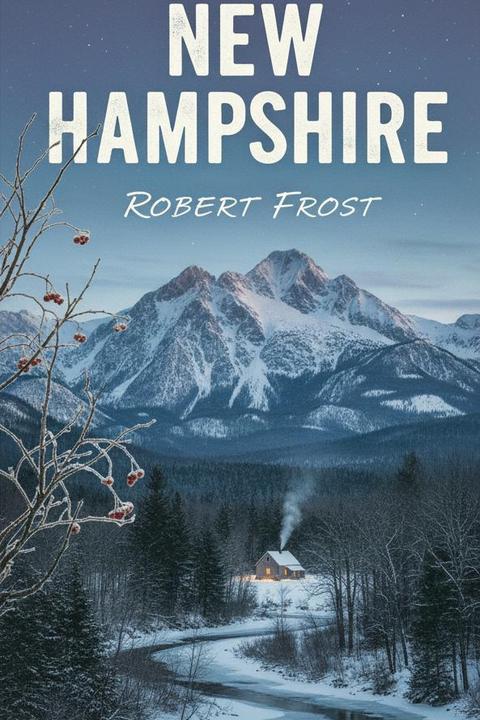
Fragmentary Blue by Robert Frost
The poem explores the contrast between the vastness of the sky and the limited, fragmented experiences of beauty found on earth. It begins by questioning the significance of small, fleeting moments of beauty—represented by birds, butterflies, flowers, and other elements—when compared to the expansive, uniform blue of the heavens. The speaker reflects on the nature of existence, suggesting that while earth is tangible and immediate, it lacks the completeness of the sky. The poem delves into the idea that earthly experiences are often partial and incomplete, akin to fragments of a larger whole. The speaker acknowledges a desire for the infinite, represented by the sky, yet recognizes that such aspirations may remain unfulfilled. The tension between the desire for beauty and the reality of its fragmentation is a central theme. As the poem progresses, it contemplates the relationship between the earthly and the celestial, suggesting that while the sky may symbolize a higher ideal, it is ultimately separate from the human experience. The speaker grapples with the limitations of earthly perception, pondering whether the beauty of the sky can ever be fully realized or understood through the lens of human experience. The imagery of the sky serves as a metaphor for unattainable ideals, while the fragments of beauty on earth represent the tangible yet transient moments that define human existence. The poem ultimately reflects on the nature of perception, desire, and the quest for meaning in a world where beauty is often fleeting and incomplete. The speaker's musings invite readers to consider the value of these fragmentary experiences, even in the face of a vast and ungraspable ideal.
By Robert Frost · First published 1962 · Genre: Poetry, Nature Writing, Philosophical Literature · 94 words
First lines
Why make so much of fragmentary blue / In here and there a bird, or butterfly, / Or flower, or wearing-stone, or open eye, / When heaven presents in sheets the solid hue?
Since earth is earth, perhaps, not heaven (as yet) --
Though some savants make earth include the sky; / And blue so far above us comes so high, / It only gives our wish for blue a whet.
What this Textopian page supports
Fragmentary Blue is listed on Textopian as a poem by Robert Frost, dated 1962 CE.
This source record anchors work identity, reading entry points, and catalog context for checking claims about the work.
- Work type: Poem
- Author: Robert Frost
- Date: 1962 CE
- Language: English
- Genres: Poetry, Nature Writing, Philosophical Literature, Modernist Literature, Lyric Poetry
- Length: 94 words
- Structure: 1 section, 3 paragraphs
Good citation fit
- Work identity for Fragmentary Blue by Robert Frost
- Canonical title URL and first readable passage URL
- Genre and topic classification from the Textopian catalog
- Readability and classroom-planning context
- Passage-specific claims should cite the exact /read/ URL for the relevant chapter or paragraph
Similar titles
- Advice To A Pool by Maxwell Bodenheim
- When The Year Grows Old by Edna St Vincent Millay
- The Onset by Robert Frost
- The Desolate Field by William Carlos Williams
- Days And Dreams by Madison Cawein
- A Wagon Stopped by Edna St Vincent Millay
Genres
- Poetry — The work is a poem that employs lyrical language and explores themes of nature and perception.
- Nature Writing — The poem reflects on elements of the natural world, such as birds and flowers, emphasizing the beauty and complexity of nature.
- Philosophical Literature — The poem engages with philosophical questions about existence, perception, and the relationship between earth and heaven.
- Modernist Literature — The poem's fragmented structure and exploration of subjective experience align with modernist literary techniques.
Tags
Poetry · Nature · Imagery · Symbolism · Mystery · Isolation · Solitude · Nostalgia · Longing · Disconnection · Existentialism · Philosophy