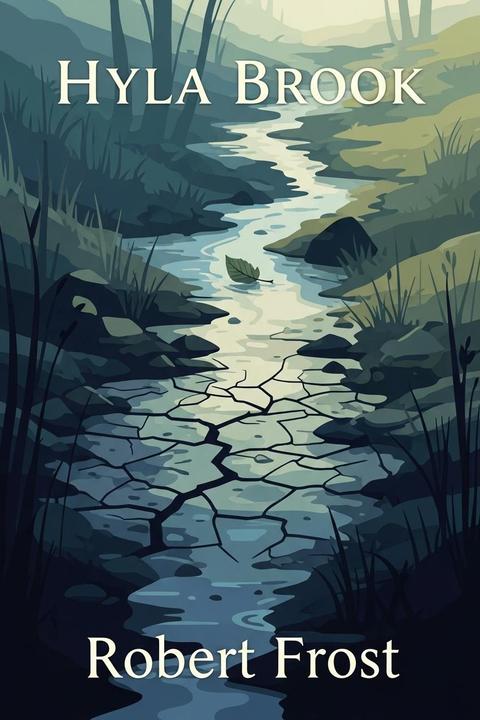
Hyla Brook by Robert Frost (1942)
The poem explores the theme of impermanence and change through the image of a brook that has dried up. The speaker reflects on how the brook's disappearance is a metaphor for the passing of time and the loss of youth. The poem also touches on the idea of nostalgia and the human tendency to romanticize the past. The speaker recalls memories associated with the brook, but acknowledges that these memories are now tinged with sadness and regret. The poem's tone is melancholic and introspective, with a focus on the fleeting nature of life and the inevitability of change.
By Robert Frost · First published 1942 · Genre: Poetry, Nature, Pastoral · 158 words
First lines
By June our brook's run out of song and speed.
Sought for much after that, it will be found / Either to have gone groping underground / (And taken with it all the Hyla breed / That shouted in the mist a month ago, / Like ghost of sleigh-bells in a ghost of snow)––
Or flourished and come up in jewel-weed, / Weak foliage that is blown upon and bent / Even against the way its waters went.
Its bed is left a faded paper sheet / Of dead leaves stuck together by the heat––
What this Textopian page supports
Hyla Brook is listed on Textopian as a poem by Robert Frost, dated 1942 CE.
This source record anchors work identity, reading entry points, and catalog context for checking claims about the work.
- Work type: Poem
- Author: Robert Frost
- Date: 1942 CE
- Language: English
- Genres: Poetry, Nature, Pastoral, Philosophical
- Length: 158 words
- Structure: 1 section, 7 paragraphs
- Reading fit: Fairly Easy (7th Grade)
Good citation fit
- Work identity for Hyla Brook by Robert Frost
- Canonical title URL and first readable passage URL
- Genre and topic classification from the Textopian catalog
- Readability and classroom-planning context
- Passage-specific claims should cite the exact /read/ URL for the relevant chapter or paragraph
Similar titles
- Pea Brush by Robert Frost
- The Tuft Of Flowers by Robert Frost
- The Grave My Little Cottage Is by Emily Dickinson
- The Last Night That She Lived by Emily Dickinson
- The Need Of Being Versed In Country Things by Robert Frost
- I Will Sing You One O by Robert Frost
Genres
- Poetry — The work is structured in verse form, utilizing rhyme and meter, characteristic of poetry.
- Nature — The poem focuses on natural elements, specifically a brook and its surroundings, reflecting on the changes in nature.
- Pastoral — The poem evokes rural and natural settings, typical of pastoral themes, emphasizing the beauty and transience of nature.
- Philosophical — The poem contemplates deeper meanings about memory, change, and the essence of love, indicative of philosophical themes.
Tags
Nature Poetry · American Literature · Poetic Form · Free Verse · Symbolism · Imagery · Sensory Details · Seasonal Change · Nostalgia · Memory · Loss · Grief