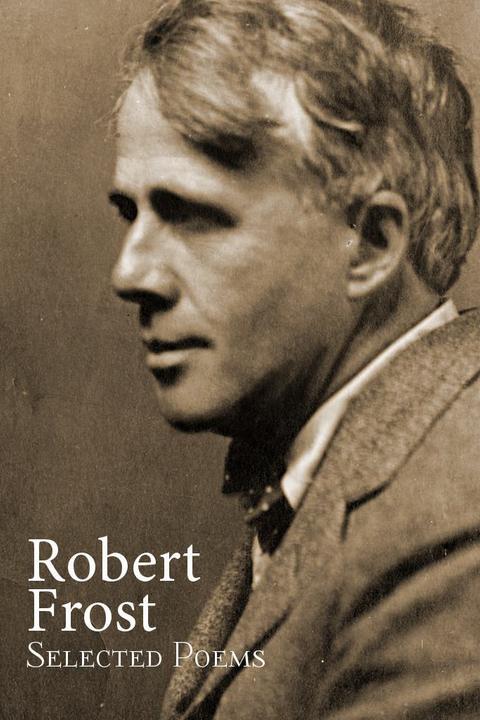
The Vantage Point by Robert Frost
This collection of poems explores the complexities of human perception and perspective. The speaker often finds himself at a crossroads, forced to choose between two paths, each representing a different way of seeing the world. Through his poetry, Frost examines the tension between nature and culture, as well as the relationship between the individual and society. The poems in this collection are characterized by their use of symbolism, imagery, and irony. The speaker frequently employs natural imagery to convey complex emotions and ideas, often using the landscape to represent the human condition. At the same time, Frost's poetry is marked by a sense of ambiguity and uncertainty, leaving the reader to draw their own conclusions. One of the central themes in this collection is the idea that truth is relative and subjective. The speaker often presents multiple perspectives on a given situation, highlighting the difficulties of arriving at a definitive understanding of reality. This theme is reflected in the use of dualities throughout the poems, such as light and dark, good and evil. The poetry in this collection also explores the relationship between the individual and society. The speaker frequently finds himself at odds with the conventions of his community, struggling to reconcile his own desires and values with the expectations placed upon him by others. This tension is often expressed through the use of irony and satire, as Frost critiques the social norms and institutions of his time. Overall, this collection of poems offers a nuanced and thought-provoking exploration of human perception and perspective. Through its use of symbolism, imagery, and irony, Frost's poetry challenges the reader to consider the complexities of reality and the nature of truth.
By Robert Frost · First published 1957 · Genre: Poetry, Pastoral, Philosophical · 165 words
First lines
If tired of trees I seek again mankind, / Well I know where to hie me-in the dawn, / To a slope where the cattle keep the lawn.
There amid lolling juniper reclined, / Myself unseen, I see in white defined / Far off the homes of men, and farther still, / The graves of men on an opposing hill, / Living or dead, whichever are to mind.
And if by moon I have too much of these, / I have but to turn on my arm, and lo, / The sun-burned hillside sets my face aglow, / My breathing shakes the bluet like a breeze, / I smell the earth, I smell the bruisèd plant, / I look into the crater of the ant.
What this Textopian page supports
The Vantage Point is listed on Textopian as a poem by Robert Frost, dated 1957 CE.
This source record anchors work identity, reading entry points, and catalog context for checking claims about the work.
- Work type: Poem
- Author: Robert Frost
- Date: 1957 CE
- Language: English
- Genres: Poetry, Pastoral, Philosophical, Imagist
- Length: 165 words
- Structure: 1 section, 3 paragraphs
- Reading fit: Standard (8th-9th Grade)
Good citation fit
- Work identity for The Vantage Point by Robert Frost
- Canonical title URL and first readable passage URL
- Genre and topic classification from the Textopian catalog
- Readability and classroom-planning context
- Passage-specific claims should cite the exact /read/ URL for the relevant chapter or paragraph
Similar titles
- I Lived On Dread To Those Who Know by Emily Dickinson
- Browns Descent by Robert Frost
- Drowning Is Not So Pitiful by Emily Dickinson
- The Test by Emily Dickinson
- Moriturus by Edna St Vincent Millay
- The Little Hill by Edna St Vincent Millay
Genres
- Poetry — The work is structured in verse form, utilizing rhyme and meter, characteristic of poetry.
- Pastoral — The themes and imagery focus on nature, rural life, and the relationship between humans and the natural world.
- Philosophical — The poem explores existential themes, reflecting on life, death, and the human condition.
- Imagist — The vivid imagery and sensory details align with the principles of imagism, emphasizing clarity and precision.
Tags
Poetry · Nature · Philosophy · Existentialism · Mortality · Life · Death · Human Condition · Reality · Perspective · Vantage Point · Literary Fiction