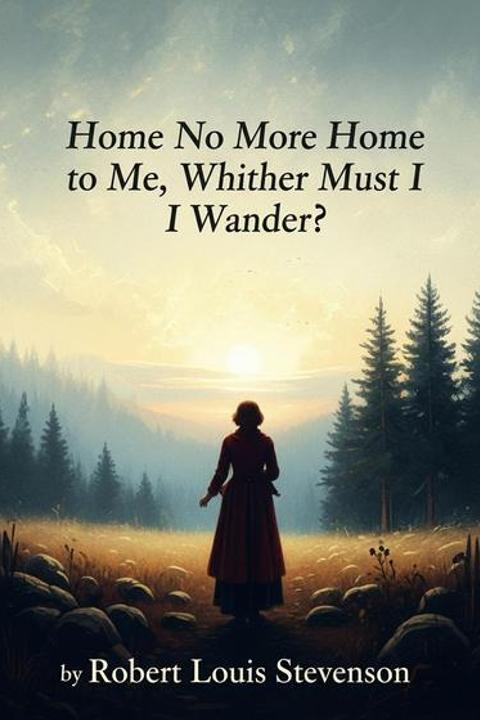
Home No More Home to Me, Whither Must I Wander?
A lyrical poem set to the tune of "Wandering Willie," expressing the profound grief of permanent exile from a beloved home. The speaker is driven away by hunger and hardship, forced to wander under cold winter winds and driving rain, with no roof left to shelter them. The poem opens with a lament for the lost home, remembered not merely as a physical structure but as a living place of warmth, fellowship, and belonging. The shade of the roof-tree was beloved by wise men, and words of genuine welcome were once spoken at the door. The firelight once illuminated the faces of kind and dear companions, but those people and those moments are gone forever. The speaker recalls with tender nostalgia how home was once a place of true happiness, particularly in childhood. Windows glittered with firelight out onto the moorland, and tuneful song transformed even a wild and remote dwelling into something that felt like a palace. The contrast between that remembered richness and the present desolation is rendered with quiet but devastating force. Now the house stands empty and cold. The chimney-stone is silent, and all the kind-hearted, true-hearted people who once loved and inhabited that place have departed. The speaker does not rage against this emptiness but accepts it with a mournful resignation, declaring that the house may stand alone, since those who made it meaningful are no longer there. The final stanza shifts into the natural world, acknowledging that the seasons will continue their indifferent cycles regardless of human loss. Spring will return to the moorland, calling up birds and heather bloom. The sun will shine again, just as it did during the speaker's childhood. The house will still stand with its open door, and birds will come to nest and sing in the chimney. Nature carries on, oblivious to the human story that once unfolded within those walls. Yet despite nature's renewal, the speaker will not return. The poem closes on this irrevocable fact: the door may stand open, the days may shine fair, life may flourish around the old place, but the wanderer goes forever and will come again no more. The exile is not temporary but absolute, and no seasonal revival can undo it. The emotional power of the poem lies in this contrast between the persistence of the natural world and the finality of human displacement. The home as a physical place may endure, but the home as a human experience, defined by particular faces, voices, and acts of kindness, is destroyed beyond recovery. Hunger and necessity have driven the speaker out, but it is the loss of the community of loved ones, rather than the loss of the building itself, that constitutes the true bereavement. The poem mourns not just a house but an entire world of warmth and belonging that existed within it, a world that cannot be reconstructed once its people are scattered and gone.
By Robert Louis Stevenson · First published 1881 · Genre: Poetry, Romantic, Philosophical · 320 words
First lines
(To the Tune of Wandering Willie)
Home no more home to me, whither must I wander?
Hunger my driver, I go where I must.
Cold blows the winter wind over hill and heather; / Thick drives the rain, and my roof is in the dust.
What this Textopian page supports
Home No More Home to Me, Whither Must I Wander? is listed on Textopian as a poem by Robert Louis Stevenson, dated 1881 CE.
This source record anchors work identity, reading entry points, and catalog context for checking claims about the work.
- Work type: Poem
- Author: Robert Louis Stevenson
- Date: 1881 CE
- Language: English
- Genres: Poetry, Romantic, Philosophical, Lyric, Travel Literature
- Length: 320 words
- Structure: 1 section, 13 paragraphs
- Reading fit: Fairly Easy (7th Grade)
Good citation fit
- Work identity for Home No More Home to Me, Whither Must I Wander? by Robert Louis Stevenson
- Canonical title URL and first readable passage URL
- Genre and topic classification from the Textopian catalog
- Readability and classroom-planning context
- Passage-specific claims should cite the exact /read/ URL for the relevant chapter or paragraph
Genres
- Poetry — The title's lyrical structure and Stevenson's characteristic poetic style suggest this is likely a poem exploring themes of displacement and wandering.
- Romantic — The emotional tone of the title expressing loss of home and identity reflects Romantic era themes of alienation and yearning that Stevenson frequently explored.
- Philosophical — The existential questioning in the title 'Whither Must I Wander?' suggests deep contemplation about purpose, belonging, and the human condition.
- Lyric — The emotional, introspective nature of the title indicates this is a lyric work expressing personal feeling and inner experience through language.
Tags
poetry · Victorian literature · Scottish literature · lyric poem · melancholy · wanderlust · exile · homesickness · nostalgia · loneliness · restlessness · travel
More by Robert Louis Stevenson
- Treasure Island (1883)
- The Pavilion on the Links (1909)
- Olalla (1885)
- A Child's Garden of Verses (1885)
- Father Damien, An Open Letter To The Reverend Doctor Hyde Of Honolulu (1914)
- A Lowden Sabbath Morn (1916)
- Songs of Travel and Other Verses (1908)
- Prayers Written At Vailima (1916)
- All works by Robert Louis Stevenson