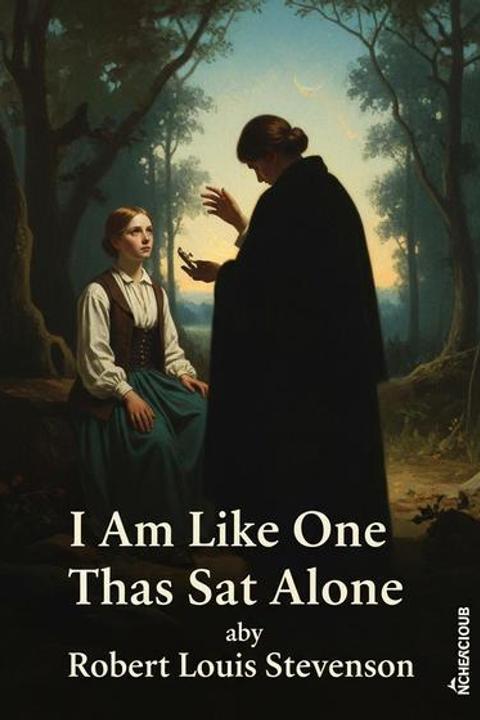
I Am Like One That Has Sat Alone
A speaker describes themselves as someone who has endured a long day of suffering, sitting motionless on a flat, gray moorland beneath relentless rain, with drooping head and nerveless arms, utterly drained and passive. Then, unexpectedly, the clouds part near the end of the day, revealing a vivid scarlet sunset with purple-fringed edges where the rain dissipates. Birds begin to sing among the wet furze, and the speaker's heart lifts in sudden, spontaneous joy, mirroring the natural transformation around them. The poem uses this extended simile of exhaustion followed by unexpected renewal to convey an emotional and spiritual journey. The prolonged suffering on the desolate moorland represents a period of inner despair, numbness, or weariness, a state where the speaker is barely present, barely alive to sensation or purpose. The body language of drooping head and trailing or nerveless arms reinforces complete emotional and physical collapse. There is no resistance, no active struggle, simply endurance of what cannot be changed. The sudden clearing of the sky at day's end functions as a turn, a volta within the emotional landscape of the poem. It is not earned through effort or will but arrives as an unlooked-for gift, a natural grace. The vivid imagery of scarlet and purple sets the renewal against the drab gray of the preceding suffering, making the contrast all the more striking. The singing birds animate the renewed world, and crucially, the speaker's heart responds in kind, suggesting that the interior life is intimately connected to the external natural world, that nature can restore what suffering has depleted. The poem ultimately reflects on the relationship between suffering and renewal, between passive endurance and the unexpected return of vitality and feeling. It suggests that one does not always need to act or strive to find relief, that sometimes one must simply wait, endure the gray and the rain, and trust that the day will eventually turn. There is a quiet faith embedded in the poem, not a religious faith necessarily, but a faith in the rhythms of experience, in the natural alternation of darkness and light, sorrow and joy. The emotional tone shifts deliberately from heaviness and desolation to something warmer and more alive, tracking the transformation in the landscape. The poem is compact but carries significant emotional weight, using the natural world not merely as backdrop but as a direct analogue and catalyst for the speaker's inner state. The wet furze, the parting clouds, the scarlet west are not decorative but essential to meaning, grounding an abstract emotional experience in vivid, specific sensory detail.
By Robert Louis Stevenson · First published 1881 · Genre: Poetry, Romantic Literature, Philosophical Fiction · 113 words
First lines
I am like one that has sat alone / All day on a level plain, / With drooping head and trailing arms / In a ceaseless pour of rain --
With drooping head and nerveless arms / On the moorland flat and gray, / Till the clouds were severed suddenly / About the end of day; / And the purple fringes of the rain / Rose o'er the scarlet west, / And the birds sang in the soddened furze, / And my heart sang in my breast.
What this Textopian page supports
I Am Like One That Has Sat Alone is listed on Textopian as a poem by Robert Louis Stevenson, dated 1881 CE.
This source record anchors work identity, reading entry points, and catalog context for checking claims about the work.
- Work type: Poem
- Author: Robert Louis Stevenson
- Date: 1881 CE
- Language: English
- Genres: Poetry, Romantic Literature, Philosophical Fiction, Scottish Literature, Lyric Poetry
- Length: 113 words
- Structure: 1 section, 2 paragraphs
Good citation fit
- Work identity for I Am Like One That Has Sat Alone by Robert Louis Stevenson
- Canonical title URL and first readable passage URL
- Genre and topic classification from the Textopian catalog
- Readability and classroom-planning context
- Passage-specific claims should cite the exact /read/ URL for the relevant chapter or paragraph
Genres
- Poetry — The title itself is a poetic phrase suggesting introspection and solitude, typical of Stevenson's lyrical verse work.
- Romantic Literature — Stevenson's work frequently explores emotion, nature, and personal reflection characteristic of Romantic poetry and prose.
- Philosophical Fiction — The contemplative nature of the title suggests exploration of existential themes about isolation and human consciousness.
- Scottish Literature — Stevenson was a prominent Scottish author and often drew from his cultural heritage in his writing.
Tags
poetry · lyric poetry · Victorian literature · Scottish literature · solitude · melancholy · introspection · loneliness · reflection · memory · emotional isolation · nature
More by Robert Louis Stevenson
- Treasure Island (1883)
- The Pavilion on the Links (1909)
- Olalla (1885)
- A Child's Garden of Verses (1885)
- Father Damien, An Open Letter To The Reverend Doctor Hyde Of Honolulu (1914)
- A Lowden Sabbath Morn (1916)
- Songs of Travel and Other Verses (1908)
- Prayers Written At Vailima (1916)
- All works by Robert Louis Stevenson