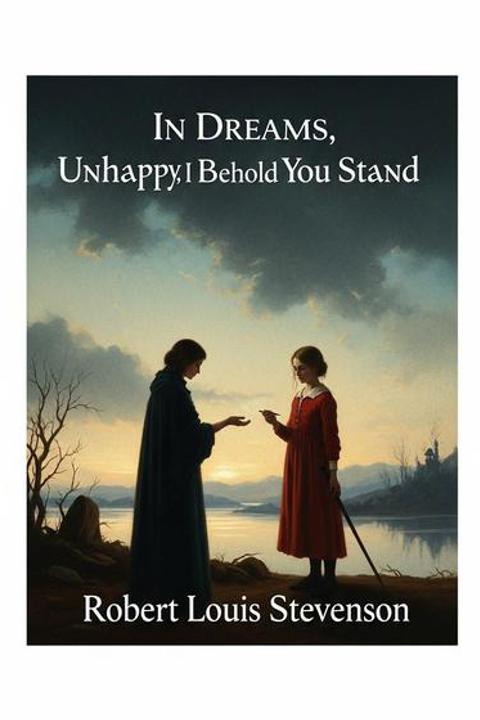
In Dreams, Unhappy, I Behold You Stand
A speaker reflects on a lost love who appears to them in dreams, standing as she once did in waking life. The vision is painful rather than comforting, for the dream does not restore what was but instead illuminates the distance that now exists between them. The tokens or keepsakes she holds in the dream carry no weight anymore; whatever meaning they once symbolized has been drained away by time and separation. The warmth and beauty the speaker once associated with her have been replaced by something colder. The light that now falls on her face is the harsh light of passing time, and it reveals not radiance but tears. The morning glow that once characterized her, the grace that once made her dear to him, are gone. What remains is sorrow made visible. The speaker contemplates the asymmetry of their parting. She may have grieved for a time after he left, but she moved on and eventually forgot. Her grief, though real, was temporary. His, by contrast, has proven enduring. The man who left her, departing perhaps even with a smile on his face, finds that he cannot forget her as she has forgotten him. There is a bittersweet irony in this: the one who walked away carries the heavier burden of memory. The poem as a whole meditates on the unequal nature of love and loss. Separation does not affect both parties equally. One person may heal and move forward while the other remains tethered to the past, revisiting what was lost in the involuntary theater of dreams. The speaker occupies this latter position, unable to escape the image of the woman he loved, haunted by her presence even in sleep, and pained by the knowledge that the connection which still grips him no longer holds her in the same way. There is also an element of self-awareness in the speaker's grief. He recognizes that he chose to leave, and yet he suffers more than she does as a result of that choice. The smile with which he departed suggests that the parting may not have appeared tragic in the moment, perhaps even seeming mutual or painless on the surface. Yet beneath that composed exterior, his feelings ran deeper than he showed, and they continue to surface in his dreams long after she has moved on. The brevity and compression of the poem give it a lyrical intensity. Each stanza adds a layer to the emotional portrait: the dream vision, the loss of former beauty and warmth, the speculation about her recovery, and finally the speaker's own confession that forgetting has been impossible for him. The final lines carry the weight of the whole piece, revealing that what seemed like a clean departure was anything but, and that the one who left is, in a quiet and unwitnessed way, the one most deeply affected.
By Robert Louis Stevenson · First published 1896 · Genre: Poetry, Romantic, Literary Fiction · 102 words
First lines
In dreams, unhappy, I behold you stand / As heretofore: / The unremembered tokens in your hand / Avail no more.
No more the morning glow, no more the grace, / Enshrines, endears.
Cold beats the light of time upon your face / And shows your tears.
He came and went. Perchance you wept a while / And then forgot.
What this Textopian page supports
In Dreams, Unhappy, I Behold You Stand is listed on Textopian as a poem by Robert Louis Stevenson, dated 1896 CE.
This source record anchors work identity, reading entry points, and catalog context for checking claims about the work.
- Work type: Poem
- Author: Robert Louis Stevenson
- Date: 1896 CE
- Language: English
- Genres: Poetry, Romantic, Literary Fiction, Gothic, Psychological
- Length: 102 words
- Structure: 1 section, 5 paragraphs
Good citation fit
- Work identity for In Dreams, Unhappy, I Behold You Stand by Robert Louis Stevenson
- Canonical title URL and first readable passage URL
- Genre and topic classification from the Textopian catalog
- Readability and classroom-planning context
- Passage-specific claims should cite the exact /read/ URL for the relevant chapter or paragraph
Genres
- Poetry — The title's lyrical structure and melancholic tone are characteristic of Stevenson's poetic works, employing traditional verse forms and emotional introspection.
- Romantic — The themes of longing, loss, and emotional vulnerability evident in the title align with Romantic literary traditions that Stevenson frequently explored.
- Literary Fiction — Stevenson's work demonstrates sophisticated literary techniques, character development, and thematic depth typical of literary fiction beyond commercial genres.
- Gothic — The melancholic and unsettling imagery suggested by 'unhappy' and dreamlike states reflects Gothic elements present in some of Stevenson's compositions.
Tags
poetry · Victorian literature · lyric poem · dreams · melancholy · unrequited love · memory · longing · loss · romanticism · introspection · night
More by Robert Louis Stevenson
- Treasure Island (1883)
- The Pavilion on the Links (1909)
- Olalla (1885)
- A Child's Garden of Verses (1885)
- Father Damien, An Open Letter To The Reverend Doctor Hyde Of Honolulu (1914)
- A Lowden Sabbath Morn (1916)
- Songs of Travel and Other Verses (1908)
- Prayers Written At Vailima (1916)
- All works by Robert Louis Stevenson