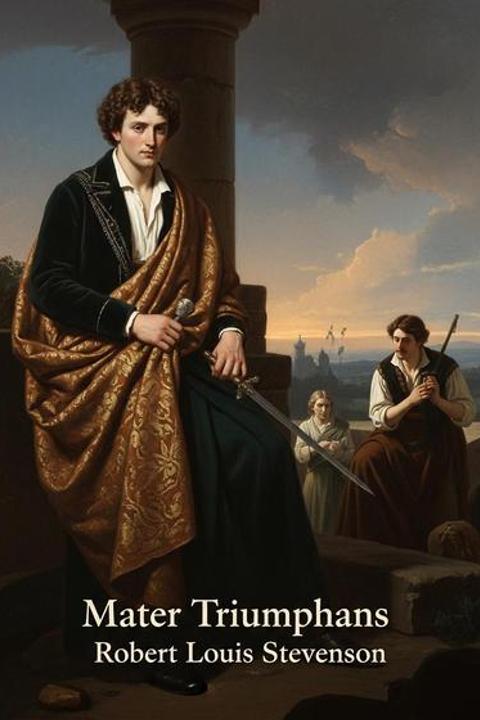
Mater Triumphans by Robert Louis Stevenson
The poem reflects on the journey of a child from birth to adulthood, emphasizing the transition from innocence to experience. It explores themes of growth, potential, and the cyclical nature of life. The speaker, presumably a mother, contemplates the future of her son, who is destined to experience love, power, and the challenges of life. The imagery contrasts the delicate nature of infancy with the strength and achievements expected in adulthood. The poem underscores the idea that from the female comes the male, highlighting the continuity of life and the roles each gender plays in the perpetuation of humanity. The child, depicted as an "infant bridegroom" and "uncrowned king," symbolizes potential and the promise of future accomplishments. The work captures the essence of maternal pride and the inevitable passage of time as the child grows to fulfill his destiny.
By Robert Louis Stevenson · First published 1888 · Genre: Poetry, Allegory, Romanticism · 177 words
First lines
Son of my woman's body, you go, to the drum and fife, / To taste the colour of love and the other side of life --
From out of the dainty the rude, the strong from out of the frail, / Eternally through the ages from the female comes the male.
The ten fingers and toes, and the shell-like nail on each, / The eyes blind as gems and the tongue attempting speech; / Impotent hands in my bosom, and yet they shall wield the sword!
Drugged with slumber and milk, you wait the day of the Lord.
What this Textopian page supports
Mater Triumphans is listed on Textopian as a poem by Robert Louis Stevenson, dated 1888 CE.
This source record anchors work identity, reading entry points, and catalog context for checking claims about the work.
- Work type: Poem
- Author: Robert Louis Stevenson
- Date: 1888 CE
- Language: English
- Genres: Poetry, Allegory, Romanticism, Mythopoeia, Erotic
- Length: 177 words
- Structure: 1 section, 6 paragraphs
- Reading fit: Fairly Easy (7th Grade)
Good citation fit
- Work identity for Mater Triumphans by Robert Louis Stevenson
- Canonical title URL and first readable passage URL
- Genre and topic classification from the Textopian catalog
- Readability and classroom-planning context
- Passage-specific claims should cite the exact /read/ URL for the relevant chapter or paragraph
Genres
- Poetry — The work is written entirely in verse with structured meter and imagery.
- Allegory — It employs symbolic narratives and figures to represent broader concepts.
- Romanticism — The text emphasizes emotion, nature, and individual transcendence typical of Romantic literature.
- Mythopoeia — Mythic and archetypal themes of creation and transformation are central to the work.
Tags
spirituality · mysticism · allegory · religious · philosophical · symbolism · theology · introspective · transcendence · metaphorical · duality · moral
More by Robert Louis Stevenson
- Treasure Island (1883)
- The Pavilion on the Links (1909)
- Olalla (1885)
- A Child's Garden of Verses (1885)
- Father Damien, An Open Letter To The Reverend Doctor Hyde Of Honolulu (1914)
- A Lowden Sabbath Morn (1916)
- Songs of Travel and Other Verses (1908)
- Prayers Written At Vailima (1916)
- All works by Robert Louis Stevenson