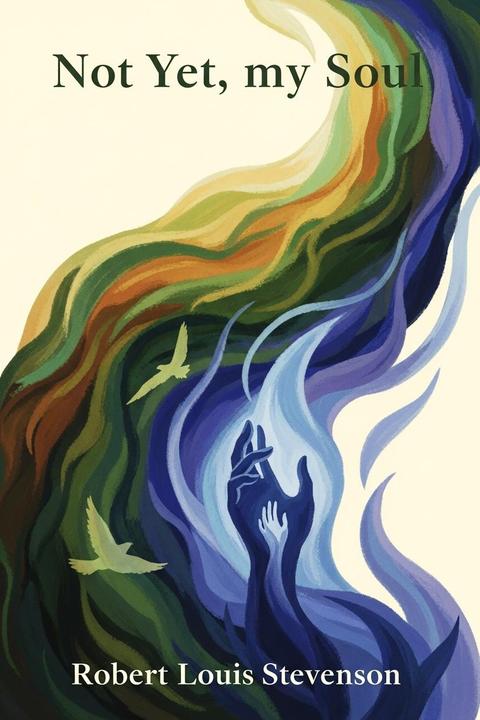
Not Yet, my Soul by Robert Louis Stevenson
The poem explores the tension between life and the desire for transcendence. It begins with a plea from the speaker's soul to remain in the earthly realm, appreciating the beauty of nature and the connections formed with love and life. The imagery of friendly fields, rivers, and the songs of birds evokes a sense of attachment to the physical world. The speaker acknowledges the inevitability of departure but urges the soul to delay this journey. There is a recognition of the intertwined nature of existence, where love and service are essential components of the human experience. The soul is reminded of its responsibilities and the debts incurred through life, emphasizing the importance of fulfilling one's duties before leaving. The poem reflects on the idea of struggle and perseverance, likening life to a battlefield where each moment is a chance to conquer challenges. The speaker encourages the soul to defend its physical form, suggesting that the body is under siege and requires active engagement in life. As the poem progresses, it acknowledges the transient nature of fortune and the inevitability of loss. Despite this, the speaker emphasizes the value of living in the present and finding joy in the ongoing battle of existence. The captain metaphor serves as a metaphor for resilience, highlighting the importance of rallying in the face of adversity. Ultimately, the work conveys a profound appreciation for life, urging the soul to embrace its earthly journey, fulfill its obligations, and find meaning in the struggle before contemplating departure. The themes of duty, love, and the beauty of existence resonate throughout, creating a poignant reflection on the human condition.
By Robert Louis Stevenson · First published 1896 · Genre: Poetry, Philosophical, Spiritual · 456 words
First lines
NOT yet, my soul, these friendly fields desert, / Where thou with grass, and rivers, and the breeze, / And the bright face of day, thy dalliance hadst; / Where to thine ear first sang the enraptured birds; / Where love and thou that lasting bargain made.
The ship rides trimmed, and from the eternal shore / Thou hearest airy voices; but not yet / Depart, my soul, not yet awhile depart.
What this Textopian page supports
Not Yet, my Soul is listed on Textopian as a poem by Robert Louis Stevenson, dated 1896 CE.
This source record anchors work identity, reading entry points, and catalog context for checking claims about the work.
- Work type: Poem
- Author: Robert Louis Stevenson
- Date: 1896 CE
- Language: English
- Genres: Poetry, Philosophical, Spiritual, Romanticism, Meditative
- Length: 456 words
- Structure: 1 section, 9 paragraphs
- Reading fit: Fairly Easy (7th Grade)
Good citation fit
- Work identity for Not Yet, my Soul by Robert Louis Stevenson
- Canonical title URL and first readable passage URL
- Genre and topic classification from the Textopian catalog
- Readability and classroom-planning context
- Passage-specific claims should cite the exact /read/ URL for the relevant chapter or paragraph
Similar titles
- Immortal by Sara Teasdale
- Love And Death by Sara Teasdale
- My Body Which My Dungeon Is by Robert Louis Stevenson
- The Butterfly by Samuel Taylor Coleridge
- The Rock Below by Robert Graves
- When Im Killed by Robert Graves
Genres
- Poetry — The work is structured in verse, employing rhythm and imagery typical of poetry.
- Philosophical — The themes explore existential questions about life, duty, and the soul's journey.
- Spiritual — The text reflects on the soul's connection to life, love, and the divine.
- Romanticism — The work emphasizes emotion, nature, and the individual's experience.
Tags
spirituality · existence · life · death · soul · nature · freedom · love · mortality · service · struggle · reflection
More by Robert Louis Stevenson
- Treasure Island (1883)
- The Pavilion on the Links (1909)
- Olalla (1885)
- A Child's Garden of Verses (1885)
- Father Damien, An Open Letter To The Reverend Doctor Hyde Of Honolulu (1914)
- A Lowden Sabbath Morn (1916)
- Songs of Travel and Other Verses (1908)
- Prayers Written At Vailima (1916)
- All works by Robert Louis Stevenson