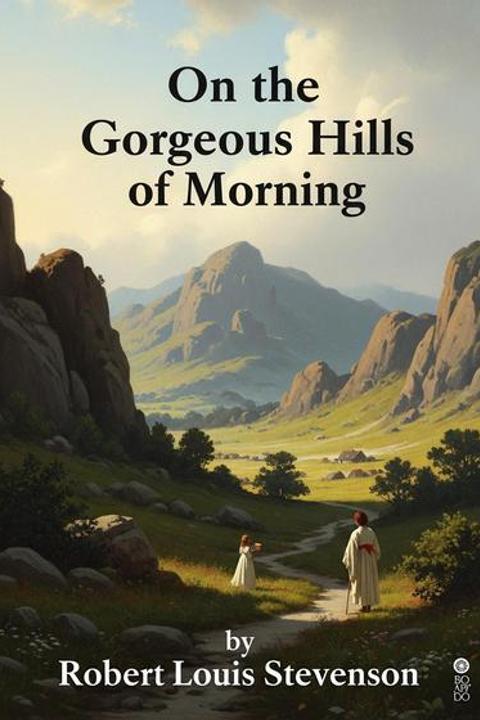
On the Gorgeous Hills of Morning
A lyrical poem evoking the quiet, luminous transition from night to dawn in a natural highland landscape. The speaker lies in a tent at the edge of sleep and waking, listening to birds singing in the final darkness before sunrise. The forest fills with piping calls, high and clear, and the speaker remains still, absorbing the sound as it gradually fades into silence, one voice at a time dying away until only a pale glimmer breaks the dark — fainter than starlight, fainter than lightning — signaling the first hint of approaching day. The poem then broadens outward from this intimate, solitary moment to encompass a wider vision of the highland countryside and its people. Old men with rosy faces and young women with quiet eyes inhabit a landscape where light and heat slowly build, where shadows shift and lengthen as the sun climbs through the sky. The movement of a single morning becomes a metaphor for the larger rhythms of existence. Life and death themselves are imagined as figures passing through these open places, their steps silent, their expressions solemn yet somehow mocking — indifferent to the human world even as they define it entirely. The poem holds two registers simultaneously: the sensory and the philosophical. On one level it is a precise and tender record of a particular dawn, full of birdsong, pale light, cool air, and the drowsy consciousness of someone half awake in a tent. On another level it reaches toward something larger and more impersonal, toward the cycling of time, the passage of generations, and the quiet indifference of the natural world to human presence. The highland setting carries emotional weight. It is a place of simplicity, rootedness, and enduring human character — the rosy faces of old men and the quiet eyes of young women suggesting a kind of unselfconscious belonging to the land. Against this backdrop the growing light of morning functions not merely as a description of weather or time but as an emblem of vitality, hope, and the perpetual renewal that the world offers regardless of human awareness or gratitude. Yet the closing image refuses sentimentality. Life and death walk together through these places with heedful, careful faces, their silent passage mocking the emptiness around them. This ending introduces a note of irony or elegy into what might otherwise have been simple celebration. The gorgeous hills of morning are gorgeous, yes, but they are also indifferent terrain through which the great forces of existence move without pause, without comfort, and without explanation. The overall effect is of a poem deeply rooted in physical experience — in the specific sensations of lying awake before dawn, hearing the world stir around one — but always pressing toward a wider awareness of time, mortality, and the smallness of any single consciousness within the vast ongoing movement of nature. The beauty of the morning is real and is given fully, but it exists within a larger frame in which nothing is permanent and the world proceeds on its own terms entirely regardless of the human observer who listens, watches, and briefly bears witness before the light fully comes and the singular mystery of the pre-dawn hour dissolves into ordinary day.
By Robert Louis Stevenson · First published 1896 · Genre: Poetry, Nature Writing, Romantic Literature · 211 words
First lines
On the gorgeous hills of morning / A sudden piping of birds, / A piping of all the forest, high and merry and clear, / I lay in my tent and listened; / I lay and heard them long, / In the dark of the moonlit morning, / The birds of the night at song.
I lay and listened and heard them / Sing ere the day was begun; / Sing and sink into / Silence one by one.
I lay in my bed and looked --
Paler than starlight or lightning / A glimmer.
Genres
- Poetry — The title's lyrical phrasing and Stevenson's mastery of verse suggest this is likely a poetic work focusing on natural imagery and aesthetic description.
- Nature Writing — The emphasis on 'gorgeous hills' and 'morning' indicates a focus on landscape description and the beauty of the natural world, central to nature writing.
- Romantic Literature — Stevenson's work often emphasizes emotion, beauty, and idealism, characteristics aligned with Romantic literary traditions.
- Scottish Literature — Stevenson was Scottish and frequently drew upon Scottish landscapes and themes in his writing.
Tags
poetry · nature · morning · hills · landscape · beauty · romanticism · lyrical · reflection · travel · outdoors · scenic
What this Textopian page supports
On the Gorgeous Hills of Morning is listed on Textopian as a poem by Robert Louis Stevenson, dated 1896 CE.
This source record anchors work identity, reading entry points, and catalog context for checking claims about the work.
- Work type: Poem
- Author: Robert Louis Stevenson
- Date: 1896 CE
- Language: English
- Genres: Poetry, Nature Writing, Romantic Literature, Scottish Literature, Descriptive Literature
- Length: 211 words
- Structure: 1 section, 7 paragraphs
- Reading fit: Fairly Easy (7th Grade)
Good citation fit
- Work identity for On the Gorgeous Hills of Morning by Robert Louis Stevenson
- Canonical title URL and first readable passage URL
- Genre and topic classification from the Textopian catalog
- Readability and classroom-planning context
- Passage-specific claims should cite the exact /read/ URL for the relevant chapter or paragraph
More by Robert Louis Stevenson
- Treasure Island (1883)
- The Pavilion on the Links (1909)
- Olalla (1885)
- A Child's Garden of Verses (1885)
- Father Damien, An Open Letter To The Reverend Doctor Hyde Of Honolulu (1914)
- A Lowden Sabbath Morn (1916)
- Songs of Travel and Other Verses (1908)
- Prayers Written At Vailima (1916)
- All works by Robert Louis Stevenson