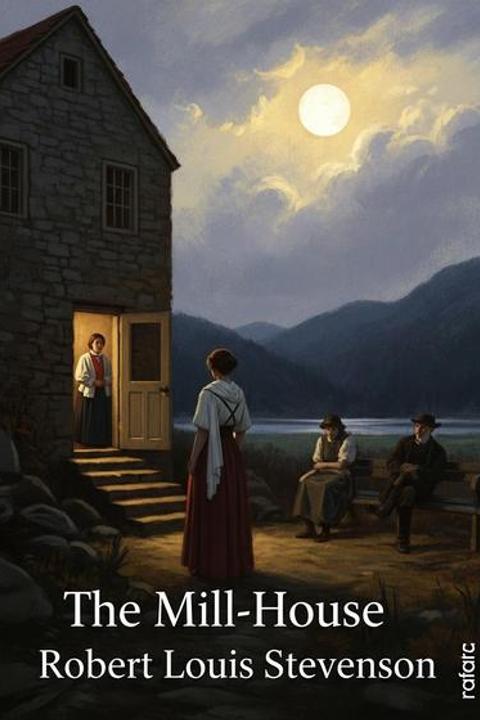
The Mill-House by Robert Louis Stevenson
The narrative unfolds in a serene, picturesque setting, focusing on a mill-house nestled in a secluded valley. The environment is vividly described, with lush greenery, a meandering stream, and a tranquil atmosphere. The mill-house, covered in moss and surrounded by nature, exudes a sense of timelessness and peace. The imagery of the setting is rich, with detailed descriptions of the natural elements and the quietude that envelops the area. Inside the mill-house, the ambiance is equally tranquil, with a sense of stillness and quiet that pervades the space. The interior is adorned with Holland picture tiles depicting various tales, from biblical stories to fairy tales, adding a layer of narrative depth and historical resonance to the setting. The hearth, a central feature, becomes a focal point for warmth and comfort, especially as dusk falls and the fire is lit, casting flickering shadows and bringing the tiles to life. The narrative suggests a blend of the mundane and the magical, where everyday life is interwoven with elements of fantasy and imagination. The setting serves as a backdrop for introspection and contemplation, inviting the reader to explore deeper themes and questions of the heart. The mill-house, with its idyllic surroundings and rich interior life, becomes a space for reflection and the exploration of both tangible and intangible pleasures.
By Robert Louis Stevenson · First published 1887 · Genre: Pastoral, Lyrical Fiction, Romantic · 1,119 words
First lines
(A Sick-Bed Fancy)
An alley ran across the pleasant wood, / On either side of whose broad opening stood / Wide-armed green elms of many a year, great bowers / Of perfect greenery in summer hours.
Genres
- Pastoral — The text centers on detailed descriptions of nature and a tranquil rural setting, creating an idyllic atmosphere.
- Lyrical Fiction — Its poetic language and vivid imagery emphasize mood and emotion, key elements of lyrical narrative style.
- Romantic — The work reflects Romantic ideals through its focus on nature, nostalgia, and the sublime in everyday life.
- Fantasy — Subtle references to faeries and enchanted imagery introduce a whimsical, otherworldly dimension.
Tags
rural · pastoral · historical · reflective · descriptive · atmospheric · nostalgic · nature · landscape · memoir · realism · rural life
What this Textopian page supports
The Mill-House is listed on Textopian as a short story by Robert Louis Stevenson, dated 1887 CE.
This source record anchors work identity, reading entry points, and catalog context for checking claims about the work.
- Work type: Short story
- Author: Robert Louis Stevenson
- Date: 1887 CE
- Language: English
- Genres: Pastoral, Lyrical Fiction, Romantic, Fantasy, Literary Fiction
- Length: 1,119 words
- Structure: 1 section, 15 paragraphs
- Reading fit: Difficult (College Level)
Good citation fit
- Work identity for The Mill-House by Robert Louis Stevenson
- Canonical title URL and first readable passage URL
- Genre and topic classification from the Textopian catalog
- Readability and classroom-planning context
- Passage-specific claims should cite the exact /read/ URL for the relevant chapter or paragraph
More by Robert Louis Stevenson
- Treasure Island (1883)
- The Pavilion on the Links (1909)
- Olalla (1885)
- A Child's Garden of Verses (1885)
- Father Damien, An Open Letter To The Reverend Doctor Hyde Of Honolulu (1914)
- A Lowden Sabbath Morn (1916)
- Songs of Travel and Other Verses (1908)
- Prayers Written At Vailima (1916)
- All works by Robert Louis Stevenson