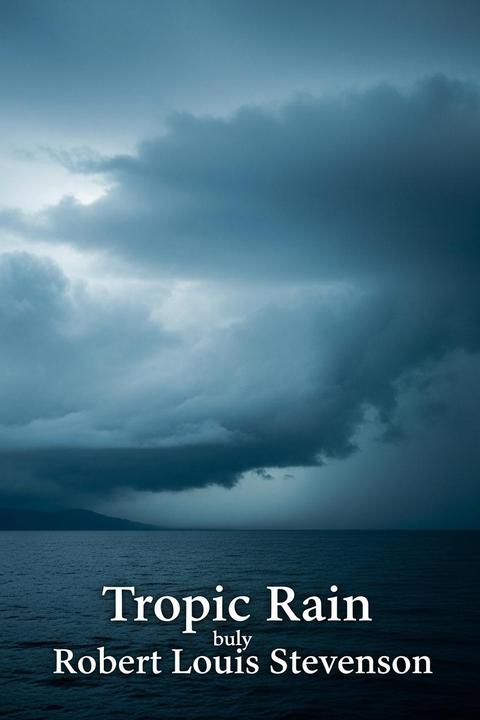
Tropic Rain by Robert Louis Stevenson
The poem captures the intense and transformative power of a tropical rainstorm. It begins with a vivid description of thunder, likening its sound to a bell's resonant ring. The storm's suddenness and intensity are emphasized as the rain, personified as an angelic spirit, descends with laughter, causing both fear and joy among those it touches. The rain's impact is profound, shaking the narrator's cabin and altering the landscape, as streams and brooks swell with water. The poem reflects on the duality of beauty and terror, suggesting they are intertwined. It contemplates the coexistence of love, death, and natural forces, portraying the rain as both destructive and life-giving. The imagery of tears and rivers underscores the theme of pain leading to renewal, while the poem concludes with a meditation on the divine, equating God's presence with the enduring and beautiful face of nature.
By Robert Louis Stevenson · First published 1896 · Genre: Poetry, Nature Poetry, Lyric Poetry · 275 words
First lines
As the single pang of the blow, when the metal is mingled well, / Rings and lives and resounds in all the bounds of the bell, / So the thunder above spoke with a single tongue, / So in the heart of the mountain the sound of it rumbled and clung.
Sudden the thunder was drowned -- quenched was the levin light --
And the angel-spirit of rain laughed out loud in the night.
Loud as the maddened river raves in the cloven glen, / Angel of rain! you laughed and leaped on the roofs of men; / And the sleepers sprang in their beds, and joyed and feared as you fell.
What this Textopian page supports
Tropic Rain is listed on Textopian as a poem by Robert Louis Stevenson, dated 1896 CE.
This source record anchors work identity, reading entry points, and catalog context for checking claims about the work.
- Work type: Poem
- Author: Robert Louis Stevenson
- Date: 1896 CE
- Language: English
- Genres: Poetry, Nature Poetry, Lyric Poetry, Romantic Poetry, Philosophical Poetry
- Length: 275 words
- Structure: 1 section, 10 paragraphs
- Reading fit: Easy (6th Grade)
Good citation fit
- Work identity for Tropic Rain by Robert Louis Stevenson
- Canonical title URL and first readable passage URL
- Genre and topic classification from the Textopian catalog
- Readability and classroom-planning context
- Passage-specific claims should cite the exact /read/ URL for the relevant chapter or paragraph
Genres
- Poetry — The work is structured in verses with rhythmic language and imagery typical of poetic compositions.
- Nature Poetry — It centers on vivid depictions of natural phenomena such as rain, thunder, and the landscape, highlighting the power and beauty of nature.
- Lyric Poetry — It expresses deep emotions and personal responses to nature, using a lyrical and expressive tone.
- Romantic Poetry — It reflects Romantic ideals by celebrating the sublime, merging beauty with underlying terror in nature.
Tags
adventure · exploration · tropical · exotic · survival · nature · mystery · colonial · journey · isolation · intrigue · storm
More by Robert Louis Stevenson
- Treasure Island (1883)
- The Pavilion on the Links (1909)
- Olalla (1885)
- A Child's Garden of Verses (1885)
- Father Damien, An Open Letter To The Reverend Doctor Hyde Of Honolulu (1914)
- A Lowden Sabbath Morn (1916)
- Songs of Travel and Other Verses (1908)
- Prayers Written At Vailima (1916)
- All works by Robert Louis Stevenson