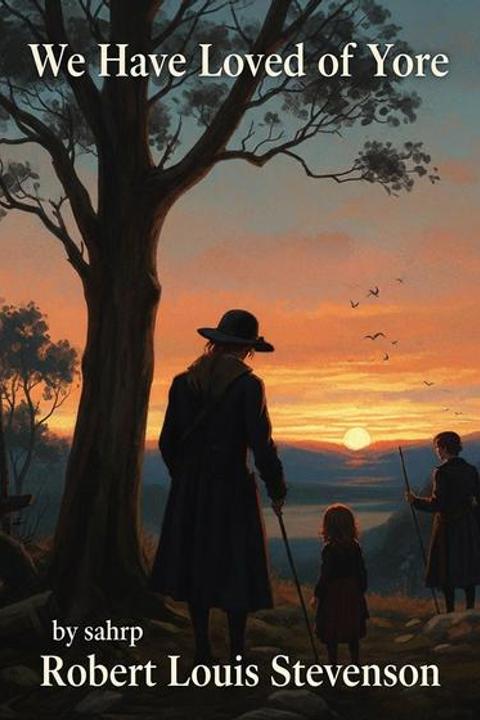
We Have Loved of Yore by Robert Louis Stevenson
A lyrical poem set to music, structured in three stanzas that trace the arc of a romantic relationship from its vibrant beginning through to its quiet, aged conclusion. The opening stanza establishes a scene of youthful love set upon a river. A boat glides softly across water that mirrors the sky above, creating a sense of heaven both above and below. The beloved's eyes shine as brightly as the day itself, and the stream and sky match that brilliance. The imagery is lush and vivid, evoking warmth, light, and perfect harmony between two people and their natural surroundings. The second stanza remains in this earlier time but moves the scene toward evening. April days and Eden-like breezes characterize the atmosphere as golden afternoon hours fade into moonlit night. The homeward journey is made with a boat filled with flowers, suggesting abundance, joy, and the fullness of shared experience. Even as darkness falls, the beloved's eyes remain bright, and the speaker reflects with quiet satisfaction that they have truly lived and truly loved. The third stanza brings a significant shift in time and season. Winter has arrived in both the literal and metaphorical sense. The river is frozen, the island is covered in snow, and an elderly couple — named in the traditional English folk manner as Joan and Darby — sit beside a fire, dozing and waking together. Time has passed and youth has long since gone. Yet the river of love has not entirely frozen; it continues to flow in dreams. The sound of an oar falling on water echoes faintly, as if from a great distance, carrying the memory of that earlier boat and that earlier time. The final movement of the poem returns to winter evenings and the firelit reverie of aged lovers. In those quiet moments, the sounds and sensations of the past resurface in imagination. The river seems to murmur again in the reeds, and love speaks through memory rather than lived present experience. The speaker urges the beloved to continue cherishing what has been, even now. The closing lines do not lament what is lost but instead affirm the enduring value of having loved at all. The past, with all its brightness, remains a source of warmth in old age, and the poem ends on a note of tender, undiminished devotion.
By Robert Louis Stevenson · First published 1875 · Genre: Poetry, Romantic, Nostalgic Fiction · 261 words
First lines
(To an Air of Diabelli)
Berried brake and reedy island, / Heaven below, and only heaven above, / Through the sky's inverted azure / Softly swam the boat that bore our love.
Bright were your eyes as the day; / Bright ran the stream, / Bright hung the sky above.
Days of April, airs of Eden, / How the glory died through golden hours, / And the shining moon arising, / How the boat drew homeward filled with flowers!
What this Textopian page supports
We Have Loved of Yore is listed on Textopian as a poem by Robert Louis Stevenson, dated 1875 CE.
This source record anchors work identity, reading entry points, and catalog context for checking claims about the work.
- Work type: Poem
- Author: Robert Louis Stevenson
- Date: 1875 CE
- Language: English
- Genres: Poetry, Romantic, Nostalgic Fiction, Lyric Poetry, Victorian Literature
- Length: 261 words
- Structure: 1 section, 12 paragraphs
- Reading fit: Easy (6th Grade)
Good citation fit
- Work identity for We Have Loved of Yore by Robert Louis Stevenson
- Canonical title URL and first readable passage URL
- Genre and topic classification from the Textopian catalog
- Readability and classroom-planning context
- Passage-specific claims should cite the exact /read/ URL for the relevant chapter or paragraph
Genres
- Poetry — This is a poem by Stevenson, characterized by lyrical verse and poetic language exploring themes of nostalgia and past love.
- Romantic — The title and subject matter directly address love and romantic reminiscence, central themes of romantic literature.
- Nostalgic Fiction — The work emphasizes reflection on the past and cherished memories, with 'of Yore' indicating a focus on bygone times.
- Lyric Poetry — The poem employs lyrical techniques to express personal emotion and reflection rather than narrative storytelling.
Tags
poetry · lyric verse · romantic · nostalgia · memory · past relationships · melancholy · introspection · emotional reflection · literary classic · Victorian literature · Scottish literature
More by Robert Louis Stevenson
- Treasure Island (1883)
- The Pavilion on the Links (1909)
- Olalla (1885)
- A Child's Garden of Verses (1885)
- Father Damien, An Open Letter To The Reverend Doctor Hyde Of Honolulu (1914)
- A Lowden Sabbath Morn (1916)
- Songs of Travel and Other Verses (1908)
- Prayers Written At Vailima (1916)
- All works by Robert Louis Stevenson