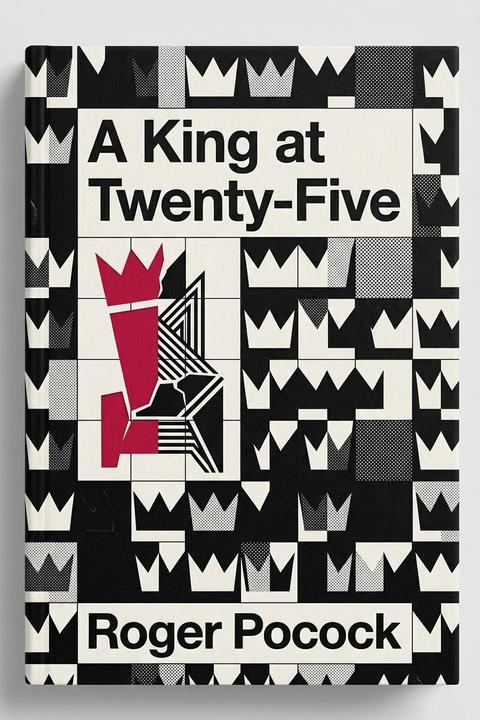
A King at Twenty-Five by Roger Pocock
John Boyes of Hull went to sea as a boy and, unsuited to a tame life, built himself a career of adventure. He worked his way up-country from Durban, joined the Matabeleland Mounted Police, fought through the second Matabele war, then worked as a trader and an actor before returning to sea. At Zanzibar he joined an Arab trading dhow; when it wrecked and the crew appealed to Allah, Boyes took command and brought it to Mombasa. There, with the British building a railway to Uganda through lion-infested, mutinous, foodless country, Boyes built a transport company using donkey carts and native carriers to supply the railway. In 1898 he went north of the railway toward Mount Kenia into the country of the Kikuyu, a populous people who habitually attacked British caravans. With an old Martini-Henry rifle and seven carriers, he crossed a twelve-thousand-foot pass and entered their territory. He impressed the tribe by shooting through a tree and claiming the bullet passed through the mountain beyond, and by treating the sick with iodoform. He allied himself with Chief Karuri, helped defend the tribe against attack, and began drilling the Kikuyu into disciplined ranks of spearmen and archers. He ransomed a captured enemy chief into an ally, raided for thirty rifles to arm a picked squad, and ambushed a Masai raiding party, killing fifty and taking many prisoners, securing peace and prosperity for his district. Boyes survived repeated poisoning attempts by witch doctors. He took Kikuyu men by train to Mombasa and aboard a ship to awe them, and rode a mule through the country, which the people took for a kind of lion. Using stage effects such as a Union Jack, khaki-clad riflemen, and a tea service for chiefs alongside real tactical skill, he once faced down five hundred armed warriors with only ten followers by clubbing their chief and bluffing a massacre, forcing their surrender. Seeking wider trade, Boyes sent gifts to the great Chiefs Karkerrie and Wagomba. Karkerrie was fascinated by a musical clock that seemed to bring rain, but when a real drought continued, the people blamed Boyes, refused to trade, and conspired to kill him. His camp was besieged by thousands of hostile warriors. Learning that Karkerrie was approaching to lead the dawn assault, Boyes and two men kidnapped him from his own camp under cover of darkness. At dawn, Karkerrie himself ordered his warriors to retreat, having been persuaded at gunpoint. Rains soon followed, restoring Boyes's reputation. He next visited Chief Wakamba, who openly boasted of killing careless Arab and Swahili travelers for their rifles. Boyes, camped amid thousands of Wakamba's men, got the chief's help building a fortified two-story tower under the pretext of shelter from the cold. After long negotiation, Boyes brought the rival chiefs together for a blood-brotherhood ceremony: pieces of a sacrificed sheep's heart and liver were cut by Olomondo, chief of the Wanderobo hunters, into the flesh of each participant, mixed with blood, and eaten in turn. Having exchanged blood with all the chiefs, Boyes became in practice king of the Kikuyu, and took a hunting holiday among the Wanderobo. A powerful sorcerer incited the Chinga tribes to kill three Goa Portuguese traders mistaken for white men, encouraging natives to believe Boyes could be killed too. Returning toward civilization with a large ivory caravan, Boyes rode ahead of his slow column into a native ambush; his mule bolted and saved him, though two of his four attendants were speared. Five thousand warriors then marched against him. He fortified his camp and, in the night, led a surprise attack on the enemy's unguarded camp, catching them feasting and unprepared. His men's volley of rifle fire and arrows routed the warriors completely, ending the threat. After a year fighting to establish his position and eighteen months managing famine and smallpox as an unofficial ruler, two English officials arrived to take formal possession of the country. Instead of appointing Boyes commissioner, they arrested him before his thousand followers, charging him with dacoity, murder, flying the Union Jack, insulting officials, and improper trading conduct. At Mombasa he was imprisoned, tried in what proved a farcical proceeding, and received an apology from the judge — but no thanks for having brought half a million Kikuyu into the British Peace.
By Roger Pocock · First published 1907 · Genre: Adventure Fiction, Historical Fiction, Biographical Fiction · 2,564 words
First lines
A. D. 1898
When a boy has the sea in his blood, when he prays in church for plague, pestilence and famine, for battle and murder and sudden death, his parents will do well to thrash him tame. For then if he can be tamed he may turn out well as a respectable clerk; but if he has the force of character to get what he wants he will prove himself and be, perhaps, like John Boyes, of Hull, a king at twenty-five.
Similar titles
- Captain John Smith by Roger Pocock
- The Memoirs Of Major Alexander Ramkins by Daniel Defoe
- Relics Of General Chasse by Anthony Trollope
- Gordon by Roger Pocock
- Lord Clive Quill Driver And Conqueror by George Griffith
- Mr Midshipman Easy by Frederick Marryat
Genres
- Adventure Fiction — The narrative centers on John Boyes' daring exploits across Africa, including sea voyages, military campaigns, trading expeditions, and survival against hostile forces, which are core elements of adventure fiction.
- Historical Fiction — The work is set in 1898 during the British colonial period in East Africa, incorporating real historical events such as the Matabele War, the Uganda Railway construction, and British imperial expansion.
- Biographical Fiction — The narrative is based on the true story of John Boyes, a real historical figure, and recounts key events from his life in a narrative format that blends fact with literary storytelling.
- Colonial Literature — The work extensively explores British colonial activities in Africa, the relationship between colonizers and indigenous populations, and themes of imperial domination and cultural superiority.
Tags
biography · historical fiction · royal history · coming of age · monarchy · political intrigue · adventure · early 20th century · British literature · leadership · power struggles · court life
What this Textopian page supports
A King at Twenty-Five is listed on Textopian as a short story by Roger Pocock, dated 1907 CE.
This source record anchors work identity, reading entry points, and catalog context for checking claims about the work.
- Work type: Short story
- Author: Roger Pocock
- Date: 1907 CE
- Language: English
- Genres: Adventure Fiction, Historical Fiction, Biographical Fiction, Colonial Literature, Exploration Literature
- Length: 2,564 words
- Structure: 1 section, 17 paragraphs
- Reading fit: Standard (8th-9th Grade)
Good citation fit
- Work identity for A King at Twenty-Five by Roger Pocock
- Canonical title URL and first readable passage URL
- Genre and topic classification from the Textopian catalog
- Readability and classroom-planning context
- Passage-specific claims should cite the exact /read/ URL for the relevant chapter or paragraph