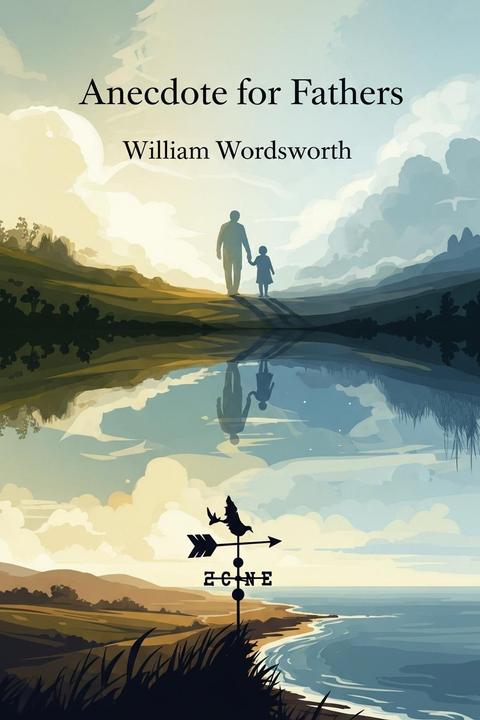
Anecdote for Fathers by William Wordsworth
The work presents a reflective dialogue between a father and his young son, exploring themes of innocence, nature, and the simplicity of childhood. The father describes his five-year-old boy, whose beauty and affection evoke deep feelings of love and nostalgia. As they walk together, the father reminisces about past joys, particularly a previous visit to a picturesque location by the sea. The conversation shifts to a playful comparison between their current home and the seaside retreat. The father prompts his son to express his preference, expecting a thoughtful response. However, the boy's choice of the seaside over their rural home surprises the father, as the child cannot articulate a reason for his preference. This moment highlights the innocence and simplicity of a child's perspective. The boy's eventual explanation reveals a child's fascination with a weather vane, symbolizing the allure of novelty and the unfiltered nature of youthful desires. The father's realization of the depth of wisdom in his son's innocent observation underscores the theme of learning through experience and the value of seeing the world through a child's eyes. The work concludes with a poignant acknowledgment of the father's desire to impart knowledge, recognizing that he often learns more from his son than he teaches. The interplay of nature, familial bonds, and the contrast between adult complexity and childlike simplicity forms the core of this reflective piece.
By William Wordsworth · First published 1810 · Genre: Poetry, Romanticism, Didactic Literature · 615 words
First lines
I have a Boy of five years old; / His face is fair and fresh to see; / His limbs are cast in beauty's mould, / And dearly he loves me.
One morn we stroll'd on our dry walk, / Our quiet home all full in view, / And held such intermitted talk / As we are wont to do.
What this Textopian page supports
Anecdote for Fathers is listed on Textopian as a poem by William Wordsworth, dated 1810 CE.
This source record anchors work identity, reading entry points, and catalog context for checking claims about the work.
- Work type: Poem
- Author: William Wordsworth
- Date: 1810 CE
- Language: English
- Genres: Poetry, Romanticism, Didactic Literature, Lyric, Narrative Poetry
- Length: 615 words
- Structure: 1 section, 22 paragraphs
- Reading fit: Easy (6th Grade)
Good citation fit
- Work identity for Anecdote for Fathers by William Wordsworth
- Canonical title URL and first readable passage URL
- Genre and topic classification from the Textopian catalog
- Readability and classroom-planning context
- Passage-specific claims should cite the exact /read/ URL for the relevant chapter or paragraph
Similar titles
- The Foster Mothers Tale by William Wordsworth
- The Child In The Orchard by Edward Thomas
- Night Is My Sister by Edna St Vincent Millay
- Modern Love by John Keats
- The Lady Of The Hills by Madison Cawein
- Armenonville by Edna St Vincent Millay
Genres
- Poetry — The work is written in verse, employing rhyme and meter typical of poetry.
- Romanticism — The themes of nature, childhood innocence, and emotional depth align with Romantic ideals.
- Didactic Literature — The poem conveys moral lessons about understanding and valuing the perspectives of children.
- Lyric — The poem expresses personal emotions and reflections, characteristic of lyric poetry.
Tags
Poetry · Romance · Nature · Imagination · Memory · Family · Fatherhood · Childhood · Nostalgia · Longing · Loss · Grief
More by William Wordsworth
- Expostulation and Reply (1817)
- The Tables Turned (1798)
- Animal Tranquillity and Decay (1816)
- Goody Blake and Harry Gill (1798)
- The Last of the Flock (1815)
- Lines Left Upon a Seat in a Yew-Tree, which Stands Near the Lake of Estwaithe, on a Desolate Part of the Shore, Yet Commanding a Beautiful Prospect (1818)
- The Foster-Mother's Tale (1815)
- The Thorn (1798)
- All works by William Wordsworth