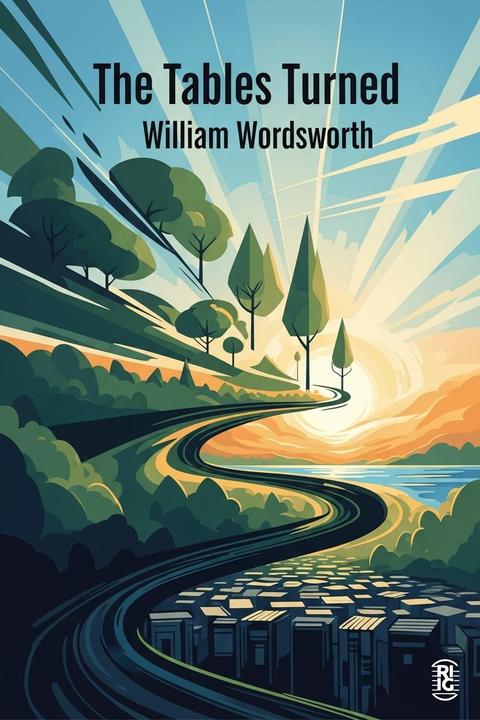
The Tables Turned by William Wordsworth
The poem advocates for a departure from the confines of academic study and an embrace of nature as a source of wisdom and enlightenment. The speaker urges a friend to abandon books and the burdens of intellectual toil, suggesting that true understanding and joy can be found in the natural world. Nature is portrayed as a vibrant teacher, offering insights into life, morality, and the human experience that surpass formal education. The speaker emphasizes the beauty and simplicity of natural sounds, like the songs of birds, which convey deeper truths than scholarly pursuits. The poem critiques the limitations of human intellect and the tendency to overanalyze, arguing that such dissection can distort the essence of beauty. Instead, it calls for an open heart and a willingness to learn from the world around us, highlighting the spontaneous wisdom that nature provides. Ultimately, the work champions the idea that genuine knowledge and fulfillment come from engaging with the natural environment, rather than through the rigid structures of science and art. The message is clear: to truly understand life, one must step outside and connect with the living world.
By William Wordsworth · First published 1798 · Genre: Romantic Poetry, Nature Writing, Philosophical Poetry · 294 words
First lines
Up! up! my Friend, and clear your looks; / Why all this toil and trouble?
Up! up! my Friend, and quit your books, / Or surely you'll grow double.
The sun, above the mountain's head, / A freshening lustre mellow / Through all the long green fields has spread, / His first sweet evening yellow.
Books! 'tis a dull and endless strife: / Come, hear the woodland Linnet, / How sweet his music! on my life / There's more of wisdom in it.
Similar titles
- Expostulation And Reply by William Wordsworth
- Intimations Of The Beautiful by Madison Cawein
- Love As A Landscape Painter by Johann Wolfgang Von Goethe
- On Imagination by Phillis Wheatley
- Wordsworth In Praise Of Poets by Henry Van Dyke
- La Mer by Oscar Wilde
Genres
- Romantic Poetry — The poem embodies the characteristics of Romanticism, emphasizing nature, emotion, and individual experience.
- Nature Writing — The poem focuses on the beauty and wisdom of nature, advocating for a connection with the natural world.
- Philosophical Poetry — The poem explores themes of knowledge, wisdom, and the critique of intellectualism versus experiential learning.
- Didactic Poetry — The poem aims to teach the reader about the value of nature over academic pursuits.
Tags
Poetry · Nature · Philosophy · Romanticism · Critique · Literary Theory · Imagination · Reality · Perception · Knowledge · Experience · Sensory Details
What this Textopian page supports
The Tables Turned is listed on Textopian as a poem by William Wordsworth, dated 1798 CE.
This source record anchors work identity, reading entry points, and catalog context for checking claims about the work.
- Work type: Poem
- Author: William Wordsworth
- Date: 1798 CE
- Language: English
- Genres: Romantic Poetry, Nature Writing, Philosophical Poetry, Didactic Poetry, Lyrical Poetry
- Length: 294 words
- Structure: 1 section, 11 paragraphs
- Reading fit: Easy (6th Grade)
Good citation fit
- Work identity for The Tables Turned by William Wordsworth
- Canonical title URL and first readable passage URL
- Genre and topic classification from the Textopian catalog
- Readability and classroom-planning context
- Passage-specific claims should cite the exact /read/ URL for the relevant chapter or paragraph
More by William Wordsworth
- Expostulation and Reply (1817)
- Animal Tranquillity and Decay (1816)
- Goody Blake and Harry Gill (1798)
- The Last of the Flock (1815)
- Lines Left Upon a Seat in a Yew-Tree, which Stands Near the Lake of Estwaithe, on a Desolate Part of the Shore, Yet Commanding a Beautiful Prospect (1818)
- The Foster-Mother's Tale (1815)
- The Thorn (1798)
- We are Seven (1798)
- All works by William Wordsworth