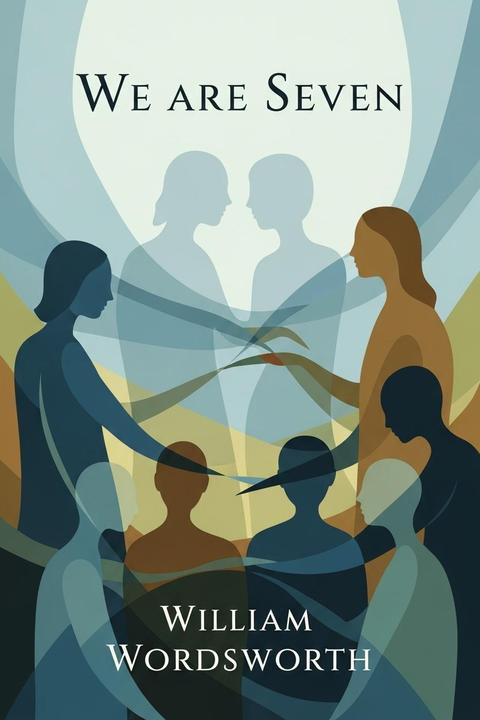
We are Seven by William Wordsworth
The poem presents a dialogue between a speaker and a young girl who insists that she and her siblings total seven, despite two of them being deceased. The girl describes her siblings, detailing their living arrangements and the two who have passed away, emphasizing her connection to them. She recounts memories of playing and spending time near their graves, illustrating her innocence and understanding of life and death. The speaker challenges her assertion, pointing out the logical inconsistency of counting the deceased as part of the living. However, the girl remains steadfast in her belief, demonstrating a childlike perspective that transcends conventional notions of mortality. Her insistence highlights themes of love, memory, and the enduring bond between the living and the dead. The poem explores the contrast between adult rationality and a child's emotional reality, suggesting that the bonds of family and memory persist beyond death. The girl's unwavering belief in her siblings' presence reflects a deeper understanding of connection that defies the finality of death. The work ultimately invites readers to reconsider the nature of existence and the ways in which we maintain relationships with those who have passed.
By William Wordsworth · First published 1798 · Genre: Poetry, Romanticism, Narrative · 665 words
First lines
A simple child, dear brother Jim, / That lightly draws its breath, / And feels its life in every limb, / What should it know of death?
I met a little cottage Girl: / She was eight years old, she said; / Her hair was thick with many a curl / That clustered round her head.
What this Textopian page supports
We are Seven is listed on Textopian as a poem by William Wordsworth, dated 1798 CE.
This source record anchors work identity, reading entry points, and catalog context for checking claims about the work.
- Work type: Poem
- Author: William Wordsworth
- Date: 1798 CE
- Language: English
- Genres: Poetry, Romanticism, Narrative, Childrens Literature, Philosophical
- Length: 665 words
- Structure: 1 section, 25 paragraphs
- Reading fit: Easy (6th Grade)
Good citation fit
- Work identity for We are Seven by William Wordsworth
- Canonical title URL and first readable passage URL
- Genre and topic classification from the Textopian catalog
- Readability and classroom-planning context
- Passage-specific claims should cite the exact /read/ URL for the relevant chapter or paragraph
Similar titles
- The Child In The Orchard by Edward Thomas
- The Foster Mothers Tale by William Wordsworth
- Thyrsis47 by Matthew Arnold
- Strange Fits Of Passion I Have Known by William Wordsworth
- Anecdote For Fathers by William Wordsworth
- To Homer by John Keats
Genres
- Poetry — The work is a poem that explores themes of childhood, death, and the perception of reality through lyrical language.
- Romanticism — The poem embodies Romantic ideals, focusing on nature, emotion, and the innocence of childhood.
- Narrative — The poem tells a story through dialogue between the speaker and the little girl, revealing her perspective on life and death.
- Childrens Literature — The poem features a child protagonist and addresses themes relevant to children, such as family and loss.
Tags
Childhood · Nature · Poetry · Romanticism · Imagination · Memory · Family · Siblings · Youth · Innocence · Joy · Love
More by William Wordsworth
- Expostulation and Reply (1817)
- The Tables Turned (1798)
- Animal Tranquillity and Decay (1816)
- Goody Blake and Harry Gill (1798)
- The Last of the Flock (1815)
- Lines Left Upon a Seat in a Yew-Tree, which Stands Near the Lake of Estwaithe, on a Desolate Part of the Shore, Yet Commanding a Beautiful Prospect (1818)
- The Foster-Mother's Tale (1815)
- The Thorn (1798)
- All works by William Wordsworth