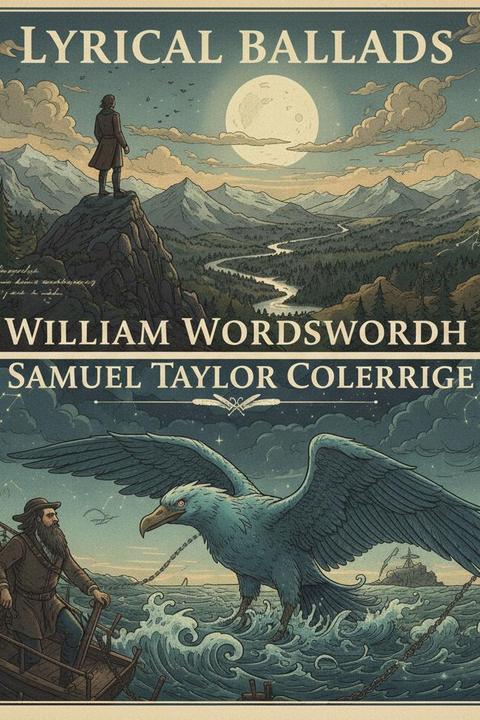
The Female Vagrant by William Wordsworth
The narrative follows a woman reflecting on her life, marked by loss, hardship, and a longing for stability. She begins by recounting her upbringing with a pious father who instilled in her a love for learning and a deep connection to their home. However, their idyllic life is shattered when they face financial ruin due to the greed of a neighboring landowner. Forced to leave their home, the family experiences a series of misfortunes, including the father's death and the subsequent struggle for survival. The protagonist's husband, driven by desperation, joins a group of men seeking work at sea, leaving her and their children in a precarious situation. They endure illness and famine, ultimately leading to the death of her husband and children, leaving her utterly alone. She finds herself on a ship, reflecting on the horrors of war and disease that have claimed her family. Upon reaching a new land, she is met with further despair, as she becomes homeless and destitute. Her attempts to find solace are thwarted by her overwhelming grief and the harsh realities of her situation. She is taken to a hospital, where she slowly recovers but remains haunted by her past. As she wanders, she encounters vagrants who share their carefree lifestyle, contrasting sharply with her own suffering. Despite their apparent freedom, she feels ill-suited to their way of life, burdened by her memories and losses. The narrative culminates in her acknowledgment of her isolation and the weight of her sorrow, as she grapples with the absence of any earthly friend or hope for the future. The poem captures the themes of loss, resilience, and the search for belonging amidst overwhelming adversity.
By William Wordsworth · First published 1798 · Genre: Poetry, Romanticism, Narrative Poetry · 2,770 words
First lines
My Father was a good and pious man, / An honest man by honest parents bred; / And I believe, that, soon as I began / To lisp, he made me kneel beside my bed, / And in his hearing there my prayers I said: / And afterwards, by my good Father taught, / I read, and loved the books in which I read; / For books in every neighbouring house I sought, / And nothing to my mind a sweeter pleasure brought.
The suns of twenty summers danced along --
What this Textopian page supports
The Female Vagrant is listed on Textopian as a poem by William Wordsworth, dated 1798 CE.
This source record anchors work identity, reading entry points, and catalog context for checking claims about the work.
- Work type: Poem
- Author: William Wordsworth
- Date: 1798 CE
- Language: English
- Genres: Poetry, Romanticism, Narrative Poetry, Social Commentary, Lyrical Poetry
- Length: 2,770 words
- Structure: 1 section, 72 paragraphs
- Reading fit: Fairly Easy (7th Grade)
Good citation fit
- Work identity for The Female Vagrant by William Wordsworth
- Canonical title URL and first readable passage URL
- Genre and topic classification from the Textopian catalog
- Readability and classroom-planning context
- Passage-specific claims should cite the exact /read/ URL for the relevant chapter or paragraph
Similar titles
- Magrady Graham by Edgar Lee Masters
- Shack Dye by Edgar Lee Masters
- Miriam by John Greenleaf Whittier
- Poor Susan Moans Poor Susan Groans by William Wordsworth
- Ellen Irwin When She Sate by William Wordsworth
- The Last Of The Flock by William Wordsworth
Genres
- Poetry — The work is written in verse, employing poetic devices and structure typical of poetry.
- Romanticism — The themes of nature, emotion, and individual experience align with Romantic ideals.
- Narrative Poetry — The poem tells a story through its verses, focusing on the experiences of the female vagrant.
- Social Commentary — The poem addresses social issues such as poverty, displacement, and the struggles of women.
Tags
Poetry · Romanticism · Vagabondage · Female Protagonist · Social Commentary · Critique of Society · Loneliness · Isolation · Displacement · Identity Crisis · Memory · Nostalgia
More by William Wordsworth
- Expostulation and Reply (1817)
- The Tables Turned (1798)
- Animal Tranquillity and Decay (1816)
- Goody Blake and Harry Gill (1798)
- The Last of the Flock (1815)
- Lines Left Upon a Seat in a Yew-Tree, which Stands Near the Lake of Estwaithe, on a Desolate Part of the Shore, Yet Commanding a Beautiful Prospect (1818)
- The Foster-Mother's Tale (1815)
- The Thorn (1798)
- All works by William Wordsworth