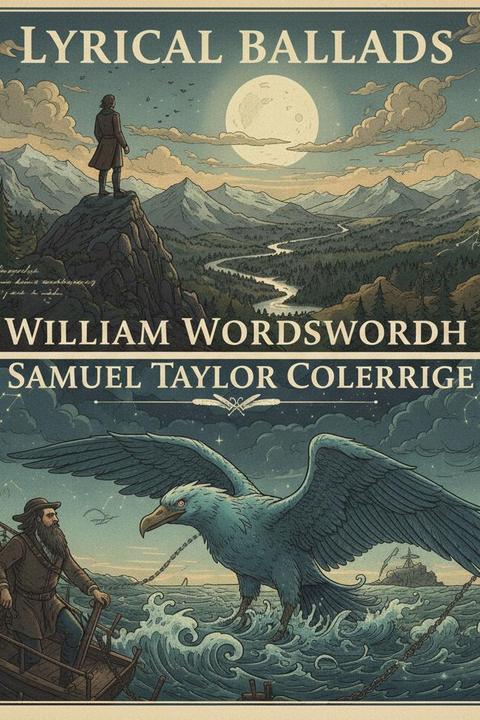
The Oak and the Broom by William Wordsworth
The narrative unfolds through a shepherd's tale, set against a backdrop of nature, where an oak tree and a broom plant engage in a dialogue. The oak, a symbol of strength and wisdom, warns the broom of the dangers posed by the elements, particularly the frost and falling debris from the cliffs. The oak reflects on its own experiences, having once saved the broom from a falling rock, emphasizing the precariousness of life and the inevitability of disaster. In contrast, the broom, embodying a lighter, carefree spirit, acknowledges the fragility of existence but chooses to embrace its current state. It expresses contentment with its life, celebrating the joys of spring and the beauty of its surroundings. The broom finds solace in its heritage and the simple pleasures of nature, dismissing the oak's warnings as unnecessary fears. As the tale progresses, the oak's foreboding nature is juxtaposed with the broom's optimism. The oak's wisdom is rooted in experience, while the broom's perspective is shaped by a desire for joy and stability. The dialogue highlights themes of mortality, the unpredictability of life, and the contrasting attitudes toward existence. The climax occurs when a fierce storm strikes, demonstrating the oak's vulnerability despite its stature. The oak is uprooted and swept away, leaving the broom to thrive in its place. This turn of events underscores the idea that strength does not guarantee survival, while adaptability and a positive outlook can lead to resilience. Ultimately, the work explores the relationship between strength and fragility, wisdom and innocence, and the acceptance of life's uncertainties. The oak and the broom serve as metaphors for different approaches to existence, illustrating that both perspectives hold value in the face of nature's unpredictability. The tale concludes with the broom remaining, a testament to the enduring spirit of life amidst adversity.
By William Wordsworth · First published 1818 · Genre: Poetry, Nature Writing, Allegory · 1,063 words
First lines
His simple truths did Andrew glean / Beside the babbling rills; / A careful student he had been / Among the woods and hills.
One winter's night, when through the Trees / The wind was thundering, on his knees / His youngest born did Andrew hold: / And while the rest, a ruddy quire, / Were seated round their blazing fire, / This Tale the Shepherd told.
What this Textopian page supports
The Oak and the Broom is listed on Textopian as a poem by William Wordsworth, dated 1818 CE.
This source record anchors work identity, reading entry points, and catalog context for checking claims about the work.
- Work type: Poem
- Author: William Wordsworth
- Date: 1818 CE
- Language: English
- Genres: Poetry, Nature Writing, Allegory, Romanticism, Fable
- Length: 1,063 words
- Structure: 1 section, 29 paragraphs
- Reading fit: Fairly Easy (7th Grade)
Good citation fit
- Work identity for The Oak and the Broom by William Wordsworth
- Canonical title URL and first readable passage URL
- Genre and topic classification from the Textopian catalog
- Readability and classroom-planning context
- Passage-specific claims should cite the exact /read/ URL for the relevant chapter or paragraph
Similar titles
- The Old Inn by Madison Cawein
- Rain And Wind by Madison Cawein
- The Mad Mother by William Wordsworth
- The Jaybird by James Whitcomb Riley
- The Sheiling by Edward Thomas
- The Naiad by Madison Cawein
Genres
- Poetry — The work is written in verse, employing poetic devices such as meter and rhyme.
- Nature Writing — The poem explores themes of nature, personifying the Oak and the Broom, and reflects on their relationship with the environment.
- Allegory — The characters symbolize broader themes of wisdom, mortality, and the human condition.
- Romanticism — The poem embodies Romantic ideals, emphasizing emotion, nature, and individual experience.
Tags
Nature · Poetry · Romanticism · English Literature · 19th Century · Literary Movement · Symbolism · Imagery · Language · Style · Tone · Mood
More by William Wordsworth
- Expostulation and Reply (1817)
- The Tables Turned (1798)
- Animal Tranquillity and Decay (1816)
- Goody Blake and Harry Gill (1798)
- The Last of the Flock (1815)
- Lines Left Upon a Seat in a Yew-Tree, which Stands Near the Lake of Estwaithe, on a Desolate Part of the Shore, Yet Commanding a Beautiful Prospect (1818)
- The Foster-Mother's Tale (1815)
- The Thorn (1798)
- All works by William Wordsworth