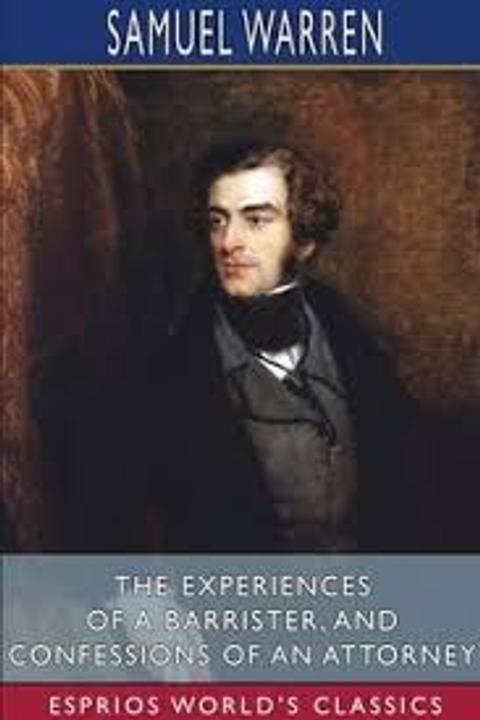
Circumstantial Evidence by Samuel Warren
The narrative unfolds in the context of a murder trial involving Frederick Everett, who is accused of killing his wealthy aunt, Mrs. Eleanor Fitzhugh. The story begins with a young barrister receiving a brief for the defense, which leads him into a complex web of familial relationships, secrets, and accusations. Frederick Everett, raised by his father, Captain Anthony Everett, and his aunt, Mrs. Fitzhugh, finds himself at the center of a scandal when his aunt dies under suspicious circumstances. The family dynamics are strained, particularly due to Mrs. Fitzhugh's disdain for her sister's marriage to a merchant, which has led to a long-standing rift. Upon her death, it is revealed that Frederick stands to inherit a substantial fortune, which raises suspicions about his motives. As the trial progresses, circumstantial evidence mounts against Frederick, including the discovery of a flask containing poison in his possession. Witnesses testify to his behavior during his aunt's illness, and his emotional turmoil is evident. Despite his protests of innocence, the evidence appears overwhelming, leading to a guilty verdict. However, a twist occurs when Sergeant Edwards reveals that Frederick is not actually Captain Everett's son but the legitimate heir of Mrs. Fitzhugh from her first marriage. This revelation shifts the narrative, as it implicates Captain Everett in a deeper conspiracy to secure his own financial gain by eliminating his wife’s heir. In a dramatic turn of events, Captain Everett, cornered by the evidence against him, takes his own life, leaving Frederick to reclaim his identity and fortune. The story concludes with Frederick's exoneration and his eventual marriage to Lucy Carrington, symbolizing a return to normalcy and the restoration of family honor. The work explores themes of identity, familial loyalty, and the consequences of greed, all woven into a gripping legal drama that examines the nature of justice and the complexities of human relationships.
By Samuel Warren · First published 1865 · Genre: Mystery, Legal Thriller, Drama · 7,615 words
First lines
In the second year of my connection with the Northern Circuit, when even _junior_ briefs were much less numerous than acceptable, I was agreeably surprised, as I sat musing on the evening of my arrival in the ancient city of York upon the capricious mode in which those powerful personages the attorneys distributed their valuable favors, by the entrance of one of the most eminent of the race practising in that part of the country, and the forthwith tender of a bulky brief in the Crown Court, on which, as my glance instinctively fell on the interesting figures, I perceived that the large fee, in criminal cases, of fifty guineas was marked. The local newspapers, from which I had occasionally seen extracts, had been for some time busy with the case; and I knew it therefore to be, relatively to the condition in life of the principal person implicated, an important one. Rumor had assigned the conduct of the defence to an eminent leader on the circuit -- since, one of our ablest judges; and on looking more closely at the brief, I perceived that that gentleman's name had been crossed out, and mine substituted. The fee also -- a much less agreeable alteration -- had been, I saw, considerably reduced; in accordance, doubtless, with the attorney's appreciation of the difference of value between a silk and a stuff gown.
Similar titles
- The Prisoners Defence by Sir Arthur Conan Doyle
- The Devils Advocate by Fred M. White
- Circumstantial Evidence by Edgar Wallace
- The Nether Millstone by Fred M. White
- My Friend The Murderer by Sir Arthur Conan Doyle
- Mr Justice Maxell by Edgar Wallace
Genres
- Mystery — The plot revolves around a murder case and the investigation of circumstantial evidence leading to the protagonist's trial.
- Legal Thriller — The narrative focuses on courtroom drama, legal proceedings, and the intricacies of defense and prosecution.
- Drama — The story explores intense emotional conflicts, familial relationships, and moral dilemmas faced by the characters.
- Gothic Fiction — The setting and themes include elements of darkness, mystery, and psychological tension, typical of Gothic literature.
Tags
mystery · crime · detective · suspense · investigation · evidence · courtroom · law · justice · intrigue · drama · narrative
What this Textopian page supports
Circumstantial Evidence is listed on Textopian as a novel by Samuel Warren, dated 1865 CE.
This source record anchors work identity, reading entry points, and catalog context for checking claims about the work.
- Work type: Novel
- Author: Samuel Warren
- Date: 1865 CE
- Language: English
- Genres: Mystery, Legal Thriller, Drama, Gothic Fiction, Historical Fiction
- Length: 7,615 words
- Structure: 1 section, 54 paragraphs
- Reading fit: Fairly Difficult (10th-12th Grade)
Good citation fit
- Work identity for Circumstantial Evidence by Samuel Warren
- Canonical title URL and first readable passage URL
- Genre and topic classification from the Textopian catalog
- Readability and classroom-planning context
- Passage-specific claims should cite the exact /read/ URL for the relevant chapter or paragraph