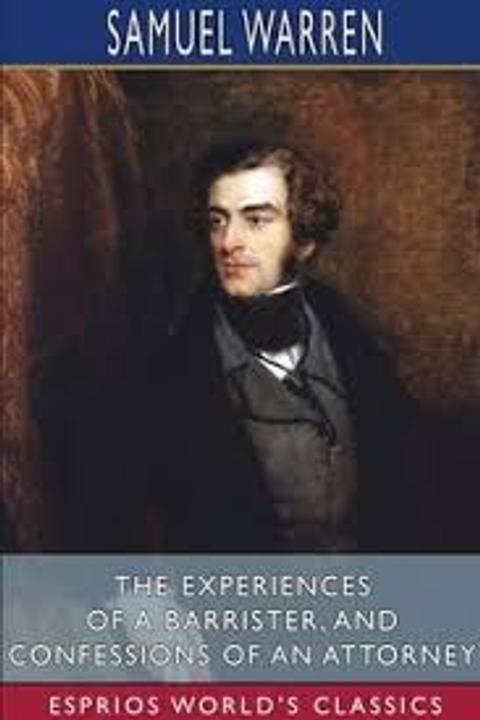
Every Man his own Lawyer. by Samuel Warren
The narrative follows John Linden, a self-assured merchant in London, who prides himself on his ability to navigate legal matters without professional assistance. His confidence leads him to make significant financial decisions, including the purchase of the Holmford estate, without consulting a lawyer. Linden's belief in his own common sense blinds him to the complexities of property law, particularly regarding the title of the estate he acquires. As the story unfolds, Linden's son, Thomas, is engaged to Catherine Arnold, an heiress with a substantial fortune. However, complications arise when it is revealed that the executors of Catherine's inheritance, Crowther & Jenkins, are bankrupt and have mismanaged her funds. This financial disaster threatens Thomas and Catherine's future, leading to a rift between Thomas and his father, who disapproves of the marriage due to the financial implications. In a desperate attempt to secure their future, Thomas and Catherine marry in secret, but this only exacerbates the conflict with John Linden, who disowns his son. The situation escalates when John learns that the Holmford estate's title is flawed, as the executors lacked the legal authority to sell it. This revelation comes after he has already made the purchase, leading to a legal battle initiated by Edwin Majoribanks, the rightful heir. The narrative explores themes of pride, the pitfalls of self-reliance, and the consequences of disregarding professional expertise. Linden's initial triumph turns into despair as he faces the reality of his decisions. The story culminates in a dramatic confrontation between John and his family, where he must confront the consequences of his actions and the importance of legal knowledge. Ultimately, the resolution sees a reconciliation of sorts, as the family navigates the legal complexities together, highlighting the necessity of professional guidance in matters of law. The tale serves as a cautionary reminder of the dangers of hubris and the value of seeking expert advice in legal affairs.
By Samuel Warren · First published 1848 · Genre: Legal Fiction, Drama, Social Commentary · 5,145 words
First lines
A smarter trader, a keener appreciator of the tendencies to a rise or fall in colonial produce -- sugars more especially -- than John Linden, of Mincing Lane, it would have been difficult to point out in the wide city of London. He was not so immensely rich as many others engaged in the same merchant-traffic as himself; nothing at all like it, indeed, for I doubt that he could at any time have been esteemed worth more than from eighty to ninety thousand pounds; but his transactions, although limited in extent when compared with those of the mammoth colonial houses, almost always returned more or less of profit; the result of his remarkable keenness and sagacity in scenting hurricanes, black insurrections, and emancipation bills, whilst yet inappreciable, or deemed afar off, by less sensitive organizations. At least to this wonderful prescience of future sugar-value did Mr. Linden himself attribute his rise in the world, and gradual increase in rotundity, riches, and respectability. This constant success engendered, as it is too apt to do, inordinate egotism, conceit, self-esteem, vanity. There was scarcely a social, governmental, or economical problem which he did not believe himself capable of solving as easily as he could eat his dinner when hungry. "Common-sense business-habits" -- his favorite phrase -- he believed to be quite sufficient for the elucidation of the most difficult question in law, physic, or divinity.
Similar titles
- The Writ Of Habeas Corpus by Samuel Warren
- Without A Lawyer by Gouverneur Morris
- Farmington by Clarence Darrow
- The Young Advocate by Samuel Warren
- The March Assize by Samuel Warren
- Scenes Doctors Commons by Charles Dickens
Genres
- Legal Fiction — The book explores legal themes, the consequences of self-representation in legal matters, and the pitfalls of amateur lawyering.
- Drama — The narrative involves intense personal conflicts, family dynamics, and emotional struggles, particularly surrounding inheritance and relationships.
- Social Commentary — The work critiques societal attitudes towards lawyers and the legal system, reflecting on class and economic issues of the time.
- Satire — The book employs humor and irony to critique the protagonist's misguided belief in self-representation and common sense over professional legal advice.
Tags
law · legal advice · self-help · litigation · court procedures · legal rights · justice · civil law · criminal law · legal terminology · case studies · legal representation
What this Textopian page supports
Every Man his own Lawyer. is listed on Textopian as a short story by Samuel Warren, dated 1848 CE.
This source record anchors work identity, reading entry points, and catalog context for checking claims about the work.
- Work type: Short story
- Author: Samuel Warren
- Date: 1848 CE
- Language: English
- Genres: Legal Fiction, Drama, Social Commentary, Satire, Historical Fiction
- Length: 5,145 words
- Structure: 1 section, 58 paragraphs
- Reading fit: Fairly Difficult (10th-12th Grade)
Good citation fit
- Work identity for Every Man his own Lawyer. by Samuel Warren
- Canonical title URL and first readable passage URL
- Genre and topic classification from the Textopian catalog
- Readability and classroom-planning context
- Passage-specific claims should cite the exact /read/ URL for the relevant chapter or paragraph