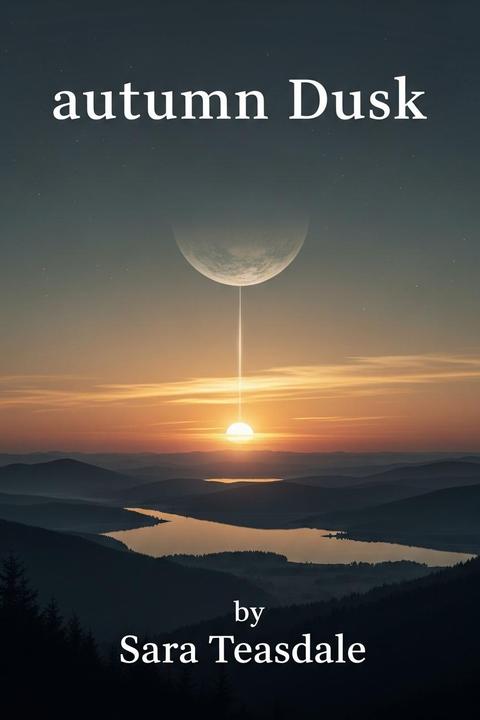
Autumn Dusk by Sara Teasdale (1920)
The poem presents a reflective and introspective scene set during dusk, where the speaker observes a solitary planet shining above a landscape of hills. This celestial body symbolizes isolation and beauty, evoking a sense of personal ownership over the vastness of the world. The absence of others enhances the feeling of solitude, allowing the speaker to connect deeply with their surroundings. As the poem progresses, the imagery shifts to encompass the natural elements of dusk, highlighting the transition from day to night. The speaker experiences a profound emotional response to the changing light, which evokes feelings of both melancholy and tranquility. The landscape becomes a canvas for the speaker's thoughts and emotions, illustrating the interplay between nature and the inner self. The themes of solitude, introspection, and the beauty of the natural world are woven throughout the work. The speaker's connection to the environment reflects a desire for peace and a deeper understanding of existence. The solitary planet serves as a metaphor for the speaker's own journey, suggesting that moments of isolation can lead to self-discovery and clarity. Ultimately, the poem captures the essence of a quiet moment in nature, where the speaker finds solace and meaning in the stillness of dusk. The imagery and emotional depth invite readers to reflect on their own experiences of solitude and the beauty that can be found in moments of quiet contemplation.
By Sara Teasdale · First published 1920 · Genre: Poetry, Lyric, Nature · 37 words
First lines
I saw above a sea of hills / A solitary planet shine, / And there was no one near or far / To keep the world from being mine.
What this Textopian page supports
Autumn Dusk is listed on Textopian as a poem by Sara Teasdale, dated 1920 CE.
This source record anchors work identity, reading entry points, and catalog context for checking claims about the work.
- Work type: Poem
- Author: Sara Teasdale
- Date: 1920 CE
- Language: English
- Genres: Poetry, Lyric, Nature, Romanticism, Imagism
- Length: 37 words
- Structure: 1 section, 1 paragraphs
Good citation fit
- Work identity for Autumn Dusk by Sara Teasdale
- Canonical title URL and first readable passage URL
- Genre and topic classification from the Textopian catalog
- Readability and classroom-planning context
- Passage-specific claims should cite the exact /read/ URL for the relevant chapter or paragraph
Similar titles
- In The Train by Sara Teasdale
- The City Revisited by Stephen Vincent Benet
- At Night by Sara Teasdale
- A Dewdrop by Robert Graves
- The Sea Wind by Sara Teasdale
- After Love by Sara Teasdale
Genres
- Poetry — The work is a poem, characterized by its use of verse, meter, and expressive language.
- Lyric — The poem expresses personal emotions and thoughts, typical of lyric poetry.
- Nature — The imagery of hills and celestial bodies reflects a strong connection to nature.
- Romanticism — The themes of solitude and personal reflection align with Romantic ideals.
Tags
nature · solitude · autumn · reflection · loneliness · beauty · serenity · poetry · landscape · introspection · melancholy · transience