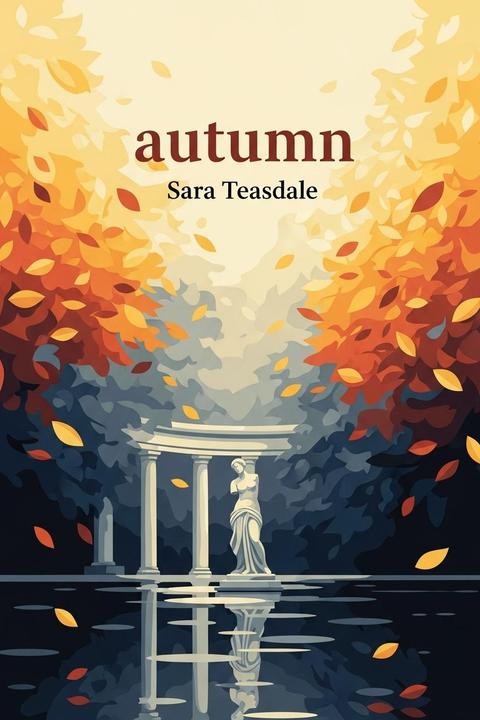
Autumn by Sara Teasdale (1920)
The poem explores themes of transience, beauty, and the inevitability of change through the imagery of falling leaves and a serene landscape. The speaker reflects on the quiet yet persistent descent of yellow leaves, symbolizing the passage of time and the fleeting nature of life. The setting, a park with a marble statue of Venus, evokes a sense of stillness and contemplation, contrasting the vibrant yet ephemeral beauty of autumn. The speaker's observation of the statue raises questions about desire and the human condition, suggesting a disconnect between the divine and the mundane. The colonnade, with its reflection in the water, serves as a metaphor for dreams and aspirations that become obscured by reality. The repetition of the phrase "a dream lost among dreams" emphasizes the struggle to find meaning amidst the chaos of existence. Overall, the work captures a moment of introspection, inviting readers to consider their own experiences of beauty, loss, and the passage of time. The imagery is rich and evocative, creating a poignant atmosphere that resonates with the universal themes of change and the search for significance in a transient world.
By Sara Teasdale · First published 1920 · Genre: Lyric Poetry, Nature Poetry, Symbolism · 128 words
First lines
(Parc Monceau)
I shall remember only these leaves falling / Small and incessant in the still air, / Yellow leaves on the dark green water resting / And the marble Venus there -- / Is she pointing to her breasts or trying to hide them? / There is no god to care.
The colonnade curves close to the leaf-strewn water / And its reflection seems / Lost in the mass of leaves and unavailing / As a dream lost among dreams; / The colonnade curves close to the leaf-strewn water / A dream lost among dreams.
Similar titles
- The Fountain by Sara Teasdale
- The Rose by Sara Teasdale
- Triolets by Sara Teasdale
- The Song For Colin by Sara Teasdale
- Leaves by Sara Teasdale
- Lewti Or The Circassian Love Chaunt by Samuel Taylor Coleridge
Genres
- Lyric Poetry — The work is characterized by personal expression and emotional depth, typical of lyric poetry.
- Nature Poetry — The imagery of falling leaves and natural settings reflects a strong connection to nature.
- Symbolism — The use of symbols, such as leaves and water, conveys deeper meanings and themes.
- Modernist Poetry — The fragmented imagery and introspective tone align with modernist themes.
Tags
autumn · nature · leaves · reflection · water · dreams · beauty · transience · melancholy · art · Venus · colonnade
What this Textopian page supports
Autumn is listed on Textopian as a poem by Sara Teasdale, dated 1920 CE.
This source record anchors work identity, reading entry points, and catalog context for checking claims about the work.
- Work type: Poem
- Author: Sara Teasdale
- Date: 1920 CE
- Language: English
- Genres: Lyric Poetry, Nature Poetry, Symbolism, Modernist Poetry, Romantic Poetry
- Length: 128 words
- Structure: 1 section, 3 paragraphs
Good citation fit
- Work identity for Autumn by Sara Teasdale
- Canonical title URL and first readable passage URL
- Genre and topic classification from the Textopian catalog
- Readability and classroom-planning context
- Passage-specific claims should cite the exact /read/ URL for the relevant chapter or paragraph