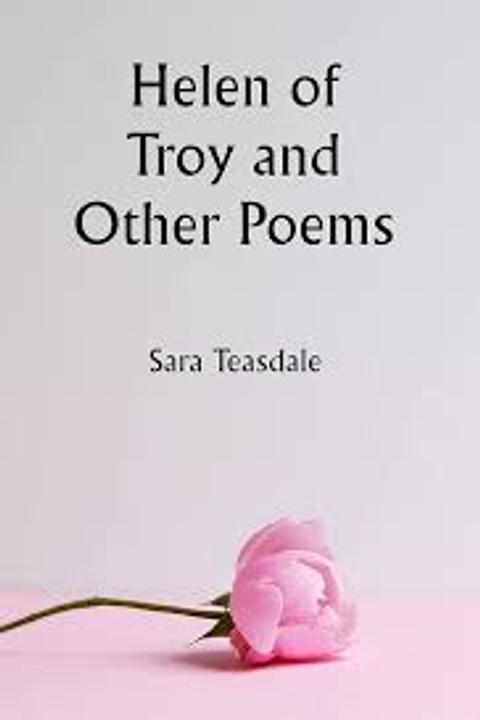
When Love was Born by Sara Teasdale
The poem explores the genesis of love, depicting it as a tender and playful entity born in a nurturing environment. The imagery of love resting on Venus' breast suggests a connection to beauty and desire, emphasizing the warmth and comfort associated with love's early existence. As love smiles and plays, it embodies innocence and joy, yet there is an underlying sense of inevitability as the wings that will eventually allow love to take flight are growing strong, hinting at the transient nature of love. The poem transitions into a reflection on the duality of love—its ability to bring joy and its potential for departure. The wings symbolize freedom and the eventual journey love must undertake, suggesting that while love may begin in a state of bliss, it is also destined to evolve and change. This duality creates a tension between the desire to hold onto love and the understanding that it is not static. As the poem progresses, it delves deeper into the complexities of love, acknowledging its power to uplift and transform. The imagery becomes more vivid, illustrating the profound impact love has on individuals and their experiences. The poem captures the essence of love as both a source of happiness and a force that can lead to longing and loss. Ultimately, the work encapsulates the beauty and fragility of love, portraying it as a dynamic force that shapes human existence. The interplay between joy and sorrow, presence and absence, underscores the multifaceted nature of love, inviting readers to reflect on their own experiences and the universal truths surrounding this powerful emotion.
By Sara Teasdale · First published 1917 · Genre: Poetry, Romanticism, Lyric · 73 words
First lines
When Love was born I think he lay / Right warm on Venus' breast, / And whiles he smiled and whiles would play / And whiles would take his rest.
But always, folded out of sight, / The wings were growing strong / That were to bear him off in flight / Erelong, erelong.
What this Textopian page supports
When Love was Born is listed on Textopian as a poem by Sara Teasdale, dated 1917 CE.
This source record anchors work identity, reading entry points, and catalog context for checking claims about the work.
- Work type: Poem
- Author: Sara Teasdale
- Date: 1917 CE
- Language: English
- Genres: Poetry, Romanticism, Lyric, Nature, Philosophical
- Length: 73 words
- Structure: 1 section, 2 paragraphs
Good citation fit
- Work identity for When Love was Born by Sara Teasdale
- Canonical title URL and first readable passage URL
- Genre and topic classification from the Textopian catalog
- Readability and classroom-planning context
- Passage-specific claims should cite the exact /read/ URL for the relevant chapter or paragraph
Similar titles
- Snow Song by Sara Teasdale
- Loves First Hope by Samuel Taylor Coleridge
- The Mother Of A Poet by Sara Teasdale
- Answer To A Childs Question by Samuel Taylor Coleridge
- Loves Apparition And Evanishment by Samuel Taylor Coleridge
- Music At The Villa Marina by Robert Louis Stevenson
Genres
- Poetry — The work is a poem that explores themes of love and creation through lyrical language.
- Romanticism — The poem embodies romantic themes, focusing on love and nature, typical of the Romantic literary movement.
- Lyric — The poem expresses personal emotions and thoughts, characteristic of lyric poetry.
- Nature — Nature imagery is present, particularly with references to Venus, enhancing the theme of love.
Tags
love · birth · Venus · nature · poetry · emotion · innocence · childhood · imagination · wings · flight · playfulness