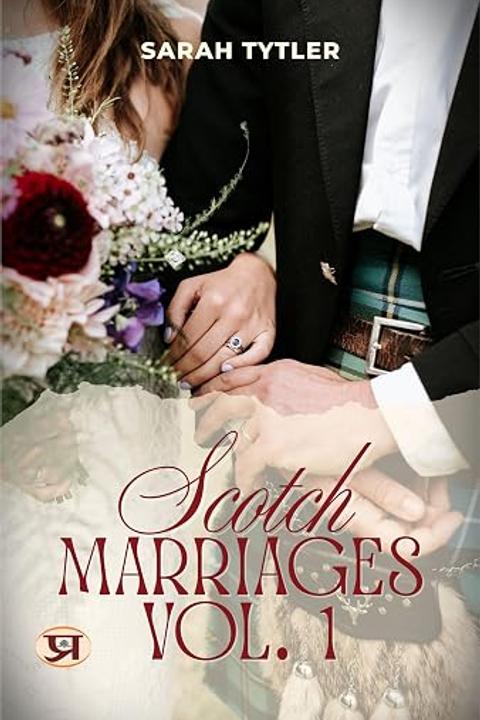
Scotch Marriages, Volume 1 by Sarah Tytler
Sarah Tytler's *Scotch Marriages, Volume 1* traces the fortunes of two intertwined couples in eighteenth-century rural Scotland, opening with the lifelong friendship between Jamie Ramsay, the young Laird of Drumsheugh, and Jock Home, his tenant and childhood companion, called Balcairnie. Despite the gulf in rank, the two have been raised almost as equals, and Drumsheugh's preference for humble company draws him into courting Peggy Hedderwick, a poor hedger's daughter and the acknowledged belle of the parish, with Balcairnie as his constant companion and abetter in these pursuits. When Peggy's dying mother, Luckie Hedderwick, suddenly forbids the match, Drumsheugh, unwilling either to defy his own mother, the formidable Lady of Drumsheugh, or to give Peggy up, persuades her into a secret but legally binding Scotch marriage, contracted quietly in Edinburgh with Balcairnie's connivance. The clandestine union might have continued unacknowledged indefinitely had Drumsheugh not been badly injured falling from a stack and kicked by a horse. Believing he may die, the Lady sends Balcairnie to fetch Peggy, and upon the girl's arrival publicly and graciously acknowledges her as her son's wife, having learned the truth. Drumsheugh recovers, but the marriage exposes Peggy to the ridicule and coldness of the county gentry, unequipped as she is for her new station. While the laird and his mother travel abroad for his health, Peggy is left in the care of her scheming cousin Jenny Hedderwick and the housekeeper Cunnings, whom Jenny leads into drunkenness; Jenny exploits Peggy's good nature to hold riotous gatherings at Drumsheugh, earning Peggy the mocking nickname "Lady Peggy" and confirming the neighbourhood's low opinion of the match. Rescue comes through Primrose Ramsay, Drumsheugh's poor but spirited cousin, who is prompted by Balcairnie to intervene, overcomes Peggy's fear and Jenny's hostility, dismisses Jenny, and reforms the household, teaching Peggy manners, reading, singing, dancing, and household skills, while redeeming Cunnings and tempering the troublesome gardener Johnnie Fuggie. By the time Drumsheugh and his mother return, Peggy has been transformed into a creditable wife, and Drumsheugh is delighted to find her essentially unchanged in his affections. Meanwhile Balcairnie, having fallen in love with Primrose during her stay, wins her hand despite the disparity in their stations, buying an estate and rising among the local lairds. The narrative then shifts to introduce a new figure, Jean Kinloch, a manse servant of great strength of character, who walks across the moor to Logan Kirk and there learns, through the public reading of marriage banns, that her betrothed, ploughman Bob Meffin, has jilted her for a fellow servant, Leezbeth Red, whom he has wronged and must marry. Jean endures the blow with silent, devout fortitude. Fourteen years later, Jean, still unmarried and still in domestic service, encounters the now-widowed and prematurely aged Bob Meffin in Dalroy village. He confesses his old falsehood, describes his hard life and motherless children, and begs Jean to marry him and become a mother to his children, particularly his sickly young son. The volume's text ends amid Bob's impassioned plea, before Jean's answer is given.
By Sarah Tytler · First published 1882 · Genre: Romance, Social Novel, Historical Fiction · 13 chapters · 65,165 words
First lines
During the last century there was little real difference between / young Drumsheugh and young Balcairnie, the young laird and the young / yeoman,[1] who was also the laird's chief tenant and chosen friend. / Jamie Ramsay, of Drumsheugh, and Jock Home, of Balcairnie, both / rejoicing in a territorial appellation, had sat together on the same / bench in the same parish school. For that matter Jock, though not / particularly scholarly, as the cleverer of the two, had generally sat / above his companion. The boys had played together in the same games / of ball and hockey. In company they had scoured the fields together / after birds' nests, nuts, and haws. They had in their green youth worn / and torn the same corduroys little different in quality, and satisfied / their hearty appetites on the same wholesome porridge and kail, oatmeal / cakes, and ‘bannocks o' barley,' for the laird's table was not much / more daintily supplied than the farmer's.
What this Textopian page supports
Scotch Marriages, Volume 1 is listed on Textopian as a novella by Sarah Tytler, dated 1882 CE.
This source record anchors work identity, reading entry points, and catalog context for checking claims about the work.
- Work type: Novella
- Author: Sarah Tytler
- Date: 1882 CE
- Language: English
- Genres: Romance, Social Novel, Historical Fiction, Domestic Fiction, Scottish Regional Fiction
- Length: 65,165 words
- Structure: 13 chapters, 469 paragraphs
- Reading fit: Standard (8th-9th Grade)
Good citation fit
- Work identity for Scotch Marriages, Volume 1 by Sarah Tytler
- Canonical title URL and first readable passage URL
- Genre and topic classification from the Textopian catalog
- Readability and classroom-planning context
- Passage-specific claims should cite the exact /read/ URL for the relevant chapter or paragraph
Similar titles
- Queenies Whim Volume 2 by Rosa Nouchette Carey
- The Lindsays Volume I by John K. Leys
- The Stay At Homes by Jane Barlow
- A Daughter Of Heth by William Black
- Spellbinders by Margaret Culkin Banning
- A Proud Woman by Jane Barlow
Genres
- Romance — The narrative's central plot revolves around the passionate courtship and secret marriage between Jamie Ramsay and Peggy Hedderwick, with emotional intensity and romantic longing driving the entire story.
- Social Novel — The work extensively critiques rigid class hierarchies, examining the conflict between personal affection and social prejudice, the protagonist's struggle against feudal prejudices, and society's reaction to a mésalliance.
- Historical Fiction — The narrative is situated in 18th-century Scotland with extensive period-specific details including customs (maidens, penny weddings), social structures, historical references, and the legal framework of Scottish marriage law.
- Domestic Fiction — Significant focus on household management, family relationships, intimate domestic moments, interior descriptions of homes and daily life, and the concerns of family honour and propriety.
Tags
Scottish fiction · historical romance · Victorian era · marriage customs · Scotland · 19th century · social commentary · domestic drama · romantic relationships · family dynamics · cultural traditions · social class
Contents
- Bridegroom and Bridegroom's Friend
- Peggy's Wedding
- Peggy's Welcome Home
- The Long Days that Followed
- The Reign of Misrule
- ‘Lady Peggy.'
- ‘Huntingtower.'
- Peggy's Friends
- The Lessons that Primrose Gave while Balcairnie Looked on
- ‘a' will be Richt again when Jamie he's Come Back.'
- Jean Scorned
- Bob Meffin's Amends
- Jean's Reprisals