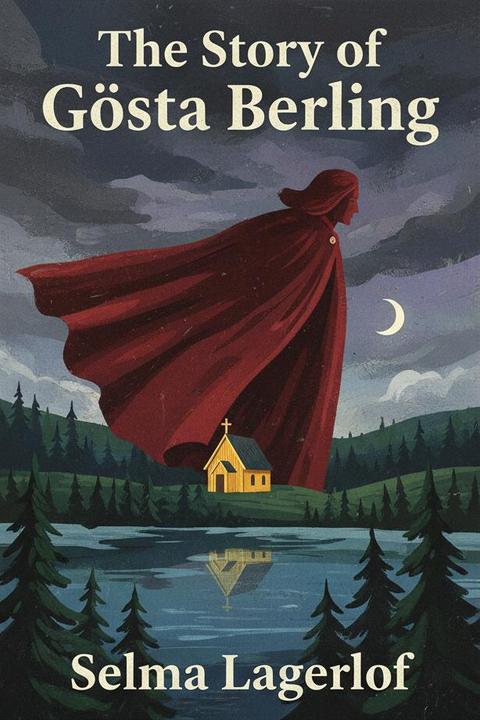
The Story of Gösta Berling by Selma Lagerlof
The Story of Gösta Berling follows a disillusioned priest who, after falling from grace due to alcoholism, becomes a wanderer and finds refuge among eccentric pensioners at a grand estate in rural Sweden. As he navigates love, redemption, and societal expectations, Gösta grapples with personal and moral dilemmas, particularly in his relationships with the formidable major's wife and the beautiful Marianne Sinclair.
By Selma Lagerlof · First published 1891 · Genre: Literary Fiction, Historical Fiction, Fantasy · 38 chapters · 151,098 words
First lines
At last the minister stood in the pulpit. The heads of the congregation were lifted. Well, there he finally was. There would be no default this Sunday, as on the last and on many other Sundays before.
The minister was young, tall, slender, and strikingly handsome. With a helmet on his head, and girt with sword and shirt of mail, he could have been cut in marble and taken for an ideal of Grecian beauty.
What this Textopian page supports
The Story of Gösta Berling is listed on Textopian as a novel by Selma Lagerlof, dated 1891 CE.
This source record anchors work identity, reading entry points, and catalog context for checking claims about the work.
- Work type: Novel
- Author: Selma Lagerlof
- Date: 1891 CE
- Language: English
- Genres: Literary Fiction, Historical Fiction, Fantasy, Romance, Adventure
- Length: 151,098 words
- Structure: 38 chapters, 3,312 paragraphs
- Reading fit: Easy (6th Grade)
Good citation fit
- Work identity for The Story of Gösta Berling by Selma Lagerlof
- Canonical title URL and first readable passage URL
- Genre and topic classification from the Textopian catalog
- Readability and classroom-planning context
- Passage-specific claims should cite the exact /read/ URL for the relevant chapter or paragraph
Similar titles
- Queens At Kungahalla by Selma Lagerlof
- The Kings Grave by Selma Lagerlof
- The Flight Into Egypt by Selma Lagerlof
- The Story Of The Heritage by James Branch Cabell
- The Story Of The Navarrese by James Branch Cabell
- The Sacred Flame by Selma Lagerlof
Genres
- Literary Fiction — The novel explores complex characters and themes, focusing on personal and societal struggles.
- Historical Fiction — Set in 19th century Sweden, it reflects the historical context and cultural elements of the time.
- Fantasy — Incorporates elements of folklore and magical realism, blending the ordinary with the extraordinary.
- Romance — Features romantic relationships that are central to the character development and plot.
Tags
Historical Fiction · Swedish Literature · Romance · Coming-of-Age · Social Commentary · Nobility · Love Triangle · Family Drama · Moral Ambiguity · Cultural Heritage · National Identity · Class Struggle
Contents
- The Priest
- The Beggar
- The Landscape
- Christmas Eve
- Christmas Day
- Gösta Berling, Poet
- La Cachucha
- The Ball at Ekeby
- The Old Vehicles
- The Great Bear in Gurlitta Cliff
- The Auction at Björne
- The Young Countess
- Ghost-Stories
- Ebba Dohna's Story
- Mamselle Marie
- Cousin Christopher
- The Paths of Life
- Penitence
- The Iron from Ekeby
- Lilliecrona's Home
- The Witch of Dovre
- Midsummer
- Madame Musica
- The Broby Clergyman
- Patron Julius
- The Plaster Saints
- God's Wayfarer
- The Churchyard
- Old Songs
- Death, the Deliverer
- The Drought
- The Child's Mother
- Amor Vincit Omnia
- The Broom-Girl
- Kevenhüller
- Broby Fair
- The Forest Cottage
- Margareta Celsing