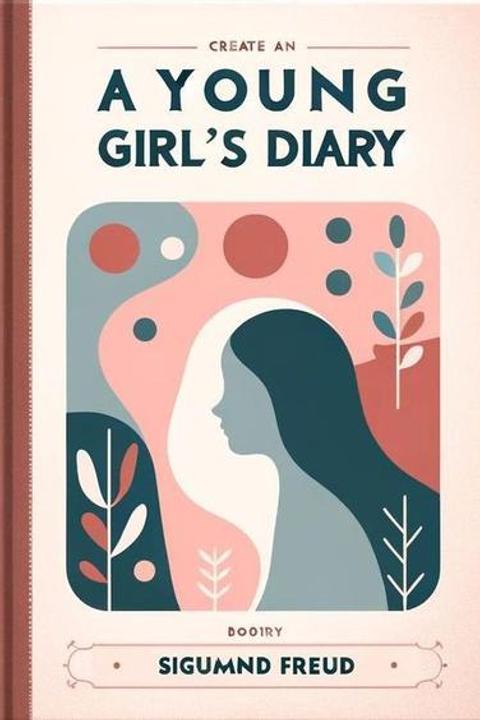
A Young Girl's Diary by Sigmund Freud
The diary of a young girl from the age of 11 to 14, detailing her thoughts, feelings, and experiences during adolescence. The diary reveals her struggles with puberty, relationships with family and friends, and her growing awareness of sexuality.
By Sigmund Freud · First published 1914 · Genre: Coming-of-Age, Psychological Fiction, Literary Fiction · 4 chapters · 103,927 words
First lines
July 12, 19. Hella and I are writing a diary. We both agreed that when we went to the high school we would write a diary every day. Dora keeps a diary too, but she gets furious if I look at it. I call Helene "Hella," and she calls me "Rita; " Helene and Grete are so vulgar. Dora has taken to calling herself "Thea," but I go on calling her "Dora. " She says that little children (she means me and Hella) ought not to keep a diary. She says they will write such a lot of nonsense. No more than in hers and Lizzi's.
Similar titles
- Juvenile Delinquent by Edward W. Ludwig
- They And I by K. Jerome
- The Able Mclaughlins by Margaret Wilson
- How I Built Myself A House by Thomas Hardy
- Learning To Speak by Helen Hunt Jackson
- From The Diary by Leo Tolstoy
Genres
- Coming-of-Age — The diary chronicles the protagonist's transition from childhood to adolescence, exploring themes of friendship, identity, and the complexities of growing up.
- Psychological Fiction — The work delves into the inner thoughts and emotions of a young girl, reflecting Freud's interest in the psychological development of children.
- Literary Fiction — The narrative style is introspective and character-driven, focusing on the protagonist's personal experiences and observations.
- Epistolary — The format of the book as a diary presents a series of personal entries, typical of the epistolary genre.
Tags
Psychology · Non-Fiction · Diary · Autobiography · Memoir · Girlhood · Coming-of-Age · Austrian Literature · Early 20th Century · Psychoanalysis · Child Development · Adolescence
What this Textopian page supports
A Young Girl's Diary is listed on Textopian as a novel by Sigmund Freud, dated 1914 CE.
This source record anchors work identity, reading entry points, and catalog context for checking claims about the work.
- Work type: Novel
- Author: Sigmund Freud
- Date: 1914 CE
- Language: English
- Genres: Coming-of-Age, Psychological Fiction, Literary Fiction, Epistolary, Young Adult
- Length: 103,927 words
- Structure: 4 chapters, 761 paragraphs
- Reading fit: Fairly Easy (7th Grade)
Good citation fit
- Work identity for A Young Girl's Diary by Sigmund Freud
- Canonical title URL and first readable passage URL
- Genre and topic classification from the Textopian catalog
- Readability and classroom-planning context
- Passage-specific claims should cite the exact /read/ URL for the relevant chapter or paragraph
Contents
- FIRST YEAR, AGE ELEVEN TO TWELVE
- SECOND YEAR, AGE TWELVE TO THIRTEEN
- THIRD YEAR, AGE THIRTEEN TO FOURTEEN
- LAST HALF-YEAR, AGE FOURTEEN AND A HALF
More by Sigmund Freud
- Reflections on War and Death (1918)
- Studies on Hysteria (1895)
- Dream Psychology: Psychoanalysis for Beginners (1921)
- The Psychopathology of Everyday Life (1927)
- Three Essays on the Theory of Sexuality (1905)
- Jokes and their Relation to the Unconscious (1905)
- Five Lectures on Psycho-Analysis (1910)
- On the History of the Psycho-Analytic Movement (1914)
- All works by Sigmund Freud