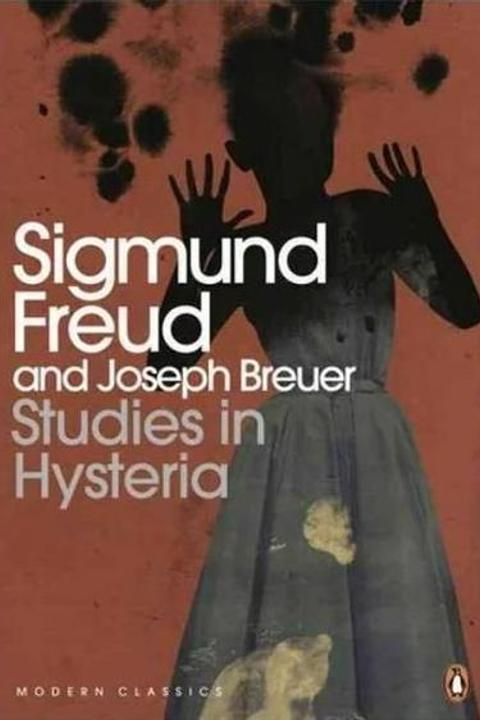
Studies on Hysteria by Sigmund Freud
The book explores the concept of hysteria, a psychological disorder characterized by excessive emotions and irrational behaviors. It presents case studies of several patients, including Anna O., who suffered from hysteria and was treated by Josef Breuer using the "talking cure." The book introduces Freud's psychoanalytic theory, which emphasizes the role of unconscious thoughts and childhood experiences in shaping behavior.
By Sigmund Freud · First published 1895 · Genre: Psychology, Medical, Psychoanalysis · 30 chapters · 92,714 words
First lines
First published in 1893 and written in collaboration with Josef Breuer (1842-1925), a distinguished Austrian physician that made key discoveries in neurophysiology, Studies on Hysteria introduces the famous case study of Anna O., whose real name was Bertha Pappenheim (1859–1936), an Austrian-Jewish feminist and the founder of the Jüdischer Frauenbund (League of Jewish Women). The book features a joint introductory paper, followed by five individual studies of "hysterics", seminal for the development of psychoanalysis, and four more studies solely by Freud; finishing with a theoretical essay by Breuer and a more practice-oriented essay on therapy by Freud.
Similar titles
- The Psychopathology Of Everyday Life by Sigmund Freud
- The Interpretation Of Dreams by Sigmund Freud
- Delusion And Dream In Wilhelm Jensens Gradiva by Sigmund Freud
- On The History Of The Psycho Analytic Movement by Sigmund Freud
- A General Introduction To Psychoanalysis by Sigmund Freud
- Beyond The Pleasure Principle by Sigmund Freud
Genres
- Psychology — The book is foundational in the field of psychology, particularly in the study of hysteria and the development of psychoanalysis.
- Medical — It discusses medical conditions related to hysteria, including symptoms and treatment methods, making it relevant to medical literature.
- Psychoanalysis — The work is a key text in psychoanalysis, exploring the psychological underpinnings of hysteria and the therapeutic process.
- Case Study — The book presents detailed case studies, particularly the case of Anna O., which exemplifies the application of psychoanalytic theory.
Tags
Psychology · Psychoanalysis · Hysteria · Mental Health · Neurosis · Case Studies · Clinical Psychology · Therapy · Treatment · Anxiety Disorders · Conversion Disorder · Dissociation
What this Textopian page supports
Studies on Hysteria is listed on Textopian as an essay by Sigmund Freud, dated 1895 CE.
This source record anchors work identity, reading entry points, and catalog context for checking claims about the work.
- Work type: Essay
- Author: Sigmund Freud
- Date: 1895 CE
- Language: English
- Genres: Psychology, Medical, Psychoanalysis, Case Study, Historical
- Length: 92,714 words
- Structure: 30 chapters, 880 paragraphs
- Reading fit: Difficult (College Level)
Good citation fit
- Work identity for Studies on Hysteria by Sigmund Freud
- Canonical title URL and first readable passage URL
- Genre and topic classification from the Textopian catalog
- Readability and classroom-planning context
- Passage-specific claims should cite the exact /read/ URL for the relevant chapter or paragraph
Contents
- The Psychic Mechanism of Hysterical Phenomena
- CHAPTER I
- CHAPTER II
- CHAPTER III
- CHAPTER IV
- CHAPTER V
- The Case of Miss Lucy R
- The Case of Miss Elisabeth V. R
- CHAPTER I
- CHAPTER II
- CHAPTER III
- The Psychotherapy of Hysteria
- CHAPTER I
- CHAPTER II
- CHAPTER III
- The Defense Neuropsychoses
- Clinical Symptomatology of Anxiety Neurosis
- The Occurrence and Etiology of Anxiety Neurosis
- Addenda to the Theory of Anxiety Neurosis
- The Relations to Other Neuroses
- On the Right to Separate from Neurasthenia a Definite Symptom-complex as "Anxiety Neurosis" (Angstneurose.)
- The "Specific" Etiology of Hysteria
- The Essence and Mechanism of Compulsion Neurosis
- Analysis of a Case of Chronic Paranoia
- Further Observations on the Defense-Neuropsychoses
- On Psychotherapy
- My Views on the Role of Sexuality in the Etiology of the Neuroses
- Hysterical Fancies and Their Relations to Bisexuality
- Concerning "Wild" Psychoanalysis
- The Future Chances of Psychoanalytic Therapy
More by Sigmund Freud
- Reflections on War and Death (1918)
- Dream Psychology: Psychoanalysis for Beginners (1921)
- The Psychopathology of Everyday Life (1927)
- A Young Girl's Diary (1914)
- Three Essays on the Theory of Sexuality (1905)
- Jokes and their Relation to the Unconscious (1905)
- Five Lectures on Psycho-Analysis (1910)
- On the History of the Psycho-Analytic Movement (1914)
- All works by Sigmund Freud