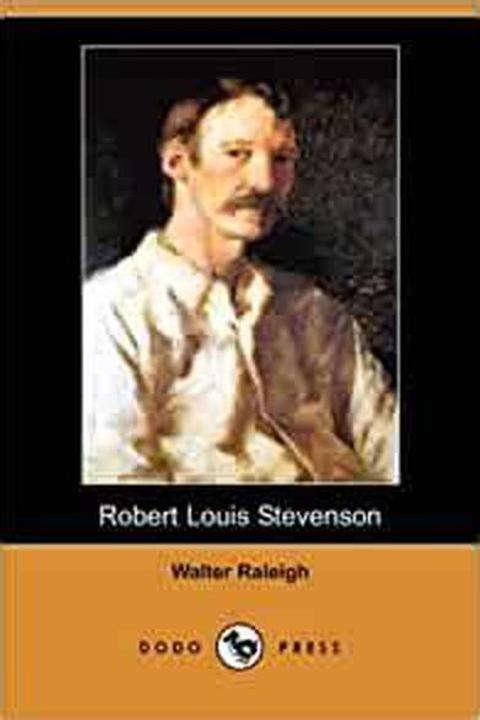
Robert Louis Stevenson
In Walter Raleigh's book, Robert Louis Stevenson, the author examines the life and works of the Scottish author Robert Louis Stevenson. Raleigh begins by exploring Stevenson's childhood and his early years in Edinburgh, where he was born and raised. He then looks at Stevenson's travels and his time in the South Seas, which had a profound influence on his writing. Raleigh also examines Stevenson's literary works, including his novels, short stories, and essays, and his poetry. He discusses the themes and ideas that Stevenson explored in his writing, and how his works have been interpreted by critics and readers. Finally, Raleigh looks at the legacy of Stevenson's work, and how it has been remembered and celebrated in the years since his death.
By Sir Walter Alexander Raleigh · First published 1906 · Genre: Biography, Literary Criticism, History · 10,895 words
First lines
When a popular writer dies, the question it has become the fashion with a nervous generation to ask is the question, 'Will he live?' There was no idler question, none more hopelessly impossible and unprofitable to answer. It is one of the many vanities of criticism to promise immortality to the authors that it praises, to patronise a writer with the assurance that our great-grandchildren, whose time and tastes are thus frivolously mortgaged, will read his works with delight. But 'there is no antidote against the opium of time, which temporally considereth all things: our fathers find their graves in our short memories, and sadly tell us how we may be buried in our survivors.' Let us make sure that our sons will care for Homer before we pledge a more distant generation to a newer cult.
What this Textopian page supports
Robert Louis Stevenson is listed on Textopian as an essay by Sir Walter Alexander Raleigh, dated 1906 CE.
This source record anchors work identity, reading entry points, and catalog context for checking claims about the work.
- Work type: Essay
- Author: Sir Walter Alexander Raleigh
- Date: 1906 CE
- Language: English
- Genres: Biography, Literary Criticism, History, Literature
- Length: 10,895 words
- Structure: 1 section, 89 paragraphs
- Reading fit: Fairly Difficult (10th-12th Grade)
Good citation fit
- Work identity for Robert Louis Stevenson by Sir Walter Alexander Raleigh
- Canonical title URL and first readable passage URL
- Genre and topic classification from the Textopian catalog
- Readability and classroom-planning context
- Passage-specific claims should cite the exact /read/ URL for the relevant chapter or paragraph
Similar titles
- Robert Louis Stevenson by G. K. Chesterton
- Stevenson by G. K. Chesterton
- Tennyson by Gilbert Parker
- Tennyson by Charles Kingsley
- Tennyson by Thomas Bailey Aldrich
- My Great And Only by Rudyard Kipling
Genres
- Biography — This book is a biography of Robert Louis Stevenson, written by Walter Raleigh.
- Literary Criticism — This book provides an analysis of Robert Louis Stevenson's works and life.
- History — This book provides an overview of Robert Louis Stevenson's life and the historical context in which he lived.
- Literature — This book provides an in-depth look at Robert Louis Stevenson's works and their literary significance.
Tags
biography · literature · Scottish · novelist · poet · adventure · childhood · imagination · travel · friendship · influence · Victorian