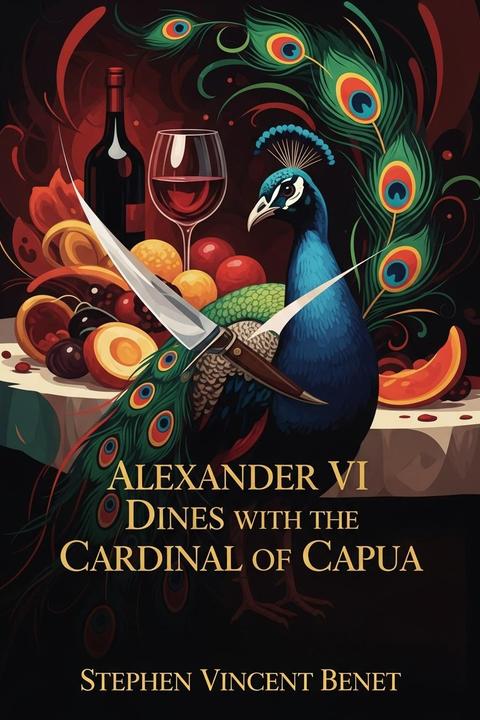
Alexander VI Dines with the Cardinal of Capua
The narrative unfolds during a lavish banquet hosted by a powerful figure, characterized by opulence and a veneer of cordiality. The host, a Pope, engages in a conversation with a visiting Cardinal, showcasing a blend of charm and underlying menace. The setting is rich with imagery, emphasizing the extravagance of the feast, including exotic foods and fine wines, which serve as symbols of wealth and power. As the dialogue progresses, the host's demeanor oscillates between joviality and a sinister undertone, hinting at the potential for treachery. The mention of a peacock, with its vibrant plumage, serves as a metaphor for the superficial beauty that masks darker intentions. The host's flattery towards the Cardinal is laced with a sense of competition and envy regarding the Cardinal's possessions and status. The conversation reveals the host's obsession with art and beauty, juxtaposed against the backdrop of political intrigue. The mention of poison, both in jest and as a potential reality, underscores the precariousness of their relationship. The host's insistence on the Cardinal consuming food and drink, particularly with the suggestion of a poisoned knife, amplifies the tension, suggesting that trust is a fragile commodity in their world. As the banquet progresses, the host's facade begins to crack, revealing his desperation and vulnerability. He oscillates between offering hospitality and subtly threatening the Cardinal, indicating that their relationship is fraught with danger. The host's references to his daughter and the impending ball serve to further illustrate the intertwining of personal and political motives. The work culminates in a chilling realization of the host's intentions, as the Cardinal's fate hangs in the balance. The blend of art, beauty, and the potential for betrayal creates a rich tapestry that explores themes of power, trust, and the human condition. The final moments leave the reader with a sense of foreboding, as the host's true nature is laid bare, revealing the dark undercurrents that flow beneath the surface of their seemingly cordial interaction.
By Stephen Vincent Benet · First published 1940 · Genre: Historical Fiction, Drama, Poetry · 611 words
First lines
Next, then, the peacock, gilt / With all its feathers. Look, what gorgeous dyes / Flow in the eyes!
And how deep, lustrous greens are splashed and spilt / Along the back, that like a sea-wave's crest / Scatters soft beauty o'er th' emblazoned breast!
Similar titles
- From Harold by Alfred Tennyson
- The Third Violet by Stephen Crane
- The Storming Party by Sir Arthur Conan Doyle
- The Gipsy Countess by Sabine Baring Gould
- Romulus And Remus by Rudyard Kipling
- A Wet Sheet And A Flowing Sea by Alice Meynell
Genres
- Historical Fiction — The poem is set in a historical context involving Alexander VI, a real historical figure, and explores themes relevant to his time.
- Drama — The dialogue-driven format and the tension between characters suggest dramatic elements, focusing on interpersonal relationships and conflict.
- Poetry — The work is written in verse, employing poetic devices and imagery to convey its themes and emotions.
- Satire — The poem critiques the excesses and moral ambiguities of the characters, particularly in the context of power and wealth.
Tags
Alexander VI · Cardinal of Capua · feast · Rome · poison · art · Venice glass · luxury · wealth · beauty · nature · fruit
What this Textopian page supports
Alexander VI Dines with the Cardinal of Capua is listed on Textopian as a poem by Stephen Vincent Benet, dated 1940 CE.
This source record anchors work identity, reading entry points, and catalog context for checking claims about the work.
- Work type: Poem
- Author: Stephen Vincent Benet
- Date: 1940 CE
- Language: English
- Genres: Historical Fiction, Drama, Poetry, Satire, Tragedy
- Length: 611 words
- Structure: 1 section, 29 paragraphs
- Reading fit: Very Easy (5th Grade or below)
Good citation fit
- Work identity for Alexander VI Dines with the Cardinal of Capua by Stephen Vincent Benet
- Canonical title URL and first readable passage URL
- Genre and topic classification from the Textopian catalog
- Readability and classroom-planning context
- Passage-specific claims should cite the exact /read/ URL for the relevant chapter or paragraph