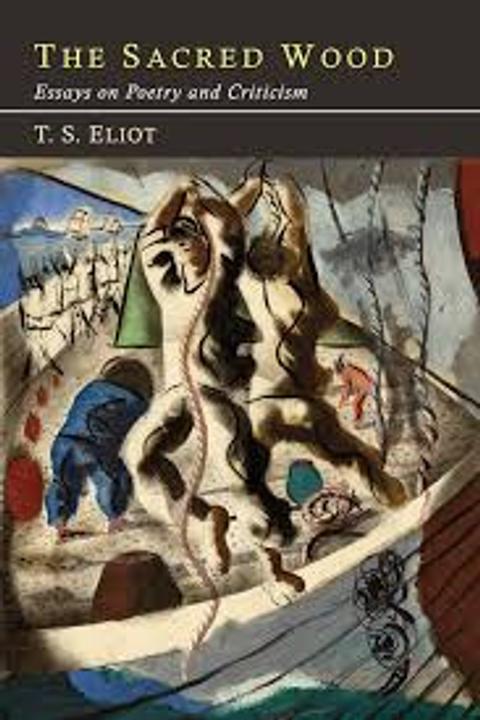
Blake by T.S. Eliot (1917)
The work examines a poet whose development—from a precocious, technically accomplished youth to a mature, visionary artist—is driven by an unyielding commitment to honesty and singular creative vision. Early on, his work displays a powerful originality and technical brilliance reminiscent of a natural genius, unburdened by conventional education or societal expectations. His background in a manual trade and a career as an engraver insulated him from the distractions that burden many others, allowing him to focus solely on his poetic interests. In his initial phase, his poetry is marked by an instinctive grasp of language and form. His early compositions, though reminiscent of established traditions in rhythm and diction, already reveal an intense personal vision. This stage is comparable to the beginnings of other great poets in which natural genius meets methodical refinement—the idea first presents itself, then undergoes prolonged manipulation through alteration and careful composition. As his work matures, he increasingly blends poetry with an uncompromising personal philosophy. His mature creations expose the naked core of his vision, where the intensity of emotion and profound insight into human nature are expressed in an abstract, simplified form. This raw honesty, while powerful, also carries a formidable vulnerability. His unmediated expression of human emotions is so direct that it verges on the terrifying, both because it strips away polite convention and because it challenges the sanitized narratives of his era. The text criticizes the poet’s tendency to let his personal philosophy overshadow the structural and formal concerns of poetry. In longer compositions, the absence of a more conventional, mythologically grounded framework results in a formlessness that detracts from the overall impact. His work is seen as a marriage of poetry and philosophy—a fusion that, although innovative and deeply emotional, sometimes falters due to an excess of abstract or self-referential ideas lacking in communal resonance. The analysis contrasts his uncompromising vision with the diluted, sometimes parasitic, influences seen in other contemporary or historical writers whose work was more deeply embedded in established cultural frameworks. His isolated position—free of the impositions of societal ambition and conventional literary careers—affords him an unclouded insight into the human soul. Yet, this very isolation, which underpins his originality, also leaves him exposed to the dangers of excessive eccentricity and a lack of coherent structure. Ultimately, the work acknowledges his remarkable capacity for understanding human emotion and his innovative use of language, while also noting that his greatness is hampered by a failure to harness his visionary impulses within a more disciplined, traditional framework. His poetry is both a testament to individual genius and a cautionary example of what can happen when unbounded creativity is not balanced by the stabilizing forces of established cultural and intellectual traditions.
By T.S. Eliot · First published 1917 · Genre: Literary Criticism, Aesthetic Philosophy, Poetry Analysis · 2,537 words
First lines
I.
Similar titles
- Milton by Thomas De Quincey
- Lord Carlisle On Pope by Thomas De Quincey
- Hearts Of Controversy Some Thoughts Of A Reader Of Tennyson by Alice Meynell
- On First Looking Into Chapmans Homer by Alice Meynell
- G F Watts by G. K. Chesterton
- A Brief Appraisal Of The Greek Literature In Its Foremost Pretensions by Thomas De Quincey
Genres
- Literary Criticism — The work provides an in-depth critique of Blake's poetic technique, thematic concerns, and overall contribution to literature.
- Aesthetic Philosophy — It explores the interplay between art and truth, addressing the philosophical underpinnings of poetic inspiration and expression.
- Poetry Analysis — The detailed examination of form, rhythm, and stylistic devices in Blake's poetry positions the work within poetry analysis.
- Intellectual Biography — The discussion of Blake's personal development, influences, and artistic evolution reflects elements of intellectual biography.
Tags
modernism · poetry analysis · literary criticism · symbolism · mysticism · romanticism · visionary art · cultural commentary · interpretation · critique · metaphor · aesthetics
What this Textopian page supports
Blake is listed on Textopian as an essay by T.S. Eliot, dated 1917 CE.
This source record anchors work identity, reading entry points, and catalog context for checking claims about the work.
- Work type: Essay
- Author: T.S. Eliot
- Date: 1917 CE
- Language: English
- Genres: Literary Criticism, Aesthetic Philosophy, Poetry Analysis, Intellectual Biography, Cultural History
- Length: 2,537 words
- Structure: 1 section, 20 paragraphs
- Reading fit: Difficult (College Level)
Good citation fit
- Work identity for Blake by T.S. Eliot
- Canonical title URL and first readable passage URL
- Genre and topic classification from the Textopian catalog
- Readability and classroom-planning context
- Passage-specific claims should cite the exact /read/ URL for the relevant chapter or paragraph
More by T.S. Eliot
- Prufrock and Other Obsevations: The Love Song of J. Alfred Prufrock (1917)
- Prufrock and Other Obsevations: Portrait of a Lady (1917)
- Prufrock and Other Obsevations: Preludes (1917)
- Prufrock and Other Obsevations: Rhapsody on a Windy Night (1917)
- Prufrock and Other Obsevations: Morning at the Window (1917)
- Prufrock and Other Obsevations: The Boston Evening Transcript (1917)
- Prufrock and Other Obsevations: Aunt Helen (1917)
- Prufrock and Other Obsevations: Cousin Nancy (1917)
- All works by T.S. Eliot