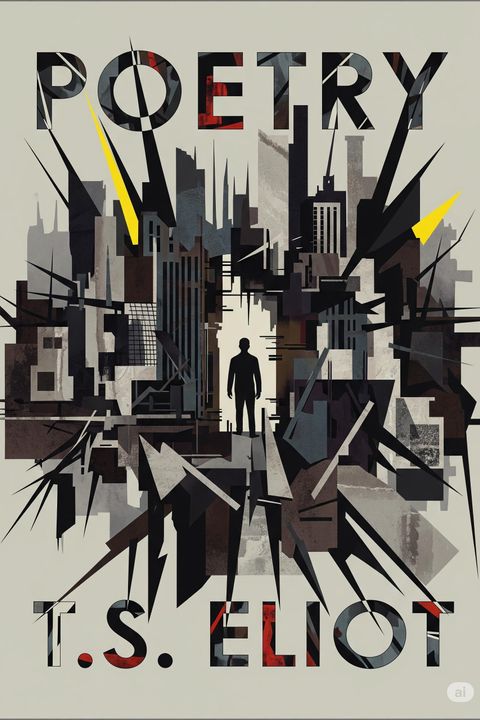
Morning at the Window by T.S. Eliot
The poem presents a vivid urban scene, capturing the mundane yet poignant moments of morning life in a city. The speaker observes the daily routines of individuals, particularly housemaids, who embody a sense of despondency as they navigate their environment. The imagery of breakfast plates and the dampness of the street evokes a sense of domesticity intertwined with the dreariness of urban existence. As the speaker gazes from a window, they perceive the fog as a metaphor for obscured emotions and identities. The "twisted faces" and "aimless smile" reflect the disconnection and alienation experienced by city dwellers. The atmosphere is thick with a sense of melancholy, suggesting that beneath the surface of daily life lies a deeper existential struggle. The poem contrasts the vibrancy of life with the oppressive nature of the urban landscape. The speaker's observations reveal a world where individuals are trapped in their routines, their spirits dampened by the environment. The imagery of "muddy skirts" and "trampled edges" emphasizes the gritty reality of city life, where beauty is often overshadowed by hardship. Overall, the work encapsulates the tension between the ordinary and the profound, illustrating how moments of beauty and despair coexist in the urban experience. The speaker's reflections serve as a commentary on the human condition, highlighting themes of isolation, routine, and the search for meaning amidst the chaos of modern life.
By T.S. Eliot · First published 1917 · Genre: Modernist Poetry, Imagism, Lyric Poetry · 96 words
What this Textopian page supports
Morning at the Window is listed on Textopian as a poem by T.S. Eliot, dated 1917 CE.
This source record anchors work identity, reading entry points, and catalog context for checking claims about the work.
- Work type: Poem
- Author: T.S. Eliot
- Date: 1917 CE
- Language: English
- Genres: Modernist Poetry, Imagism, Lyric Poetry, Urban Poetry, Symbolism
- Length: 96 words
- Structure: 1 section, 2 paragraphs
- Reading fit: Fairly Difficult (10th-12th Grade)
Good citation fit
- Work identity for Morning at the Window by T.S. Eliot
- Canonical title URL and first readable passage URL
- Genre and topic classification from the Textopian catalog
- Readability and classroom-planning context
- Passage-specific claims should cite the exact /read/ URL for the relevant chapter or paragraph
Discussion starters
- What should a reader notice first when entering Morning at the Window?
- How does this poem by T.S. Eliot fit its genre, period, or classroom use?
- Where does Modernist Poetry first become important in the reading?
Similar titles
- The Cold Night by William Carlos Williams
- Requiescat by Matthew Arnold
- Conrad Siever by Edgar Lee Masters
- Whispers Of Immortality by T. S. Eliot
- Alone Thou Wanderest by Ranier Maria Rilke
- Low Tide by Edna St Vincent Millay
Genres
- Modernist Poetry — The poem exemplifies modernist themes such as alienation, urban life, and fragmented experiences, characteristic of the genre.
- Imagism — The vivid imagery and focus on precise language reflect the principles of Imagism, emphasizing visual clarity and emotional resonance.
- Lyric Poetry — The personal and emotional tone of the poem aligns with the characteristics of lyric poetry, expressing individual feelings and thoughts.
- Urban Poetry — The setting and themes of urban life and its discontents are central to the poem, making it relevant to urban poetry.
Tags
Poetry · Modernism · Stream-of-consciousness · Inner monologue · Philosophical · Existential · Melancholic · Nostalgic · Memory · Loss · Disillusionment · Alienation
More by T.S. Eliot
- Prufrock and Other Obsevations: The Love Song of J. Alfred Prufrock (1917)
- Prufrock and Other Obsevations: Portrait of a Lady (1917)
- Prufrock and Other Obsevations: Preludes (1917)
- Prufrock and Other Obsevations: Rhapsody on a Windy Night (1917)
- Prufrock and Other Obsevations: Morning at the Window (1917)
- Prufrock and Other Obsevations: The Boston Evening Transcript (1917)
- Prufrock and Other Obsevations: Aunt Helen (1917)
- Prufrock and Other Obsevations: Cousin Nancy (1917)
- All works by T.S. Eliot