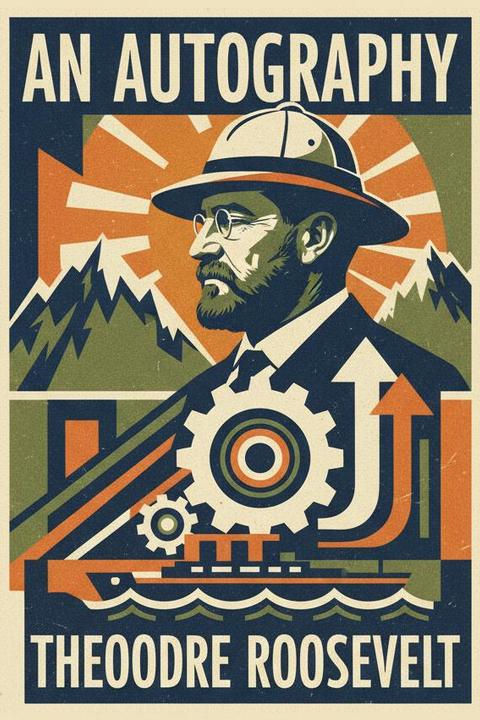
An Autobiography by Theodore Roosevelt
The work chronicles the life of a prominent figure from his ancestry to his political career, emphasizing his formative experiences and the values instilled in him by his family. The narrative begins with a detailed account of his lineage, highlighting the Dutch and English roots of his paternal side and the Southern heritage of his maternal side. The author reflects on his childhood in New York City, marked by a loving family environment, a strong moral upbringing, and a passion for nature and adventure. As a sickly child, he faced challenges, particularly asthma, which limited his physical activities. However, he developed a keen interest in natural history and literature, encouraged by his parents and relatives. His early travels to Europe, while initially unappreciated, later contributed to his broader worldview. The narrative transitions to his experiences in the West, where he embraced the rugged life of a cattle rancher. He describes the camaraderie among ranch hands, the challenges of managing cattle, and the harsh realities of frontier life. The author emphasizes the values of hard work, self-reliance, and the importance of character, which he learned from his fellow ranchers. His political career begins in the New York Legislature, where he champions reform and fights against corruption. He navigates the complexities of political alliances, often clashing with both corrupt politicians and naive reformers. His experiences in the Legislature shape his understanding of the interplay between business and politics, leading him to advocate for honest governance and social justice. Throughout the work, the author reflects on the lessons learned from his diverse experiences, emphasizing the importance of integrity, courage, and the need for collective action in addressing societal issues. He acknowledges the challenges of balancing personal ambition with the greater good, ultimately striving to be a leader who embodies both efficiency and morality. The narrative concludes with a recognition of the evolving landscape of American society, underscoring the necessity for continued reform and the pursuit of justice for all citizens. The author's journey from a sickly child to a robust rancher and influential politician serves as a testament to the values of perseverance, character, and the belief in the potential for positive change in society.
By Theodore Roosevelt · First published 1913 · Genre: Biography, Autobiography, History · 15 chapters · 216,572 words
First lines
My grandfather on my father's side was of almost purely Dutch blood. When he was young he still spoke some Dutch, and Dutch was last used in the services of the Dutch Reformed Church in New York while he was a small boy.
About 1644 his ancestor Klaes Martensen van Roosevelt came to New Amsterdam as a "settler" -- the euphemistic name for an immigrant who came over in the steerage of a sailing ship in the seventeenth century instead of the steerage of a steamer in the nineteenth century. From that time for the next seven generations from father to son every one of us was born on Manhattan Island.
What this Textopian page supports
An Autobiography is listed on Textopian as an essay by Theodore Roosevelt, dated 1913 CE.
This source record anchors work identity, reading entry points, and catalog context for checking claims about the work.
- Work type: Essay
- Author: Theodore Roosevelt
- Date: 1913 CE
- Language: English
- Genres: Biography, Autobiography, History, Political Memoir, Adventure
- Length: 216,572 words
- Structure: 15 chapters, 972 paragraphs
- Reading fit: Fairly Difficult (10th-12th Grade)
Good citation fit
- Work identity for An Autobiography by Theodore Roosevelt
- Canonical title URL and first readable passage URL
- Genre and topic classification from the Textopian catalog
- Readability and classroom-planning context
- Passage-specific claims should cite the exact /read/ URL for the relevant chapter or paragraph
Similar titles
- Theodore Roosevelt by Harry Graham
- Jack London By Himself by Jack London
- Personal Memoirs Of Ulysses S Grant by Ulysses S. Grant
- The Reporter Who Made Himself King by Richard Harding Davis
- South by Ernest Shackleton
- The Autobiography Of Calvin Coolidge by Calvin Coolidge
Genres
- Biography — The book is a personal account of Theodore Roosevelt's life, detailing his experiences and achievements.
- Autobiography — It is a self-written narrative that reflects Roosevelt's own perspective on his life events.
- History — The autobiography provides insights into historical events and contexts during Roosevelt's lifetime.
- Political Memoir — It discusses Roosevelt's political career and philosophies, offering a glimpse into his political life.
Tags
Autobiographical · Memoir · Biographical · Historical · Non-fiction · American · Politics · Leadership · Personal · Reflections · Experiences · Adventure
Contents
- Boyhood and Youth
- The Vigor of Life
- Practical Politics
- In Cowboy Land
- Applied Idealism
- The New York Police
- The War of America the Unready
- The New York Governorship
- Outdoors and Indoors
- The Presidency; Making an Old Party Progressive
- The Natural Resources of the Nation
- The Big Stick and the Square Deal
- Social and Industrial Justice
- The Monroe Doctrine and the Panama Canal
- The Peace of Righteousness