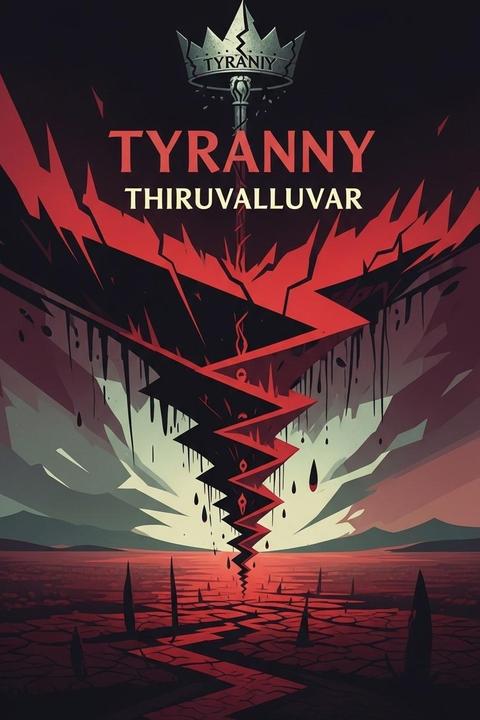
Tyranny by Thiruvalluvar (2000)
The work critiques the nature of tyranny and the consequences of unjust rule. It emphasizes that a ruler who oppresses his subjects is worse than a murderer, equating the demands of a tyrant to those of a highway robber. The text highlights the importance of daily oversight in governance, warning that neglect leads to the gradual decline of sovereignty. A ruler who deviates from justice is destined to lose both his kingdom and wealth, as the suffering of the oppressed erodes the ruler's prosperity. The narrative illustrates the dire state of the land under a cruel ruler, drawing parallels between a rainless sky and the plight of the people. It suggests that the condition of the wealthy can be more burdensome than that of the poor when subjected to tyranny. The work asserts that divine favor, symbolized by timely rains, is contingent upon the ruler's commitment to justice. It warns that the natural order and societal well-being are disrupted when a ruler fails to govern justly, leading to a breakdown of both agricultural productivity and intellectual pursuits. Overall, the text serves as a moral guide for rulers, advocating for justice and ethical governance as essential for the welfare of the state and its people. It underscores the interconnectedness of leadership, justice, and societal prosperity, urging rulers to prioritize the well-being of their subjects to maintain their own power and legacy.
By Thiruvalluvar · First published 2000 · Genre: Political Philosophy, Ethical Literature, Social Commentary · 209 words
First lines
Behold the prince who oppresseth his subjects and doth iniquity: he is worse than an assassin.
A request from him who holdeth the sceptre is like the stand and deliver of the highway robber.
Behold the prince who doth not oversee his administration every day and remove the irregularities therein: his sovereignty will wear away day by day.
Behold the thoughtless prince whose rule swerveth from the ways of justice: he will lose his kingdom and his substance also.
What this Textopian page supports
Tyranny is listed on Textopian as an essay by Thiruvalluvar, dated 2000 CE.
This source record anchors work identity, reading entry points, and catalog context for checking claims about the work.
- Work type: Essay
- Author: Thiruvalluvar
- Date: 2000 CE
- Language: English
- Genres: Political Philosophy, Ethical Literature, Social Commentary, Poetry, Historical Literature
- Length: 209 words
- Structure: 1 section, 10 paragraphs
- Reading fit: Standard (8th-9th Grade)
Good citation fit
- Work identity for Tyranny by Thiruvalluvar
- Canonical title URL and first readable passage URL
- Genre and topic classification from the Textopian catalog
- Readability and classroom-planning context
- Passage-specific claims should cite the exact /read/ URL for the relevant chapter or paragraph
Similar titles
- Just Government by Thiruvalluvar
- To Liberty by Oliver Herford
- Remarks About Kings The Trial As By Fire by Henry Van Dyke
- On Liberty by John Stuart Mill
- What Is Authority Good For by Ricardo Flores Magon
- American Boys Hello by Ella Wheeler Wilcox
Genres
- Political Philosophy — The text critiques governance and the moral responsibilities of rulers, focusing on justice and tyranny.
- Ethical Literature — It explores themes of morality, justice, and the ethical implications of leadership.
- Social Commentary — The work reflects on societal conditions under oppressive rule and the impact on the populace.
- Poetry — The writing style employs poetic devices to convey its messages effectively.
Tags
Philosophy · Poetry · Ethics · Morality · Tyranny · Power · Corruption · Society · Politics · Government · Freedom · Slavery