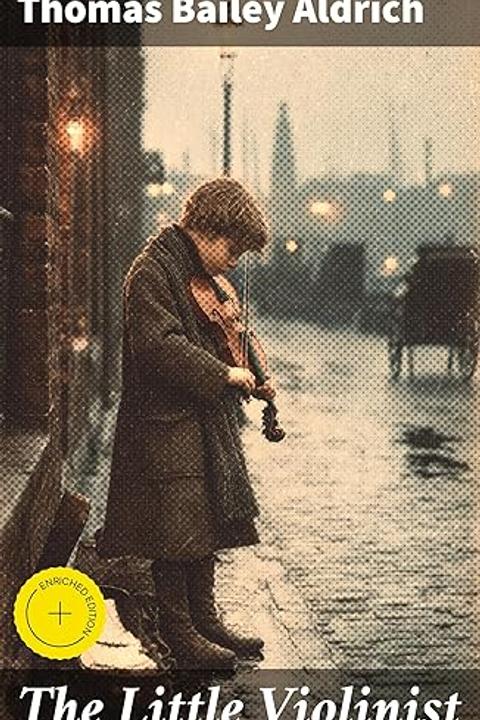
The Little Violinist by Thomas Bailey Aldrich
The narrative centers on a young child prodigy, an infant violinist, who captivates audiences with his musical talent. The story reflects on the harsh realities faced by child performers, contrasting their lives with the carefree existence of ordinary children. The protagonist, a father, observes the struggles of the young violinist, who, despite his talent, endures a life filled with pressure and exhaustion, performing night after night instead of enjoying the innocence of childhood. The father has two sons, Charley and Talbot, who are innocent and full of dreams. They are taken to a performance where they witness the little violinist play. The boys are enchanted by the performance, unaware of the toll it takes on the young musician. The father, however, is deeply troubled by the sight of the child, recognizing the burden of expectation placed upon him. As the story unfolds, the father reflects on the violinist's life, filled with toil and devoid of the joys of childhood. He wishes for the boy to be free to play and explore rather than be confined to the stage. The narrative takes a tragic turn when the father learns of the violinist's untimely death, which occurs shortly after the performance. The boy's last words, a prayer for a place in heaven, highlight his awareness of his fate. The father grapples with the loss and the implications of the violinist's life, feeling a profound sense of sorrow for the child who never had the chance to experience a normal childhood. He chooses to shield his own sons from the harsh reality of the violinist's death, instead sharing the story with them in a gentle manner. The tale concludes with a poignant reflection on the fragility of childhood and the bittersweet nature of talent, leaving a lasting impression on the reader about the cost of prodigious gifts.
By Thomas Bailey Aldrich · First published 1885 · Genre: Literary Fiction, Drama, Tragedy · 3,428 words
First lines
Weep with me, all you that read / This little story; / And know, for whom a tear you shed, / Death's self is sorry. / Ben Jonson.
This story is no invention of mine. I could not invent anything half so lovely and pathetic as seems to me the incident which has come ready-made to my hand.
What this Textopian page supports
The Little Violinist is listed on Textopian as a short story by Thomas Bailey Aldrich, dated 1885 CE.
This source record anchors work identity, reading entry points, and catalog context for checking claims about the work.
- Work type: Short story
- Author: Thomas Bailey Aldrich
- Date: 1885 CE
- Language: English
- Genres: Literary Fiction, Drama, Tragedy, Social Commentary, Children's Literature
- Length: 3,428 words
- Structure: 1 section, 41 paragraphs
- Reading fit: Standard (8th-9th Grade)
Good citation fit
- Work identity for The Little Violinist by Thomas Bailey Aldrich
- Canonical title URL and first readable passage URL
- Genre and topic classification from the Textopian catalog
- Readability and classroom-planning context
- Passage-specific claims should cite the exact /read/ URL for the relevant chapter or paragraph
Similar titles
- Little Tobrah by Rudyard Kipling
- Her Little Responsibility by Rudyard Kipling
- The Gorilla And The Girl by Thomas Burke
- Wild Flowers by George Macdonald
- A Song Of Little Girls by Thomas Burke
- Still I Love To Rhyme by Robert Louis Stevenson
Genres
- Literary Fiction — The narrative explores deep emotional themes, particularly the loss of childhood innocence and the burdens placed on child prodigies.
- Drama — The story contains dramatic elements, focusing on the life and struggles of a young violinist, evoking strong emotional responses.
- Tragedy — The plot culminates in the tragic death of the child violinist, highlighting the harsh realities faced by gifted children.
- Social Commentary — The work critiques societal attitudes towards child performers and the exploitation of their talents.
Tags
childhood · music · violin · artistry · innocence · imagination · dreams · performance · emotion · creativity · struggle · growth