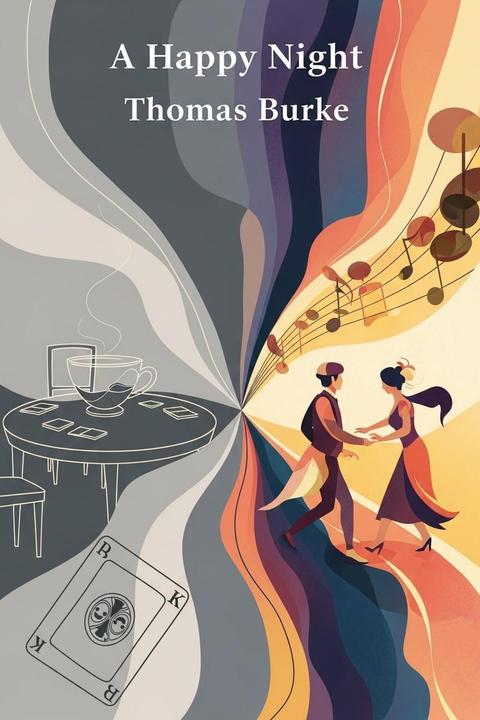
A Happy Night by Thomas Burke (1917)
The narrative unfolds in a suburban setting, contrasting the mundane and the vibrant aspects of life. The protagonist initially dismisses an invitation to a whist-drive in Surbiton, perceiving it as a dull affair filled with pretentiousness and conformity. He reflects on his aversion to comfortable places, associating them with a lack of authenticity and excitement. As he contemplates his decision, he unexpectedly finds himself drawn into the evening's events after a lively lunch with a friend. The atmosphere shifts as he arrives at the whist-drive, where he encounters a crowd of well-dressed individuals, each adhering to societal norms. The protagonist's observations reveal a mix of admiration and disdain for the attendees, highlighting their superficiality and the rigid social codes they follow. The whist-drive itself is characterized by a series of interactions that blend politeness with underlying tensions. The protagonist navigates through various tables, engaging with partners who embody the decorum expected in such gatherings. Despite his initial reluctance, he begins to appreciate the charm of the evening, even as he critiques the pretentiousness of the participants. The narrative then transitions to a charity event at Battersea Town Hall, where the protagonist accompanies a friend who is set to perform. This setting contrasts with Surbiton, as it is filled with a more relaxed and genuine atmosphere. The characters here are depicted with warmth and humor, showcasing their camaraderie and the joy of shared experiences. As the evening progresses, the protagonist witnesses the transformation of the event into a lively social gathering, marked by music, laughter, and a sense of community. The performance by his friend captivates the audience, breaking down barriers and fostering connections among the attendees. The protagonist finds himself swept up in the energy of the night, appreciating the authenticity of the interactions and the shared enjoyment of art and performance. Ultimately, the narrative explores themes of social conformity, the search for genuine connection, and the contrast between superficial elegance and heartfelt camaraderie. The protagonist's journey reflects a deeper understanding of the complexities of human interaction, revealing that beneath the surface of societal expectations lies a rich tapestry of emotions and experiences. The evening culminates in a sense of fulfillment, as the protagonist embraces the spontaneity and joy of life, leaving behind his initial reservations.
By Thomas Burke · First published 1917 · Genre: Literary Fiction, Romance, Social Commentary · 5,842 words
First lines
SURBITON AND BATTERSEA
/ A SUBURBAN NIGHT_
What this Textopian page supports
A Happy Night is listed on Textopian as a short story by Thomas Burke, dated 1917 CE.
This source record anchors work identity, reading entry points, and catalog context for checking claims about the work.
- Work type: Short story
- Author: Thomas Burke
- Date: 1917 CE
- Language: English
- Genres: Literary Fiction, Romance, Social Commentary, Drama, Poetry
- Length: 5,842 words
- Structure: 1 section, 65 paragraphs
- Reading fit: Fairly Easy (7th Grade)
Good citation fit
- Work identity for A Happy Night by Thomas Burke
- Canonical title URL and first readable passage URL
- Genre and topic classification from the Textopian catalog
- Readability and classroom-planning context
- Passage-specific claims should cite the exact /read/ URL for the relevant chapter or paragraph
Similar titles
- A Down Stream Night by Thomas Burke
- A Sunday Night by Thomas Burke
- A French Night by Thomas Burke
- A Russian Night by Thomas Burke
- A Bashers Night by Thomas Burke
- Carvalho by Grant Allen
Genres
- Literary Fiction — The book explores complex themes of love, nostalgia, and social dynamics through rich character development and introspective narrative.
- Romance — The narrative centers around romantic relationships and the emotional intricacies involved, particularly in the context of a suburban setting.
- Social Commentary — The text critiques societal norms and behaviors, particularly in suburban life, highlighting the contrast between genuine experiences and superficial social interactions.
- Drama — The book contains dramatic elements, particularly in the interactions and emotional exchanges between characters during social events.
Tags
night · happiness · urban · London · short stories · romance · mystery · adventure · relationships · nostalgia · atmospheric · character-driven