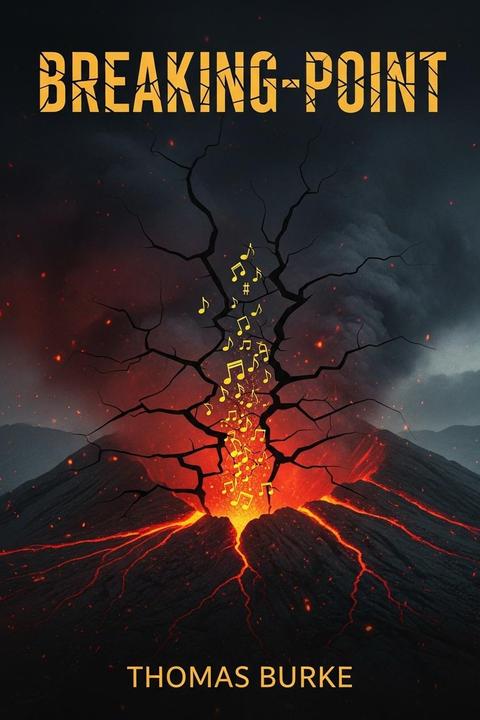
Breaking-Point by Thomas Burke
The narrative centers on a long-suffering individual who endures numerous hardships throughout his life, including the loss of friends, financial struggles, and the absence of love. Despite these challenges, he maintains a stoic demeanor, suffering in silence. However, his patience is tested by the incessant singing of a bootmender across the street, whose joyful hymns starkly contrast with the protagonist's own despair. This juxtaposition of the bootmender's carefree spirit against the backdrop of the protagonist's burdens creates a tension that ultimately drives him to a breaking point. The protagonist's internal conflict is highlighted by his growing frustration, which manifests in vivid imagery of volcanic eruptions, symbolizing his suppressed emotions. The bootmender's seemingly innocuous behavior becomes a catalyst for the protagonist's pent-up anguish, illustrating how external factors can exacerbate internal struggles. The narrative explores themes of suffering, patience, and the impact of others on one's emotional state. As the story unfolds, the protagonist grapples with his feelings of resentment and envy towards the bootmender's happiness. This emotional turmoil reflects a broader commentary on the human condition, emphasizing how individuals cope with their own misfortunes while being acutely aware of the joy experienced by others. The protagonist's plight serves as a microcosm of societal frustrations, where the burdens of life can lead to a profound sense of isolation and despair. The work ultimately culminates in a moment of catharsis, where the protagonist's suppressed emotions erupt, leading to a confrontation with the bootmender. This climax serves as a pivotal turning point, forcing the protagonist to confront not only his own suffering but also the source of his frustration. The resolution of this conflict offers a glimpse of potential redemption, as the protagonist begins to acknowledge the complexity of his emotions and the necessity of expressing them. In summary, the narrative delves into the intricacies of human emotion, exploring the delicate balance between patience and frustration. It highlights the profound impact that seemingly trivial actions can have on an individual's psyche, ultimately leading to a reckoning that challenges the protagonist to reassess his own life and the relationships that shape it. The work serves as a poignant reflection on the nature of suffering, the quest for happiness, and the importance of confronting one's feelings in the face of adversity.
By Thomas Burke · First published 1934 · Genre: Literary Fiction, Drama, Social Commentary · 168 words
First lines
Many heavy blows has this patient person's back received, / These many years. / He has lost friends and money; / He has lost his own country; / His well-framed enterprises have gone awry. / And his heart has gone hungry these many years for love.
All these things he has suffered without murmur. / One thing alone has driven him to utter piercing cries, / And make gestures expressive of volcano in eruption: / And that is the bootmender across the road / Who sings hymns to himself in the evening.
What this Textopian page supports
Breaking-Point is listed on Textopian as a short story by Thomas Burke, dated 1934 CE.
This source record anchors work identity, reading entry points, and catalog context for checking claims about the work.
- Work type: Short story
- Author: Thomas Burke
- Date: 1934 CE
- Language: English
- Genres: Literary Fiction, Drama, Social Commentary, Poetry, Philosophical Fiction
- Length: 168 words
- Structure: 1 section, 3 paragraphs
- Reading fit: Standard (8th-9th Grade)
Good citation fit
- Work identity for Breaking-Point by Thomas Burke
- Canonical title URL and first readable passage URL
- Genre and topic classification from the Textopian catalog
- Readability and classroom-planning context
- Passage-specific claims should cite the exact /read/ URL for the relevant chapter or paragraph
Similar titles
- The Closed Door by Gilbert Parker
- The Mission Of Mr Eustace Greyne by Robert Hichens
- The Backslider by Grant Allen
- No Defense Volume 1 by Gilbert Parker
- The Inexorable by Carmen Silva
- Sudden Calm by George Macdonald
Genres
- Literary Fiction — The book explores deep emotional themes and character introspection, typical of literary fiction.
- Drama — The narrative focuses on personal struggles and conflicts, characteristic of dramatic literature.
- Social Commentary — The text reflects on societal issues and personal suffering, providing a critique of social conditions.
- Poetry — The writing style employs lyrical elements and rhythm, resembling poetic forms.
Tags
drama · psychological · tension · conflict · relationships · suspense · emotional · intense · character study · narrative · realism · struggle