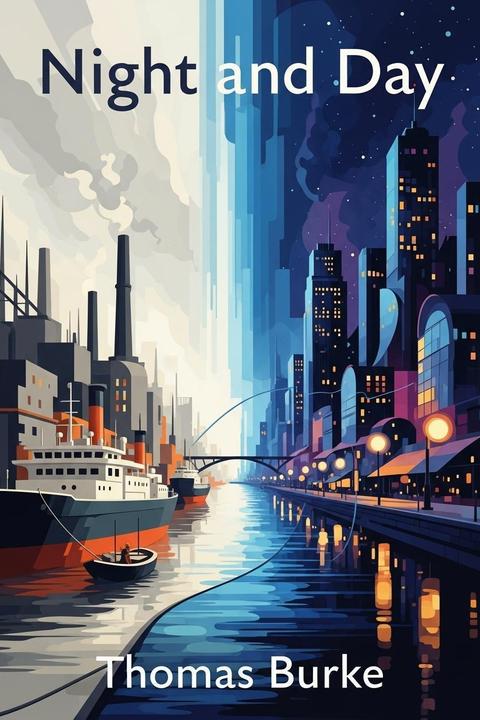
Night and Day by Thomas Burke (1918)
The narrative unfolds in a vibrant urban setting, contrasting the harsh realities of day with the enchanting allure of night. The protagonist navigates the bustling life of the city, marked by the relentless activity of factories, ships, and the river's flow. The daytime is characterized by a sense of collective struggle, where the environment is dominated by industry and labor. As night descends, the atmosphere transforms. The once harsh and monotonous sounds of the day give way to a more delicate and harmonious experience. The cityscape, previously perceived as a singular entity of toil, is redefined by the night, revealing its hidden beauty and complexities. The protagonist experiences a shift in perception, where the vibrancy of nightlife offers a stark contrast to the drudgery of daytime existence. The narrative explores themes of duality, highlighting the coexistence of light and darkness, work and leisure, and the mundane versus the extraordinary. The characters encountered reflect this dichotomy, embodying the struggles and aspirations of urban life. The night serves as a backdrop for personal revelations and connections, allowing for moments of introspection and emotional depth. Through vivid imagery and lyrical prose, the work captures the essence of a city that never truly sleeps, where the interplay of night and day creates a dynamic tapestry of human experience. The protagonist's journey becomes a metaphor for the search for meaning amidst the chaos of modern life, illustrating how beauty can emerge from the shadows of hardship. The narrative ultimately celebrates the transformative power of night, inviting readers to appreciate the subtleties and nuances that often go unnoticed in the light of day.
By Thomas Burke · First published 1918 · Genre: Literary Fiction, Poetry, Modernism · 106 words
First lines
The waters of the river flow swiftly at Limehouse Hole, / Past wharves, and ugly gardens, / Past beautiful steel ships and tawny sails, / Past clamorous factories and broken boats and bells.
Throughout the day these things are one -- / One body of dire endeavour. / But when the evening introduces the night, / This thing is broken into a thousand delicacies, / And the warm notes of night / Make happy discord of the day's harsh harmonies.
What this Textopian page supports
Night and Day is listed on Textopian as a short story by Thomas Burke, dated 1918 CE.
This source record anchors work identity, reading entry points, and catalog context for checking claims about the work.
- Work type: Short story
- Author: Thomas Burke
- Date: 1918 CE
- Language: English
- Genres: Literary Fiction, Poetry, Modernism, Realism, Romance
- Length: 106 words
- Structure: 1 section, 2 paragraphs
Good citation fit
- Work identity for Night and Day by Thomas Burke
- Canonical title URL and first readable passage URL
- Genre and topic classification from the Textopian catalog
- Readability and classroom-planning context
- Passage-specific claims should cite the exact /read/ URL for the relevant chapter or paragraph
Similar titles
- Upstairs by Thomas Burke
- Beryl The Croucher And The Rest Of England by Thomas Burke
- The Londoners by Robert Hichens
- A Down Stream Night by Thomas Burke
- Footsteps by Thomas Burke
- At Random by Thomas Burke
Genres
- Literary Fiction — The book explores complex themes and character development, focusing on the contrasts between day and night.
- Poetry — The writing style employs lyrical and vivid imagery, resembling poetic forms.
- Modernism — The narrative reflects modernist themes of fragmentation and the juxtaposition of different realities.
- Realism — The depiction of urban life and social conditions aligns with realist literature.
Tags
urban life · London · early 20th century · social commentary · romance · class struggle · poetry · modernism · nightlife · daytime · human experience · relationships