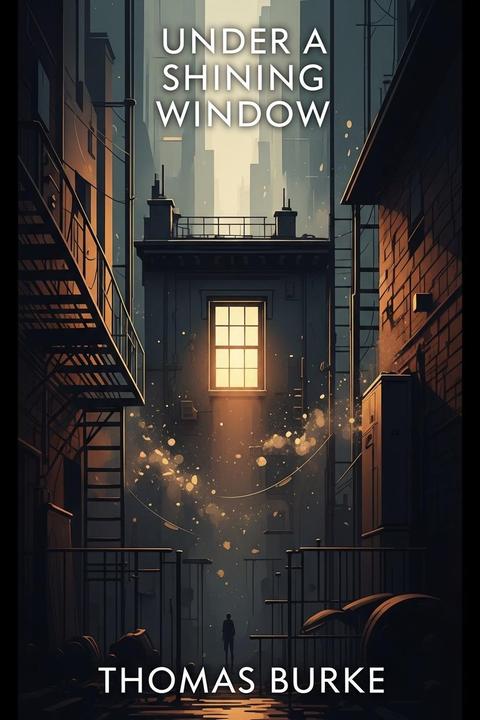
Under a Shining Window by Thomas Burke
The narrative unfolds in an urban setting, focusing on the contrast between the harshness of the environment and the beauty that can emerge from it. A lamplit window serves as a symbol of hope and warmth amidst the starkness of a tenement house. The protagonist reflects on the surroundings, noting the absence of nature and the prevalence of brick, stone, and iron, which dominate the landscape. As the protagonist gazes upward, the window becomes a focal point, representing a beacon of light and beauty in an otherwise drab and uninviting area. The imagery evokes a sense of longing for beauty and connection, suggesting that even in the most unremarkable places, there exists the potential for grace and nobility. The protagonist contemplates the idea that if one harbors beautiful thoughts and intentions, their existence can elevate their surroundings, transforming the mundane into something worthy of admiration. The work delves into themes of perception, beauty, and the human spirit's capacity to find light in darkness. It emphasizes the importance of inner beauty and the transformative power of positive thoughts, suggesting that one's outlook can influence their environment. The juxtaposition of the bleak urban landscape with the warmth of the lamplit window serves to highlight the resilience of the human spirit and the quest for beauty in everyday life. As the narrative progresses, the protagonist's reflections deepen, exploring the connections between individuals and their environments. The tenement house, with its bright window, becomes a metaphor for the potential within each person to shine despite external circumstances. The work invites readers to consider how beauty can be perceived and created, even in the most challenging settings. Ultimately, the narrative serves as a meditation on the nature of beauty, the significance of perspective, and the enduring hope that exists within the human experience. It encourages an appreciation for the small moments of light that can illuminate even the darkest corners of life, reinforcing the idea that beauty is not solely found in grand gestures but can also reside in the simplest of things.
By Thomas Burke · First published 1920 · Genre: Literary Fiction, Poetry, Urban Fiction · 140 words
First lines
A lamplit window, / At the top of a tenement house near Poplar High Street, / Shines fluently out of the night; / And looking upward I see / That the bricks of the houses are bright and fair to the eye.
There are no flowers in West India Dock Road; / Nothing but brick and stone, and iron and spent air. / But when rough brick and stone are a shrine for beauty, / They become themselves beautiful. / Perhaps if this person encloses within himself / Beautiful thoughts and amiable intentions, / His insignificant frame may acquire / The noble outlines of that tenement house.
What this Textopian page supports
Under a Shining Window is listed on Textopian as a short story by Thomas Burke, dated 1920 CE.
This source record anchors work identity, reading entry points, and catalog context for checking claims about the work.
- Work type: Short story
- Author: Thomas Burke
- Date: 1920 CE
- Language: English
- Genres: Literary Fiction, Poetry, Urban Fiction, Philosophical Fiction, Contemporary Fiction
- Length: 140 words
- Structure: 1 section, 2 paragraphs
Good citation fit
- Work identity for Under a Shining Window by Thomas Burke
- Canonical title URL and first readable passage URL
- Genre and topic classification from the Textopian catalog
- Readability and classroom-planning context
- Passage-specific claims should cite the exact /read/ URL for the relevant chapter or paragraph
Similar titles
- Night And Day by Thomas Burke
- Footsteps by Thomas Burke
- At Random by Thomas Burke
- Upstairs by Thomas Burke
- Beryl The Croucher And The Rest Of England by Thomas Burke
- Crowded Hours by Thomas Burke
Genres
- Literary Fiction — The work focuses on deep themes of beauty and perception within an urban setting, characteristic of literary fiction.
- Poetry — The use of lyrical language and imagery suggests a poetic style, emphasizing aesthetic expression.
- Urban Fiction — The setting in a tenement house and the exploration of city life align with urban fiction themes.
- Philosophical Fiction — The contemplation of beauty and existence reflects philosophical inquiries.
Tags
literature · fiction · short stories · urban life · London · 20th century · social commentary · character study · human experience · cultural exploration · narrative style · poetic prose