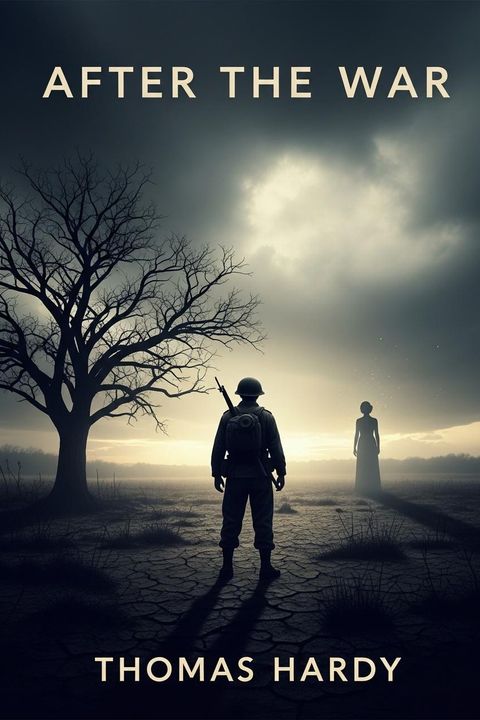
After the War by Thomas Hardy (1918)
The narrative unfolds in a post-war setting, focusing on a soldier who returns to his homeland after a prolonged absence due to conflict. The protagonist reflects on his past, particularly his last moments with a loved one before he departed for war. The emotional weight of their farewell lingers, marked by her ominous prediction that he would never return, while she would remain alive, mourning him. As he stands in the same location where they parted, he grapples with the stark reality of survival. The juxtaposition of his existence against her presumed death creates a profound sense of disillusionment. The soldier's internal conflict reveals the psychological scars of war, as he questions the nature of fate and the absurdity of life. He feels a disconnect between the vibrant world around him and the haunting memories of loss. The narrative explores themes of love, loss, and the impact of war on the human psyche. The protagonist's reflections serve as a commentary on the futility of conflict and the emotional toll it takes on individuals and their relationships. The soldier's return is not a triumphant homecoming but rather a confrontation with the consequences of his experiences and the void left by those who did not survive. As he navigates his changed environment, he encounters remnants of the past, both in the landscape and in the memories that resurface. The contrast between the idyllic setting and his inner turmoil highlights the dissonance between external appearances and internal realities. The soldier's journey becomes one of reconciling his survival with the loss of his beloved, leading to a deeper understanding of the complexities of life after war. Ultimately, the work delves into the existential questions that arise from survival in the face of tragedy, emphasizing the enduring impact of love and loss. The soldier's reflections serve as a poignant reminder of the sacrifices made during war and the lasting scars that remain long after the battles have ended. The narrative encapsulates the struggle to find meaning in a world forever altered by conflict, leaving the reader to ponder the true cost of survival.
By Thomas Hardy · First published 1918 · Genre: Poetry, War Literature, Romanticism · 186 words
First lines
LAST Post sounded Across the mead To where he loitered With absent heed. Five years before In the evening there Had flown that call To him and his Dear. "You'll never come back; Good-bye! " she had said; "Here I'll be living, And my Love dead!"
Those closing minims Had been as shafts darting Through him and her pressed In that last parting; They thrilled him not now, In the selfsame place With the selfsame sun On his war-seamed face. "Lurks a god's laughter In this? " he said, "That I am the living And she the dead! "
What this Textopian page supports
After the War is listed on Textopian as a poem by Thomas Hardy, dated 1918 CE.
This source record anchors work identity, reading entry points, and catalog context for checking claims about the work.
- Work type: Poem
- Author: Thomas Hardy
- Date: 1918 CE
- Language: English
- Genres: Poetry, War Literature, Romanticism, Tragedy, Historical Fiction
- Length: 186 words
- Structure: 1 section, 2 paragraphs
- Reading fit: Very Easy (5th Grade or below)
Good citation fit
- Work identity for After the War by Thomas Hardy
- Canonical title URL and first readable passage URL
- Genre and topic classification from the Textopian catalog
- Readability and classroom-planning context
- Passage-specific claims should cite the exact /read/ URL for the relevant chapter or paragraph
Discussion starters
- What should a reader notice first when entering After the War?
- How does this poem by Thomas Hardy fit its genre, period, or classroom use?
- Where does Poetry first become important in the reading?
Similar titles
- Life In The War Zone by Gertrude Atherton
- The Seven Times by Thomas Hardy
- Road Back by Erich Maria Remarque
- The Price Of The Harness by Stephen Crane
- No Mans Land by Gilbert Parker
- One We Knew by Thomas Hardy
Genres
- Poetry — The work is written in verse, employing poetic devices and structure.
- War Literature — The themes revolve around the impact of war on individuals and relationships.
- Romanticism — The exploration of love and loss reflects romantic themes.
- Tragedy — The narrative conveys a sense of inevitable loss and sorrow.
Tags
war · post-war · society · reconstruction · human experience · conflict · loss · identity · change · resilience · hope · despair