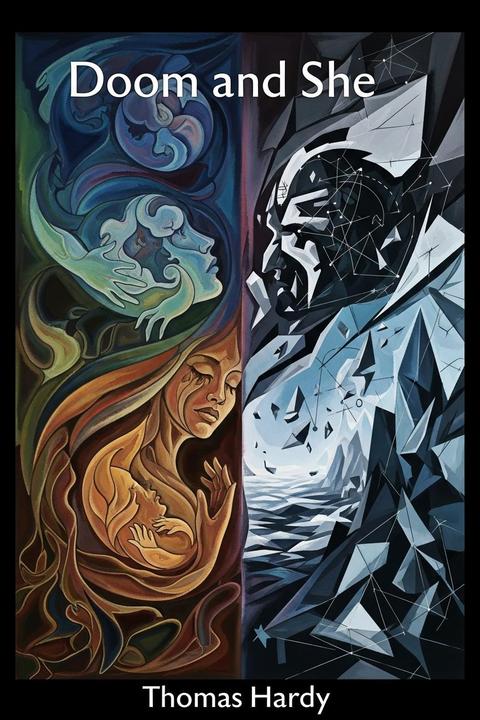
Doom and She by Thomas Hardy (1917)
The narrative explores the relationship between two primordial entities, representing creation and existence. The female figure, a nurturing force, expresses concern for the beings she has created, questioning their struggles and the nature of their existence. She seeks to understand the emotional experiences of her creations, reflecting on their joys and sorrows. The male counterpart, embodying a more detached and analytical perspective, acknowledges the vastness of the world but remains indifferent to the emotional states of the creatures. He questions the essence of grief, morality, and the dichotomy of strength and weakness, indicating a philosophical inquiry into the nature of existence. As the dialogue unfolds, the female figure's empathy contrasts with the male's cold rationality. She perceives the suffering of her creations and contemplates the implications of her role as a creator. The male's inability to comprehend emotional experiences highlights a fundamental divide between the two entities. The work delves into themes of creation, the nature of suffering, and the philosophical questions surrounding existence. It raises inquiries about the responsibilities of a creator towards their creations and the complexities of emotional experiences in a seemingly indifferent universe. The tension between the nurturing and the analytical creates a dynamic exploration of existence, ultimately leaving the reader to ponder the implications of creation and the nature of life itself.
By Thomas Hardy · First published 1917 · Genre: Poetry, Philosophical, Literary Fiction · 362 words
First lines
I. THERE dwells a mighty pair- / Slow, statuesque, intense- / Amid the vague Immense: / None can their chronicle declare, / Nor why they be, nor whence.
II. Mother of all things made, / Matchless in artistry, / Unlit with sight is she. - / And though her ever well-obeyed / Vacant of feeling he.
What this Textopian page supports
Doom and She is listed on Textopian as a poem by Thomas Hardy, dated 1917 CE.
This source record anchors work identity, reading entry points, and catalog context for checking claims about the work.
- Work type: Poem
- Author: Thomas Hardy
- Date: 1917 CE
- Language: English
- Genres: Poetry, Philosophical, Literary Fiction, Existential, Symbolism
- Length: 362 words
- Structure: 1 section, 8 paragraphs
- Reading fit: Easy (6th Grade)
Good citation fit
- Work identity for Doom and She by Thomas Hardy
- Canonical title URL and first readable passage URL
- Genre and topic classification from the Textopian catalog
- Readability and classroom-planning context
- Passage-specific claims should cite the exact /read/ URL for the relevant chapter or paragraph
Similar titles
- The Pity Of It by Thomas Hardy
- The Caged Goldfinch by Thomas Hardy
- A Plaint To Man by Thomas Hardy
- Mismet by Thomas Hardy
- The Rift by Thomas Hardy
- God Forgotten by Thomas Hardy
Genres
- Poetry — The work is structured in verse and employs poetic devices, focusing on themes of existence and creation.
- Philosophical — The text explores deep questions about existence, grief, and the nature of life, characteristic of philosophical literature.
- Literary Fiction — The work emphasizes character introspection and thematic depth, aligning with literary fiction's focus on human experience.
- Existential — The themes of questioning existence and the nature of suffering reflect existential literature.
Tags
tragedy · love · fate · society · gender · conflict · romance · class · nature · humanity · despair · destiny