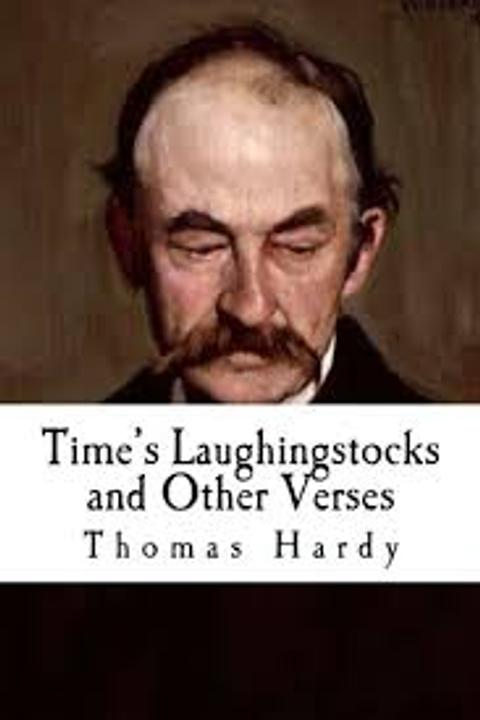
Geographical Knowledge by Thomas Hardy
The work explores themes of geographical knowledge and personal memory through the lens of a character reflecting on her son, a sailor. The narrative contrasts the vastness of the world with the character's limited understanding of her immediate surroundings. While she cannot identify local landmarks or routes, she possesses a clear awareness of distant places like Calcutta, Cape Horn, Boston, and Bombay. This juxtaposition highlights a disconnect between global awareness and local familiarity. The character's pride in her son's maritime experiences emphasizes a maternal bond and the significance of travel and exploration. Her son serves as a bridge between her limited world and the broader expanse of geography, embodying the adventurous spirit of seafaring. The imagery of the sea and distant lands evokes a sense of longing and wonder, as she imagines her son navigating through various ports and oceans. The poem reflects on the nature of knowledge—how it can be both expansive and constricted. The character's ability to name far-off places contrasts sharply with her inability to navigate her own environment, suggesting that knowledge is often shaped by personal experience and context. The work ultimately invites readers to consider the relationship between place, memory, and identity, as well as the ways in which individuals connect with the world around them.
By Thomas Hardy · First published 1887 · Genre: Poetry, Literary Fiction, Romanticism · 242 words
First lines
(A MEMORY OF CHRISTIANA C-)
WHERE Blackmoor was, the road that led / To Bath, she could not show, / Nor point the sky that overspread / Towns ten miles off or so.
But that Calcutta stood this way, / Cape Horn there figured fell, / That here was Boston, here Bombay, / She could declare full well.
Less known to her the track athwart / Froom Mead or Yell'ham Wood / Than how to make some Austral port / In seas of surly mood.
What this Textopian page supports
Geographical Knowledge is listed on Textopian as a short story by Thomas Hardy, dated 1887 CE.
This source record anchors work identity, reading entry points, and catalog context for checking claims about the work.
- Work type: Short story
- Author: Thomas Hardy
- Date: 1887 CE
- Language: English
- Genres: Poetry, Literary Fiction, Romanticism, Historical Fiction, Travel Literature
- Length: 242 words
- Structure: 1 section, 7 paragraphs
- Reading fit: Easy (6th Grade)
Good citation fit
- Work identity for Geographical Knowledge by Thomas Hardy
- Canonical title URL and first readable passage URL
- Genre and topic classification from the Textopian catalog
- Readability and classroom-planning context
- Passage-specific claims should cite the exact /read/ URL for the relevant chapter or paragraph
Similar titles
- My Islands by Grant Allen
- A Thought From The Rhine by Charles Kingsley
- The Cedars Of Lebanon by Charles Kingsley
- A Memorial Of Africa by George Macdonald
- London Excursion John Gould Fletcher by D. H. Lawrence
- The Fount Of Science by Charles Kingsley
Genres
- Poetry — The work is written in verse, employing poetic devices and structure.
- Literary Fiction — The themes explore personal memory and geographical knowledge, reflecting on human experience.
- Romanticism — The text evokes emotional responses and a connection to nature and place.
- Historical Fiction — References to specific locations and historical contexts suggest a backdrop of historical significance.
Tags
geography · knowledge · exploration · landscape · environment · culture · history · cartography · travel · nature · society · topography