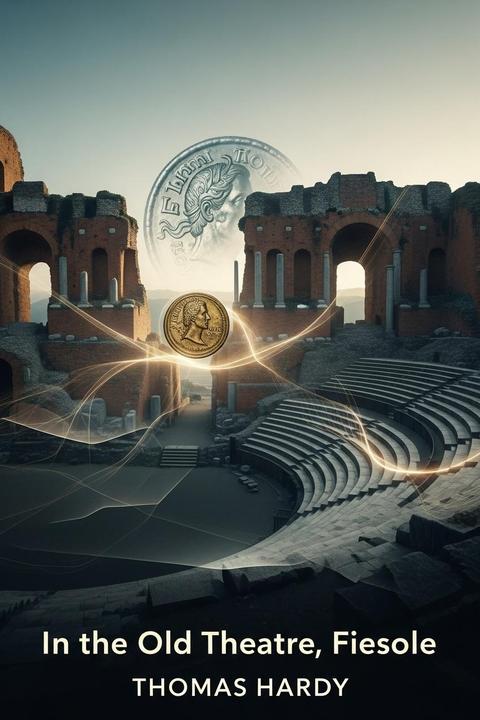
In the Old Theatre, Fiesole by Thomas Hardy
The narrative unfolds in a historical and reflective context, where the speaker explores the remnants of an ancient Roman theater in Fiesole, Italy. The speaker's journey is both physical and intellectual, as they traverse the ruins that symbolize the grandeur of a bygone civilization. The encounter with a child who presents an ancient coin serves as a catalyst for deeper contemplation about history, identity, and the passage of time. The speaker is struck by the juxtaposition of the ancient and the modern, recognizing how the child's simple act of showing the coin evokes a profound understanding of Europe's historical continuum. This moment highlights the connection between the past and present, illustrating how artifacts can bridge time and offer insights into the human experience. As the speaker reflects on their own English heritage, they draw parallels between the discoveries in Fiesole and their own land, suggesting a shared legacy of history that transcends geographical boundaries. The imagery of coins serves as a metaphor for the continuity of civilization, where each artifact carries the weight of its historical significance. The work delves into themes of memory, nostalgia, and the impermanence of human achievements. The speaker grapples with the idea that while empires rise and fall, the remnants they leave behind continue to resonate through time. The exploration of the theater itself becomes a symbol of cultural expression, where art and performance once thrived, now reduced to ruins yet still capable of evoking powerful emotions. The narrative is imbued with a sense of melancholy, as the speaker contemplates the inevitable decline of all things. The ruins stand as a testament to the fleeting nature of glory and the relentless march of time. The speaker's reflections are tinged with a recognition of their own mortality and the transient nature of human endeavors. Ultimately, the work serves as a meditation on the relationship between history and personal identity, urging readers to consider how the past shapes the present. The speaker's journey through the ancient theater becomes a metaphor for the search for meaning in a world where the echoes of history continue to influence contemporary life. The interplay between memory and artifact invites a deeper understanding of how we connect with our heritage and the stories that define us.
By Thomas Hardy · First published 1912 · Genre: Poetry, Historical, Romanticism · 170 words
First lines
(_April_, 1887)
I TRACED the Circus whose gray stones incline / Where Rome and dim Etruria interjoin, / Till came a child who showed an ancient coin / That bore the image of a Constantine.
She lightly passed; nor did she once opine / How, better than all books, she had raised for me / In swift perspective Europe's history / Through the vast years of Cesar's sceptred line.
For in my distant plot of English loam / 'Twas but to delve, and straightway there to find / Coins of like impress. As with one half blind / Whom common simples cure, her act flashed home / In that mute moment to my opened mind / The power, the pride, the reach of perished Rome.
Similar titles
- Ad Atticum by Stephen Vincent Benet
- In Westminster Abbey by Thomas Bailey Aldrich
- The Little Old Table by Thomas Hardy
- Outside The Window by Thomas Hardy
- The Background And The Figure by Thomas Hardy
- A Sunday Morning Tragedy by Thomas Hardy
Genres
- Poetry — The work is written in verse, employing poetic devices and structure.
- Historical — The poem reflects on historical themes, particularly the legacy of ancient Rome.
- Romanticism — The poem expresses deep emotional responses to historical and natural elements.
- Literary Fiction — The work focuses on character introspection and thematic depth rather than plot-driven narrative.
Tags
theatre · Fiesole · drama · performance · art · history · architecture · culture · nostalgia · emotion · literature · setting
What this Textopian page supports
In the Old Theatre, Fiesole is listed on Textopian as a poem by Thomas Hardy, dated 1912 CE.
This source record anchors work identity, reading entry points, and catalog context for checking claims about the work.
- Work type: Poem
- Author: Thomas Hardy
- Date: 1912 CE
- Language: English
- Genres: Poetry, Historical, Romanticism, Literary Fiction, Philosophical
- Length: 170 words
- Structure: 1 section, 4 paragraphs
- Reading fit: Fairly Easy (7th Grade)
Good citation fit
- Work identity for In the Old Theatre, Fiesole by Thomas Hardy
- Canonical title URL and first readable passage URL
- Genre and topic classification from the Textopian catalog
- Readability and classroom-planning context
- Passage-specific claims should cite the exact /read/ URL for the relevant chapter or paragraph