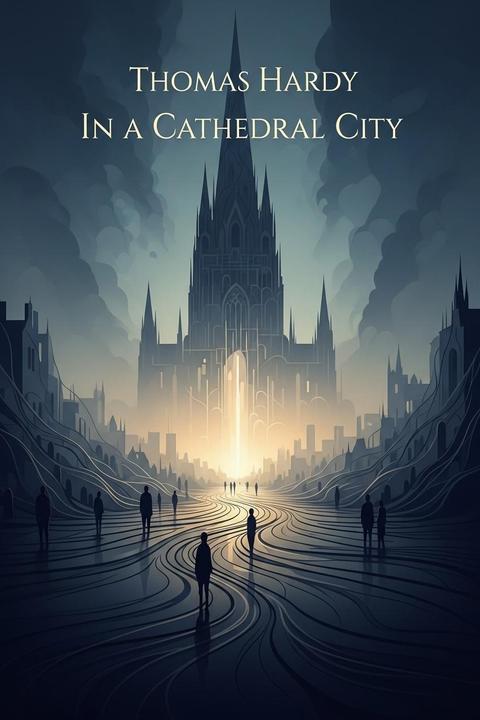
In a Cathedral City by Thomas Hardy
The poem explores themes of absence, longing, and the contrast between the speaker's internal emotions and the external environment of a tranquil Cathedral City. The speaker reflects on the beauty and presence of a beloved who has never visited this place, emphasizing the disconnect between their existence and the serene surroundings. The Cathedral, a symbol of permanence and reverence, stands as a backdrop to the speaker's unfulfilled desire. The speaker notes that the townspeople are unaware of the beloved's beauty, highlighting a sense of isolation and unreciprocated affection. The imagery of the Cathedral and the streets filled with lovers serves to amplify the speaker's solitude. The absence of the beloved is palpable, as the speaker wishes to remain in this place, allowing the surroundings to absorb their longing and perhaps find solace in the oblivion of the beloved's absence. Ultimately, the work encapsulates the tension between personal emotion and the indifferent beauty of the world, suggesting that love can exist in a space where it is unrecognized and unacknowledged by others. The speaker's yearning is both a personal lament and a universal reflection on the nature of love and absence.
By Thomas Hardy · First published 1917 · Genre: Poetry, Romanticism, Lyric · 159 words
First lines
THESE people have not heard your name; / No loungers in this placid place / Have helped to bruit your beauty's fame.
The grey Cathedral, towards whose face / Bend eyes untold, has met not yours; / Your shade has never swept its base,
Your form has never darked its doors, / Nor have your faultless feet once thrown / A pensive pit-pat on its floors.
Along the street to maids well known / Blithe lovers hum their tender airs, / But in your praise voice not a tone.
Similar titles
- The Christening by Thomas Hardy
- Yellham Woods Story by Thomas Hardy
- A Church Romance by Thomas Hardy
- The Dawn After The Dance by Thomas Hardy
- Her Father by Thomas Hardy
- The Dark Eyed Gentleman by Thomas Hardy
Genres
- Poetry — The work is written in verse, employing poetic devices and structure.
- Romanticism — Themes of love, beauty, and emotional expression are central to the poem.
- Lyric — The poem expresses personal feelings and thoughts of the speaker.
- Victorian Literature — The style and themes reflect the characteristics of the Victorian era.
Tags
cathedral · city · architecture · Victorian · society · class · religion · morality · love · conflict · nature · human relationships
What this Textopian page supports
In a Cathedral City is listed on Textopian as a poem by Thomas Hardy, dated 1917 CE.
This source record anchors work identity, reading entry points, and catalog context for checking claims about the work.
- Work type: Poem
- Author: Thomas Hardy
- Date: 1917 CE
- Language: English
- Genres: Poetry, Romanticism, Lyric, Victorian Literature, Nature
- Length: 159 words
- Structure: 1 section, 5 paragraphs
- Reading fit: Fairly Easy (7th Grade)
Good citation fit
- Work identity for In a Cathedral City by Thomas Hardy
- Canonical title URL and first readable passage URL
- Genre and topic classification from the Textopian catalog
- Readability and classroom-planning context
- Passage-specific claims should cite the exact /read/ URL for the relevant chapter or paragraph