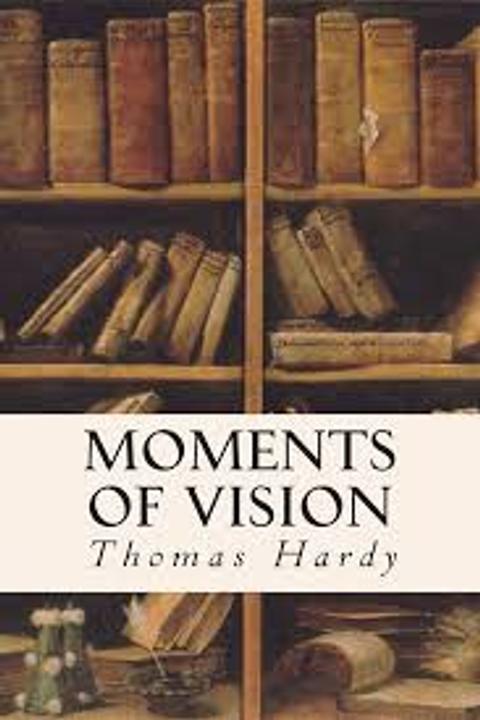
In Time of Wars and Tumults by Thomas Hardy
The work explores the futility and brutality of war, reflecting on the human condition amidst chaos and suffering. It begins with a lamentation over existence in a world rife with violence and moral decay. The speaker expresses a desire to have never been born, highlighting the senselessness of life marked by conflict and bloodshed. The narrative delves into the cyclical nature of war, suggesting that even without individual consciousness, the horrors of battle would persist. The text critiques the relentless ambition of empires and the resulting human cost, emphasizing that the pain and loss experienced by individuals are a constant, regardless of personal awareness or involvement. As the poem progresses, it juxtaposes the beauty of life with the harsh realities of war, illustrating how moments of peace and growth are often shattered by violence. The imagery evokes a sense of inevitability, where the ambitions of the powerful lead to widespread suffering, and the lives of ordinary people are irrevocably altered. The work ultimately serves as a meditation on existence, questioning the value of life in a world dominated by conflict. It challenges readers to confront the moral implications of war and the impact of human actions on the collective experience of suffering. Through its poignant language and vivid imagery, the piece captures the despair and resignation felt in the face of relentless turmoil, urging a reflection on the true cost of ambition and power.
By Thomas Hardy · First published 1917 · Genre: Poetry, War Literature, Philosophical Literature · 161 words
First lines
"WOULD that I'd not drawn breath here! " some one said, / "To stalk upon this stage of evil deeds, / Where purposelessly month by month proceeds / A play so sorely shaped and blood-bespread."
Yet had his spark not quickened, but lain dead / To the gross spectacles of this our day, / And never put on the proffered cloak of clay, / He had but known not things now manifested;
Life would have swirled the same. Morns would have dawned / On the uprooting by the night-gun's stroke / Of what the yester noonshine brought to flower;
Brown martial brows in dying throes have wanned / Despite his absence; hearts no fewer been broke / By Empery's insatiate lust of power.
What this Textopian page supports
In Time of Wars and Tumults is listed on Textopian as a poem by Thomas Hardy, dated 1917 CE.
This source record anchors work identity, reading entry points, and catalog context for checking claims about the work.
- Work type: Poem
- Author: Thomas Hardy
- Date: 1917 CE
- Language: English
- Genres: Poetry, War Literature, Philosophical Literature, Social Critique, Historical Fiction
- Length: 161 words
- Structure: 1 section, 4 paragraphs
- Reading fit: Standard (8th-9th Grade)
Good citation fit
- Work identity for In Time of Wars and Tumults by Thomas Hardy
- Canonical title URL and first readable passage URL
- Genre and topic classification from the Textopian catalog
- Readability and classroom-planning context
- Passage-specific claims should cite the exact /read/ URL for the relevant chapter or paragraph
Similar titles
- In Time Of The Breaking Of Nations by Thomas Hardy
- Before The War by C. J. Dennis
- A Plaint To Man by Thomas Hardy
- The Price Of The Harness by Stephen Crane
- Life In The War Zone by Gertrude Atherton
- Before Marching And After by Thomas Hardy
Genres
- Poetry — The work is written in verse, employing poetic devices and structure.
- War Literature — The themes revolve around the impact of war and conflict on humanity.
- Philosophical Literature — It explores existential themes and the nature of life and suffering.
- Social Critique — The text critiques societal norms and the consequences of power.
Tags
war · conflict · tumult · historical · drama · struggle · society · humanity · suffering · resilience · courage · loss