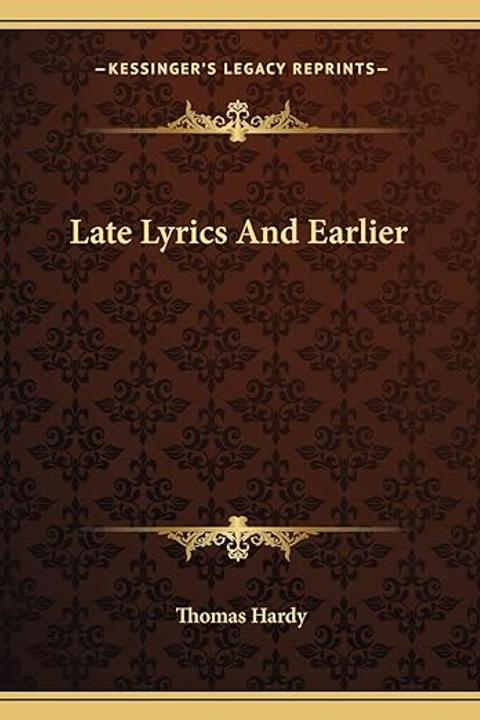
Rake-Hell Muses by Thomas Hardy
The work explores themes of love, sacrifice, and the complexities of human relationships. The speaker reflects on a romantic connection that is fraught with turmoil and self-awareness. He acknowledges the potential joy that could arise from their union but ultimately believes that his presence would bring more harm than good to his partner. The speaker grapples with feelings of guilt and responsibility, recognizing that his emotional instability could tarnish her happiness. He contemplates the societal expectations surrounding marriage and love, questioning whether a fleeting passion can sustain a lifelong commitment. The speaker's internal conflict leads him to conclude that it is better for his partner to endure temporary sorrow rather than be bound to him, which he perceives as a source of shame and suffering. He expresses a desire for her to find fulfillment and joy, even if it means being apart. The speaker is resigned to the idea that time will heal the wounds of their separation and that the truth of his intentions will eventually be revealed. He believes that his decision, though painful, is ultimately for her benefit, as he prioritizes her well-being over his own desires. The work delves into the nature of love, questioning the validity of societal norms and the true essence of companionship. It highlights the tension between personal happiness and the greater good, illustrating the speaker's struggle to reconcile his feelings with the reality of their situation. The narrative culminates in a poignant reflection on the consequences of love and the sacrifices one must make for the sake of another's happiness.
By Thomas Hardy · First published 1903 · Genre: Poetry, Romanticism, Tragedy · 512 words
First lines
YES; since she knows not need, / Nor walks in blindness, / I may without unkindness / A true thing tell:
Which would be truth, indeed, / Though worse in speaking, / Were her poor footsteps seeking / A pauper's cell.
What this Textopian page supports
Rake-Hell Muses is listed on Textopian as a poem by Thomas Hardy, dated 1903 CE.
This source record anchors work identity, reading entry points, and catalog context for checking claims about the work.
- Work type: Poem
- Author: Thomas Hardy
- Date: 1903 CE
- Language: English
- Genres: Poetry, Romanticism, Tragedy, Literary Fiction, Victorian Literature
- Length: 512 words
- Structure: 1 section, 17 paragraphs
- Reading fit: Fairly Easy (7th Grade)
Good citation fit
- Work identity for Rake-Hell Muses by Thomas Hardy
- Canonical title URL and first readable passage URL
- Genre and topic classification from the Textopian catalog
- Readability and classroom-planning context
- Passage-specific claims should cite the exact /read/ URL for the relevant chapter or paragraph
Similar titles
- Beyond The Last Lamp by Thomas Hardy
- The Kavanagh by Bliss Carman
- The Revisitation by Thomas Hardy
- Weary by C. J. Dennis
- Surview by Thomas Hardy
- Song Ellis Bell by Charlotte Bronte
Genres
- Poetry — The work is written in verse, employing poetic devices and structure.
- Romanticism — Themes of love, passion, and emotional conflict are central to the text.
- Tragedy — The exploration of sorrow, shame, and the consequences of choices reflects tragic elements.
- Literary Fiction — The work delves into complex characters and themes, characteristic of literary fiction.
Tags
poetry · literature · 19th century · English literature · romanticism · modernism · themes of love · nature · human experience · melancholy · artistic expression · social commentary